月の裏側から見た皆既日食Total solar eclipse seen from behind the Moon
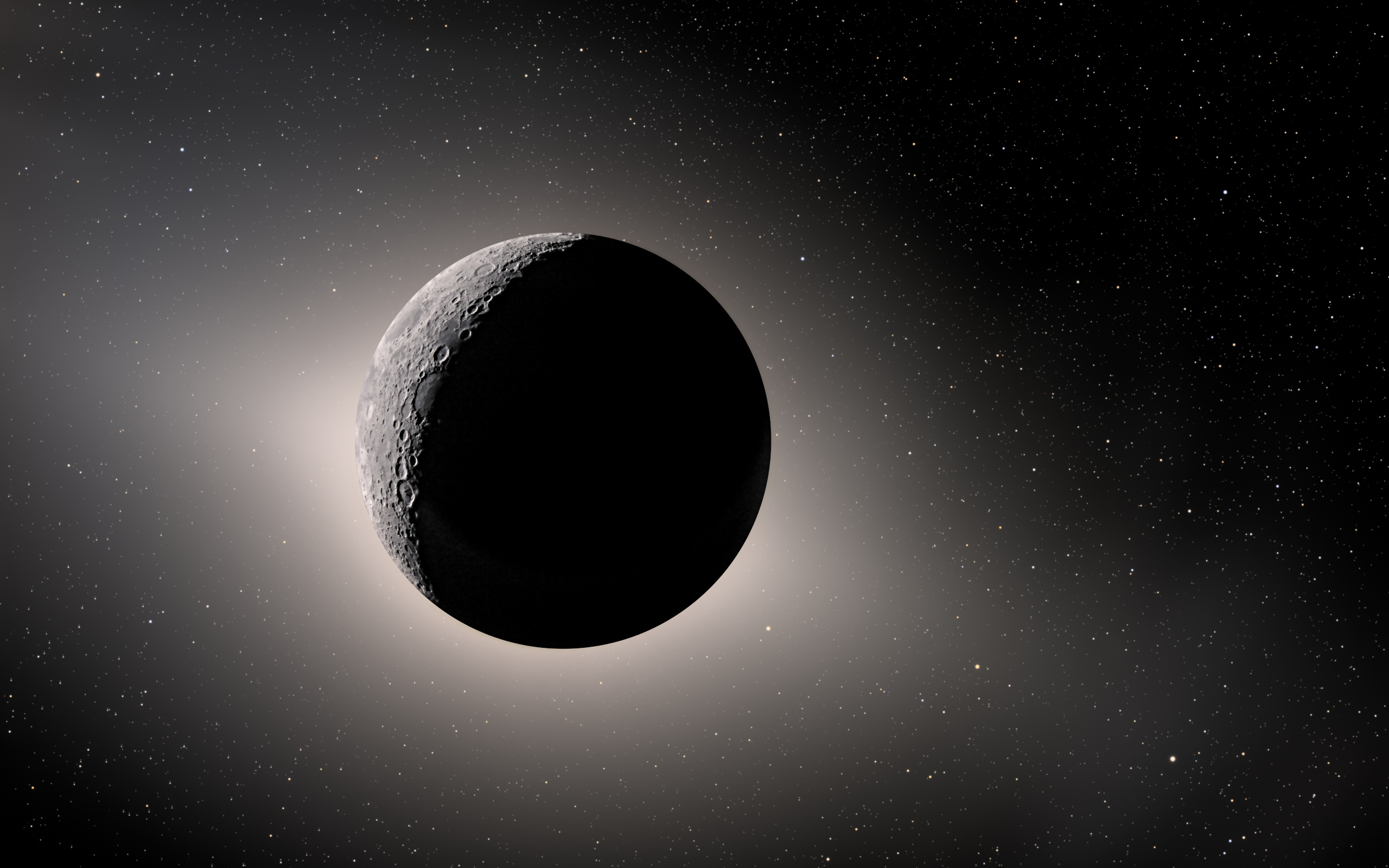
画像:NASA/Artemis II Crew/画像処理:Stefano Ivan StingaImages: NASA/Artemis II Crew · Processing: Stefano Ivan Stinga
ダウンロードDownloads
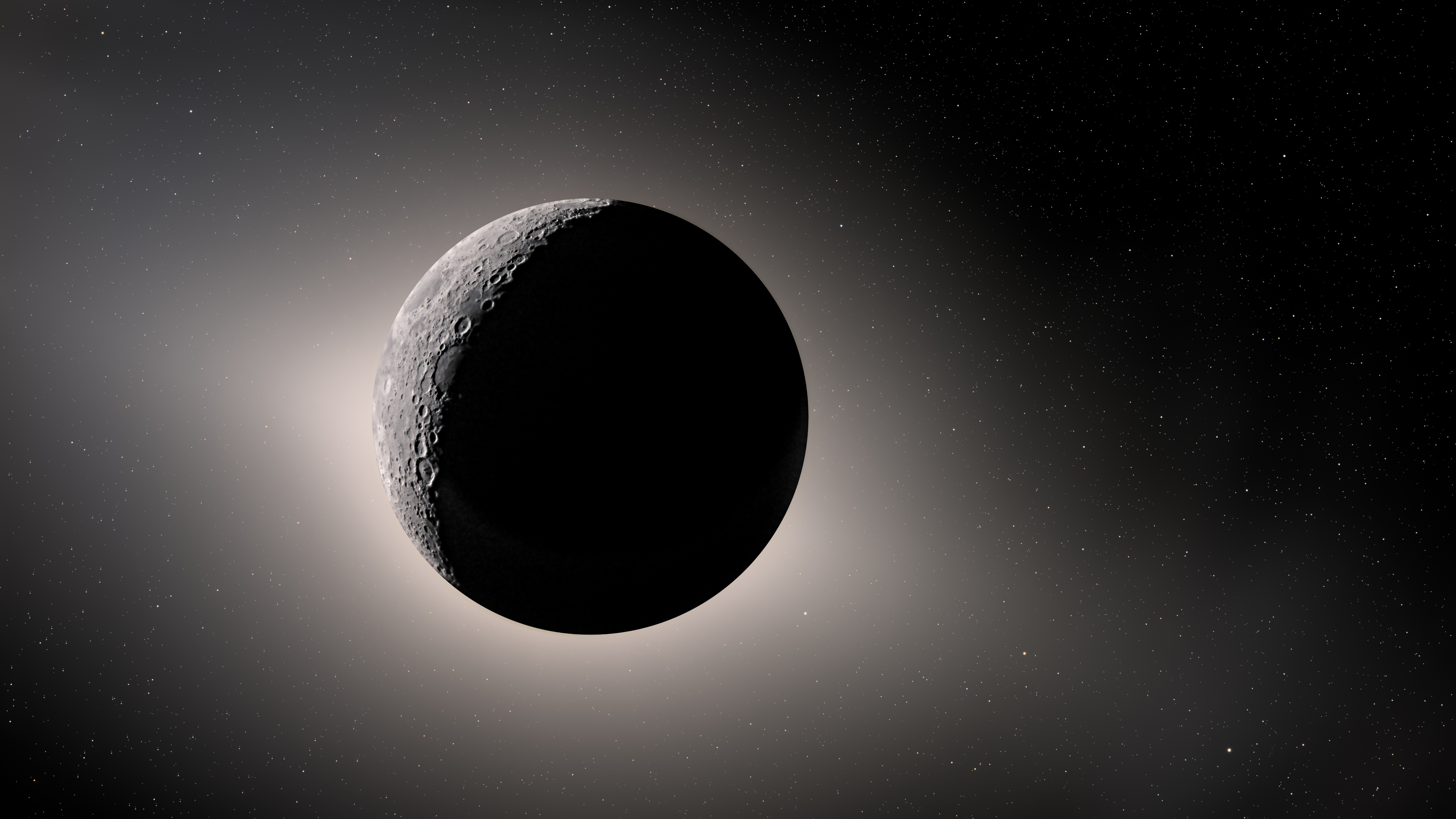
16ビットTIFF(8192×5440、74 MB)は、ご連絡いただければお送りします。A 16-bit TIFF (8192×5440, 74 MB) is available on request.
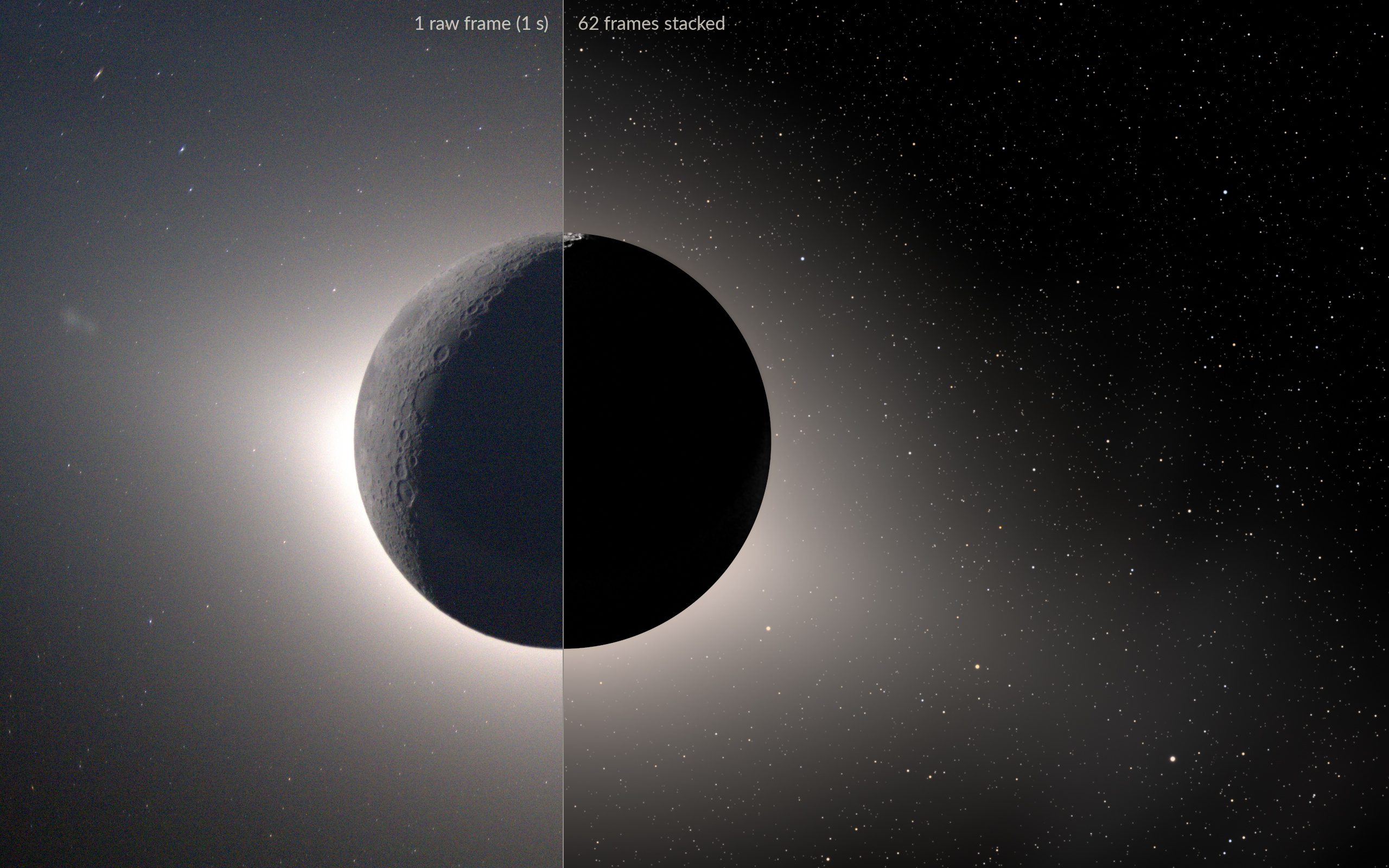
1枚のRAW画像と、62枚の合成One raw frame and the stack
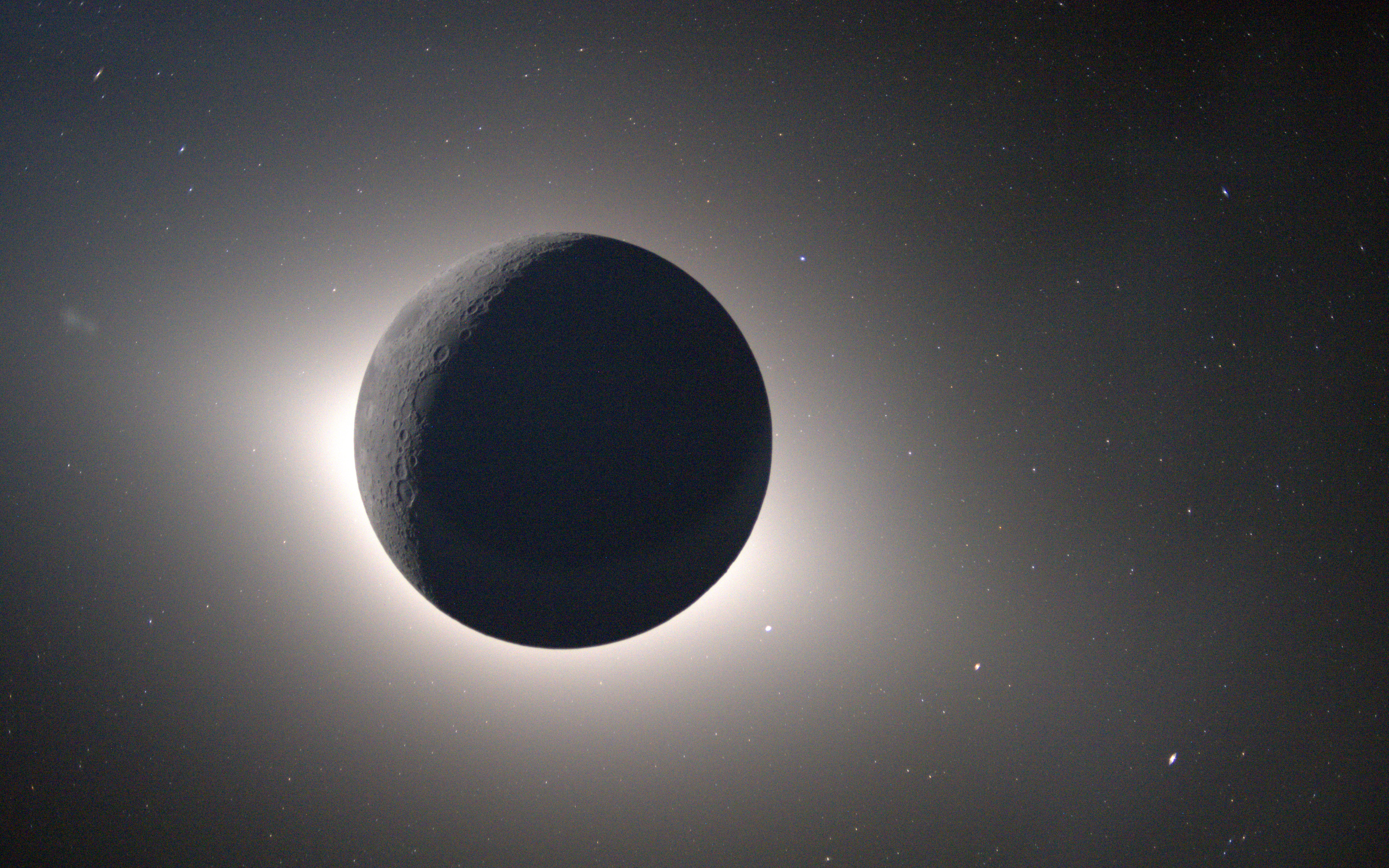 RAW画像1枚(1秒)1 raw frame (1 s)
62枚の合成62 frames stacked
左:2026年4月7日 01:05:29(世界時)に撮られた露出1秒のRAW画像1枚(art002e015967)。黒レベル、ホワイトバランス、色変換、一定の明るさ、sRGBガンマだけで現像しています。右:62枚を合成したこの画像。スライダーで境目を動かせます。Left: one 1-second raw frame, art002e015967, taken at 01:05:29 UTC on 7 April 2026, developed plainly (black point, white balance, color matrix, one brightness scale and sRGB gamma). Right: this picture, stacked from 62 frames. Drag to move the divider.
拡大画像Close-ups
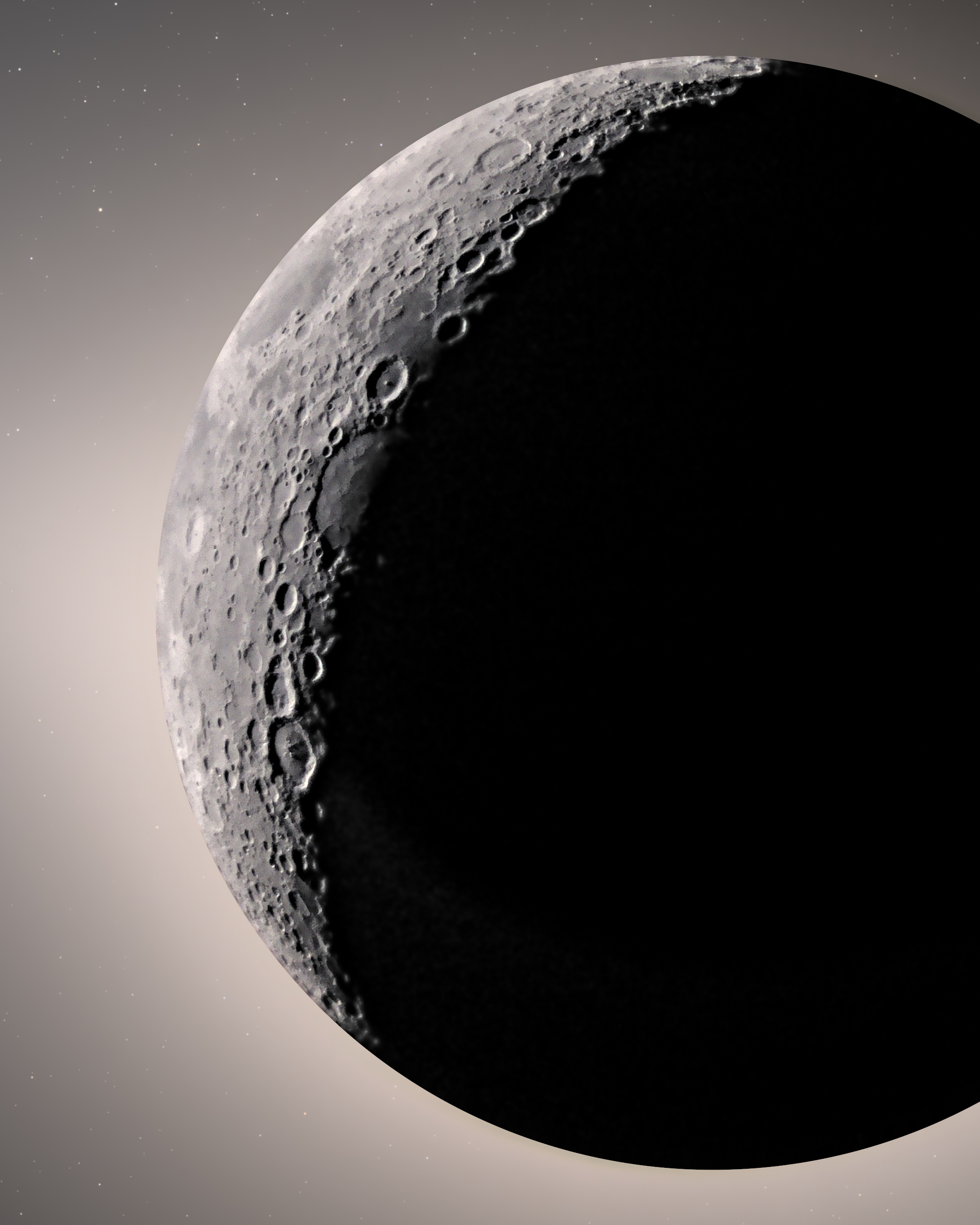
地球照に照らされた三日月:月の表側の縁と、クレーターの並ぶ明暗境界The Earthlit crescent: the edge of the Moon's near side, with craters along the terminator
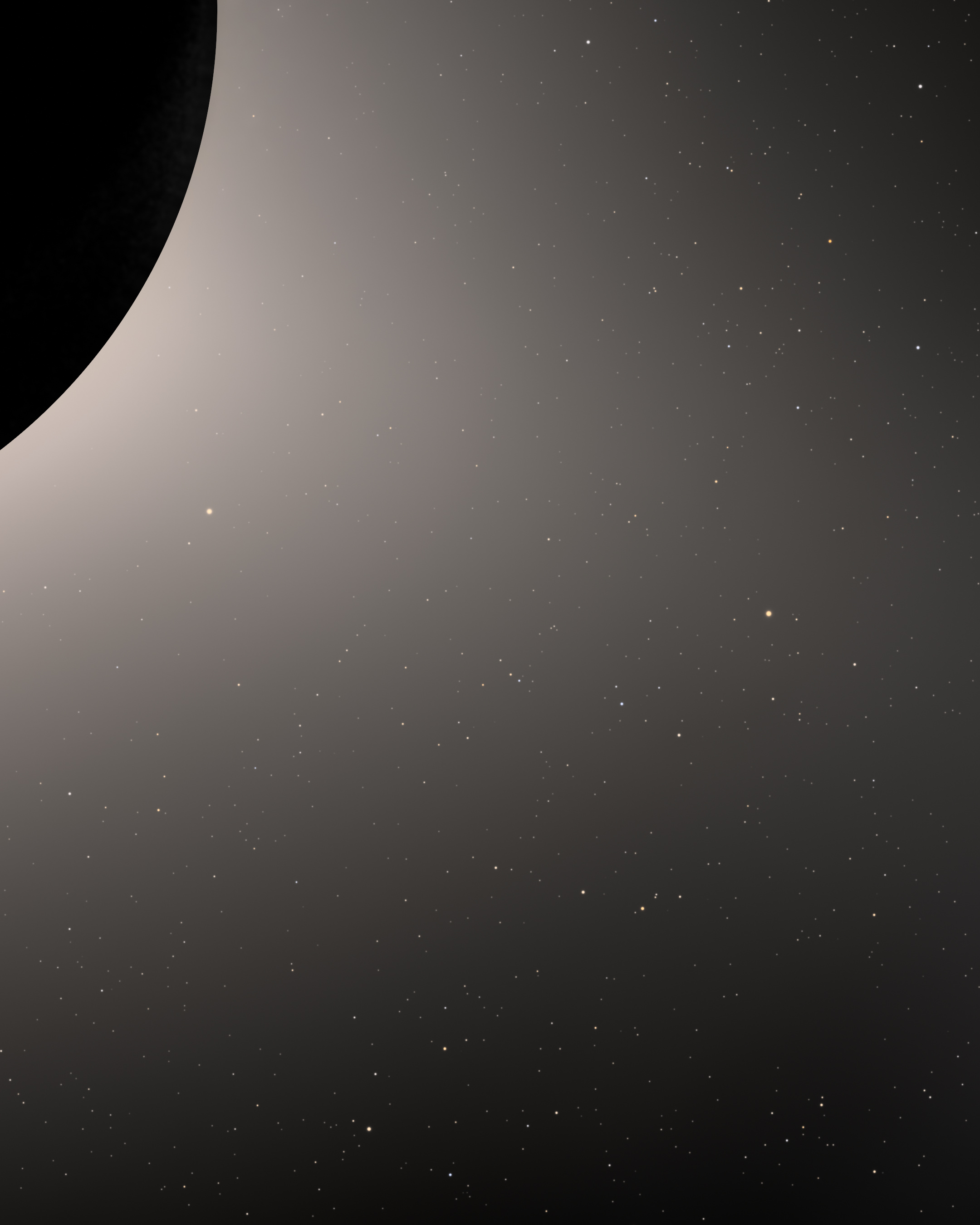
黄道光の中の土星、海王星(7.8等)、火星Saturn, Neptune (magnitude 7.8) and Mars in the zodiacal glow
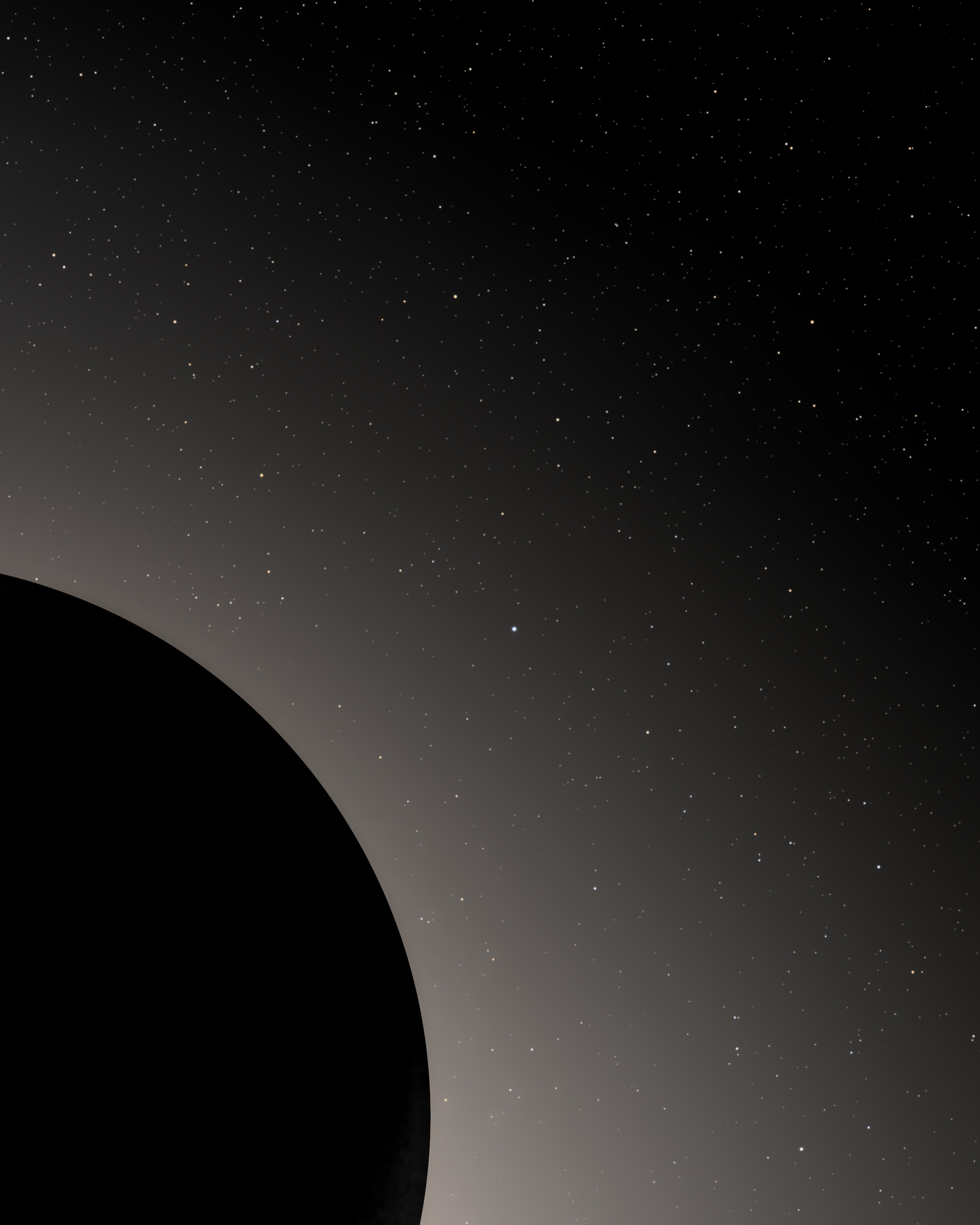
星空を背にした、月の裏側の黒い縁The black edge of the far side against the stars
拡大画像は、フル解像度の画像からの等倍の切り抜きです。The close-ups are 1:1 crops of the full-resolution picture.
解説
2026年4月7日、アルテミス2号の月フライバイの途中、宇宙船オリオンは月の影に入り、クルーは、月の裏側の向こうに太陽が隠れる皆既日食を1時間近くにわたって見ました。クルーはこの日食を、オリオンの窓越しにニコンZ9と35mm f/2のレンズで撮影しています。この画像は、そのうち00:51〜01:26(世界時)に撮られた露出最長13秒のRAW画像62枚を重ね、明るい光からかすかな星までを1枚に収めたものです。
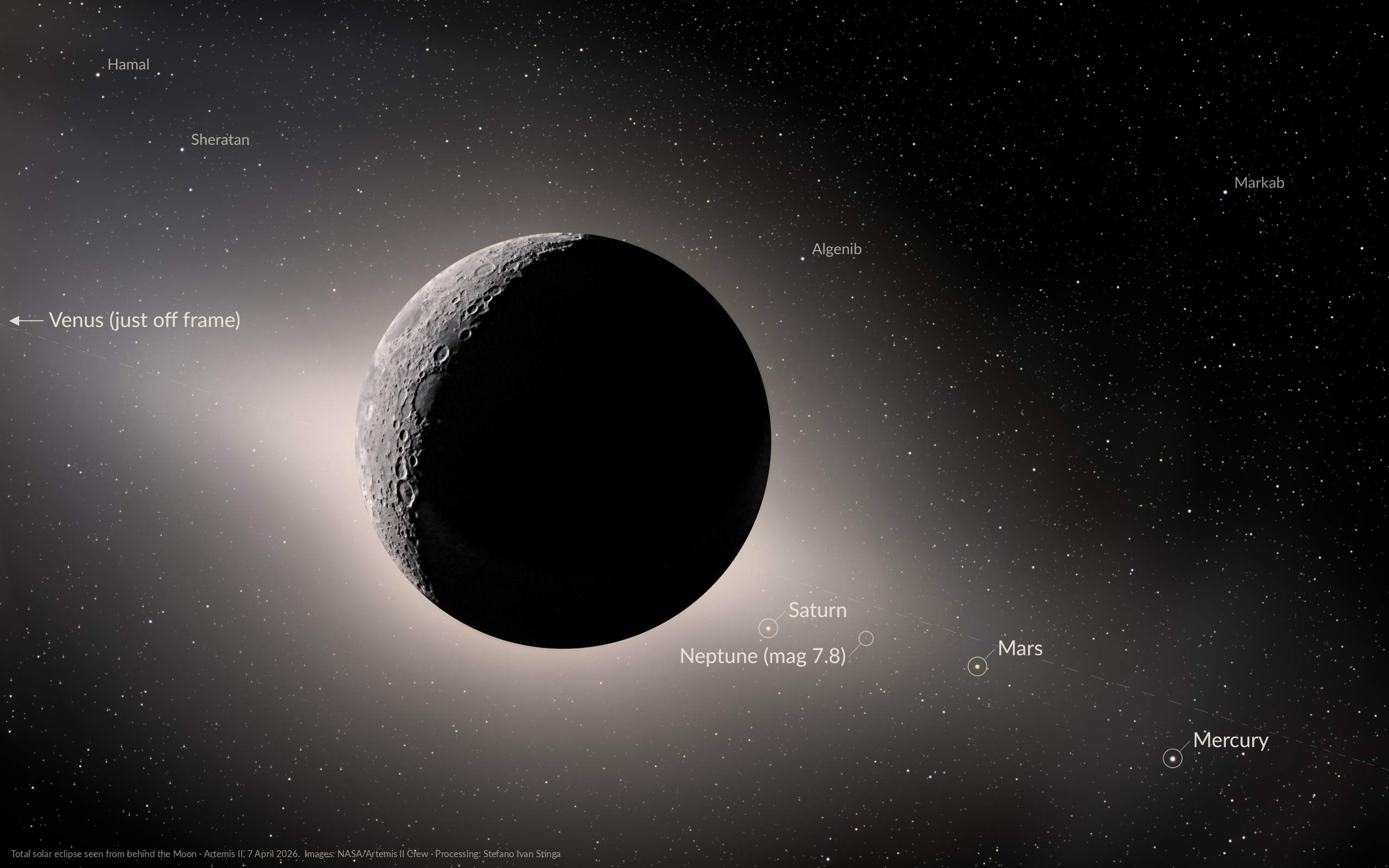
明るい光は、惑星間の塵が散乱した太陽光(Fコロナと黄道光)です。隠れた太陽の近くで最も明るく、惑星の通り道である黄道に沿って帯のように伸びています。細い三日月は、地球で反射した太陽光(地球照)に照らされた月の表側で、縁に沿ってクレーターが光をとらえています。円盤の残りは、光の当たっていない月の裏側です。右下には土星・海王星・火星・水星が黄道に沿って並び、金星は左端のすぐ外にあります。隠れた太陽は、月の中心から2.8度離れた、裏側の向こうにあります。
作り方
- データ:NASA惑星データシステム(PDS)のアルテミス2号クルーカメラ・バンドル(doi:10.17189/x52v-tb80)のRAW画像62枚(ニコンZ9、35mm f/2、NASA ID art002e015905〜art002e016026)
- 1枚ずつ較正(黒レベル、レンズの周辺減光、露出)し、星をもとに位置合わせ(1枚ごとに3次多項式)。ホットピクセルを補正
- 光:55枚を星をマスクして合成し、なめらかな多重スケールのモデルに。窓に映った金星の反射を除去し、惑星のまわりのにじみは黄道の帯に沿って埋めています
- 月:26枚のうち最もシャープな17枚を、月に合わせて(オプティカルフローで)位置合わせして合成し、ノイズ除去とデコンボリューション。縁に回り込んだ光をモデル化して除去し、暗い円盤のホットピクセルも除去
- 星:9,430個の星の位置・明るさ・青と赤の比をデータから1つずつ測り、その明るさと色のくっきりした丸い点として描き直しています。星表の星は描いていません。星表(HYG v4.1)は、位置の確認(709個で、ずれは約2ピクセル)、色の較正、明るい星の破片と本物の近接した星の見分けに使いました
- 色:星表の520個の星でホワイトバランスを較正。較正後の光の色は太陽光と一致します(塵が散乱した太陽光なので、期待どおりです)
- 対数空間で局所コントラストを持たせたHDRトーンマッピング。月は別のトーンカーブ
- 小さいサイズは、縮小ではなく、そのサイズで描画しています(星もそのサイズで描画)
- 自作のPythonツールで処理
注記
- 重ね合わせと合成の画像です:光、月、星は、同じ62枚のうち異なる組から作っています。
- 星はそれぞれの測定値から描き直したもので、星表の星は足していません。
- 月の裏側は黒く表示しています。データには表面の模様はなく、カメラと窓によるなめらかなかぶりと、かすかな反射しかありません。
- 複製やAIによる生成はしていません。
- 注記入り版のラベルは、星表の709個の星で求めた位置に置いています。
- NASAの公式画像ではなく、NASAが承認したものでもありません。
About this image
On 7 April 2026, during the Artemis II lunar flyby, the Orion spacecraft passed through the Moon's shadow, and its crew watched a total solar eclipse, with the Sun hidden behind the far side, for almost an hour. They photographed it through Orion's window with a Nikon Z9 and a 35 mm f/2 lens. This picture combines 62 of those raw frames, taken between 00:51 and 01:26 UTC with exposures of up to 13 seconds, into one view that holds both the brightest glow and the faintest stars.
The glow is sunlight scattered by interplanetary dust (the F-corona and zodiacal light). It is brightest close to the hidden Sun and stretches along the ecliptic, the plane of the planets. The thin crescent is the Moon's near side lit by Earthshine, sunlight reflected by Earth; craters along its edge catch the light. The rest of the disk is the unlit far side. Saturn, Neptune, Mars and Mercury line up along the ecliptic at the lower right, and Venus is just outside the left edge. The hidden Sun is 2.8° from the Moon's center, behind the far side.
How it was made
- Data: 62 raw frames (Nikon Z9, 35 mm f/2) from NASA's Planetary Data System, Artemis II crew-camera bundle (doi:10.17189/x52v-tb80), NASA IDs art002e015905 to art002e016026
- Each frame calibrated (black level, lens vignetting, exposure) and registered star by star (a 3rd-order polynomial per frame); hot pixels fixed
- Glow: 55 frames stacked with the stars masked, then a smooth multiscale model; the reflection of Venus in the window removed; the glare around the planets refilled along the ecliptic band
- Moon: the 17 sharpest of 26 frames, aligned on the Moon (optical flow), combined, denoised and deconvolved; the glow's bleed across the limb modeled and removed; hot pixels on the dark disk removed
- Stars: 9,430 stars, each measured in the frames (position, brightness, blue/red color) and redrawn as a clean round point of that brightness and color. No catalog star is drawn: a star catalog (HYG v4.1) was used to check the positions (709 stars agree to about 2 pixels), to calibrate the colors, and to tell real close pairs from fragments of bright stars
- Color: white balance calibrated on 520 catalog stars; the glow then has the color of sunlight, as dust-scattered sunlight should
- HDR tone mapping in log space with local contrast; the Moon has its own tone curve
- The smaller sizes are rendered at their own size (stars drawn at that size), not resized
- Processed with my own Python tools
Notes
- This is a stack and a composite: the glow, the Moon and the stars come from different sets of the same 62 frames.
- The stars are redrawn from their own measurements; no catalog star was added.
- The far side is shown black: the frames hold no surface detail there, only a smooth haze from the camera and window and a faint reflection.
- Nothing was cloned or generated with AI.
- The labels on the annotated version are placed with a plate solution on 709 catalog stars.
- This is not an official NASA image, and NASA does not endorse it.
利用についてUse
報道・記事でのご利用は、上記のクレジットを表記いただければご自由にどうぞ。それ以外のご利用は CC BY 4.0 の条件に従ってください。News and editorial use is welcome with the credit above. Other uses: CC BY 4.0.
連絡先Contact: [email protected] · X: @Sting1_JP · Flickr: photostream