カリーナ星雲:ガスと赤外線の塵The Carina Nebula in gas and infrared dust
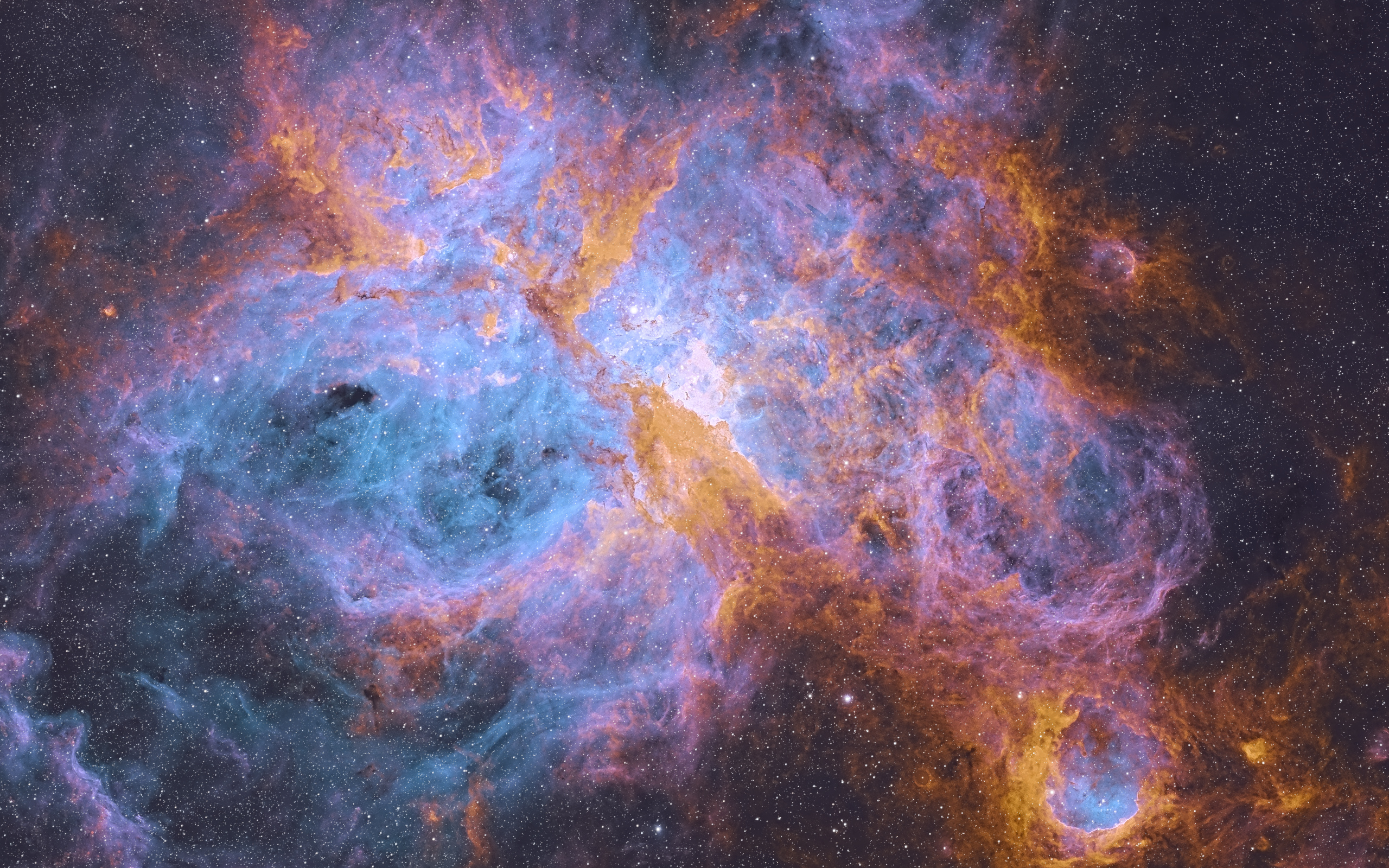
撮影・画像処理・著作権:Stefano Ivan Stinga(リモート望遠鏡:タカハシ FSQ-106ED、ナミビア)/赤外線の塵:NASA/JPL-Caltech, SPHERExImage & Copyright: Stefano Ivan Stinga (remote telescope: Takahashi FSQ-106ED, Namibia) · Infrared dust: NASA/JPL-Caltech, SPHEREx
ダウンロードDownloads
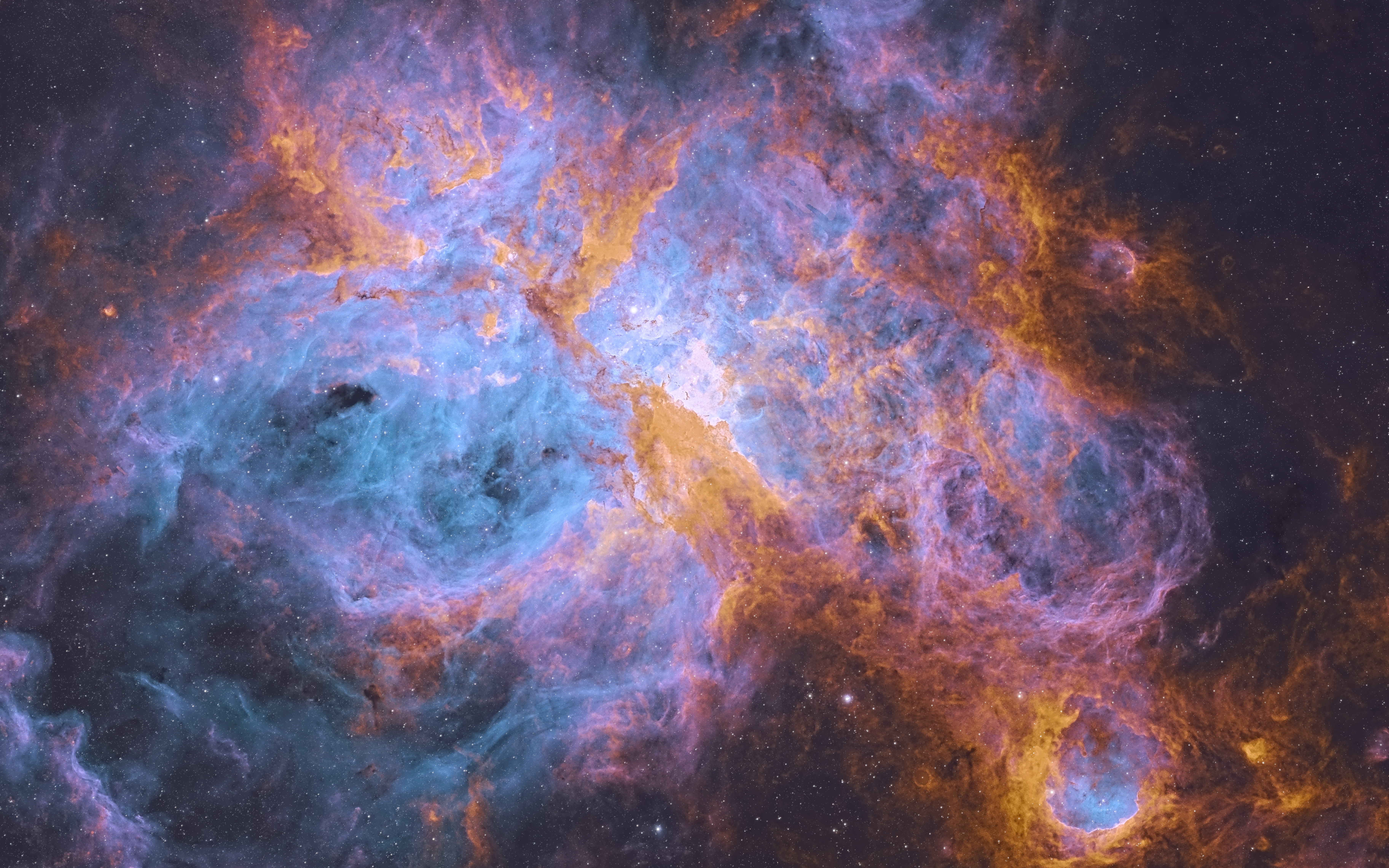
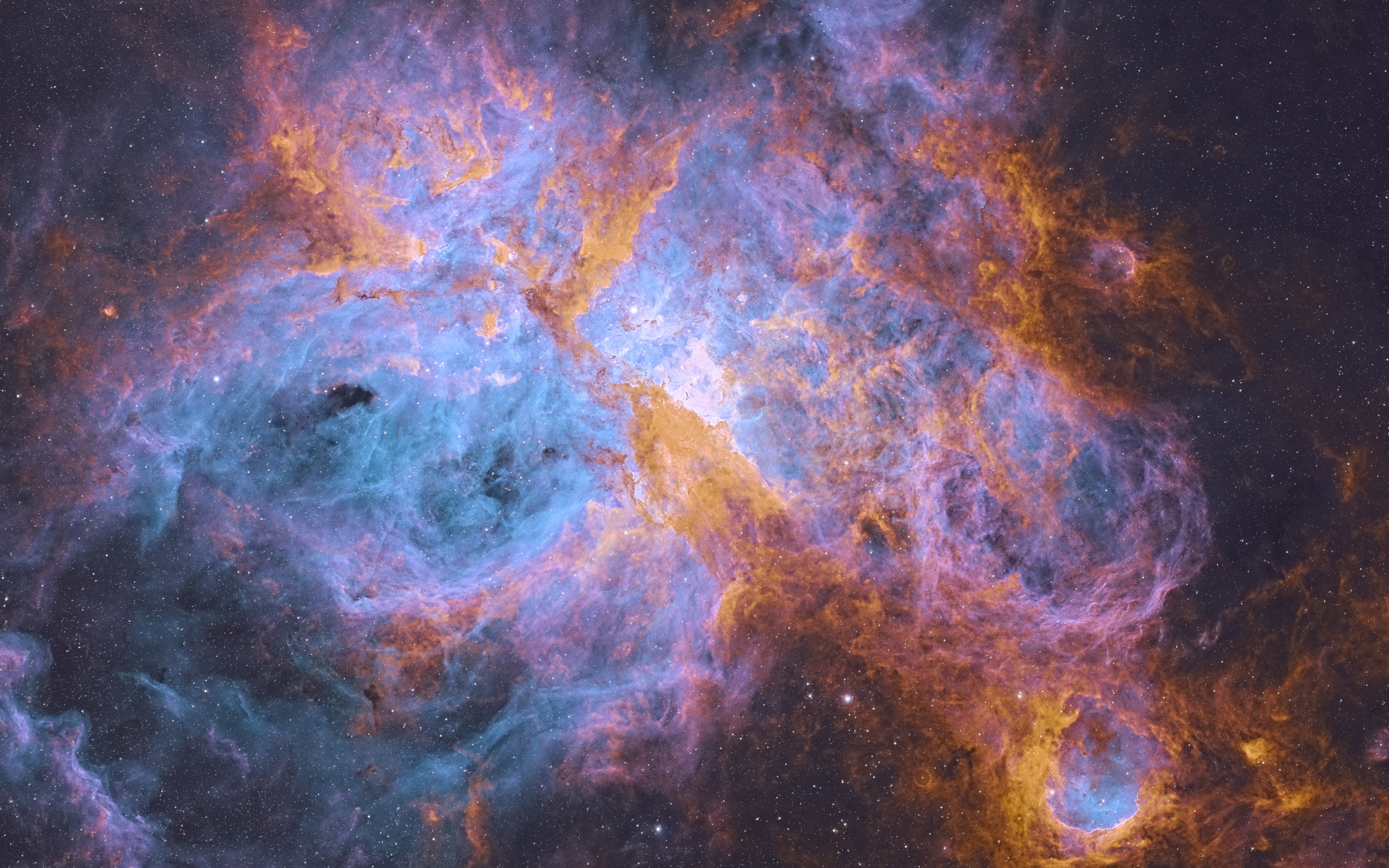
どの画像にも、回折スパイク(明るい星の十字の光)は描き加えていません。No diffraction spikes were added to any of these pictures.
拡大画像Close-ups
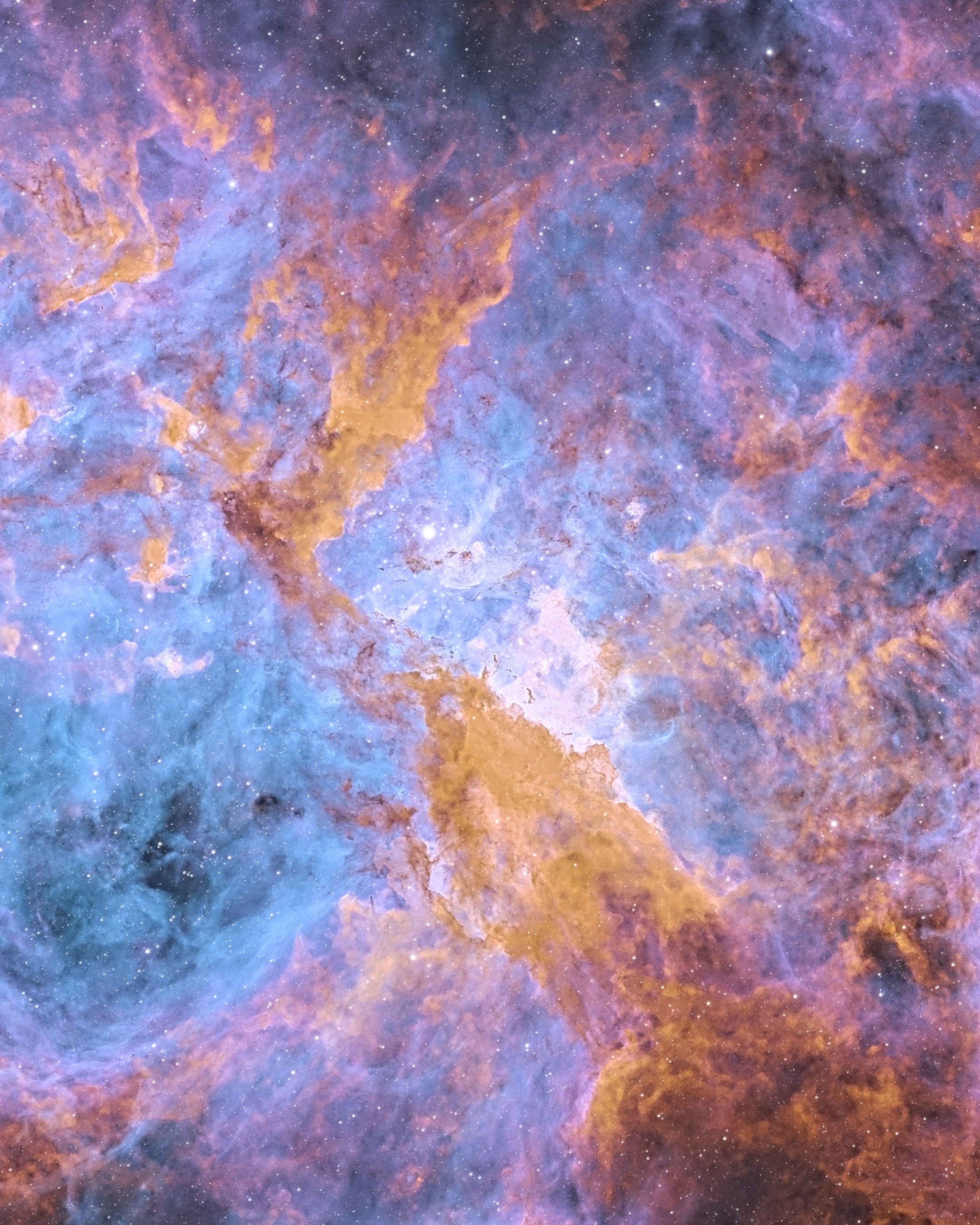
中心部:イータ・カリーナ、キーホール、星団トランプラー14と、赤外線で金色に光るちりの帯The heart: Eta Carinae, the Keyhole and the cluster Trumpler 14, with the dust lanes glowing amber in the infrared
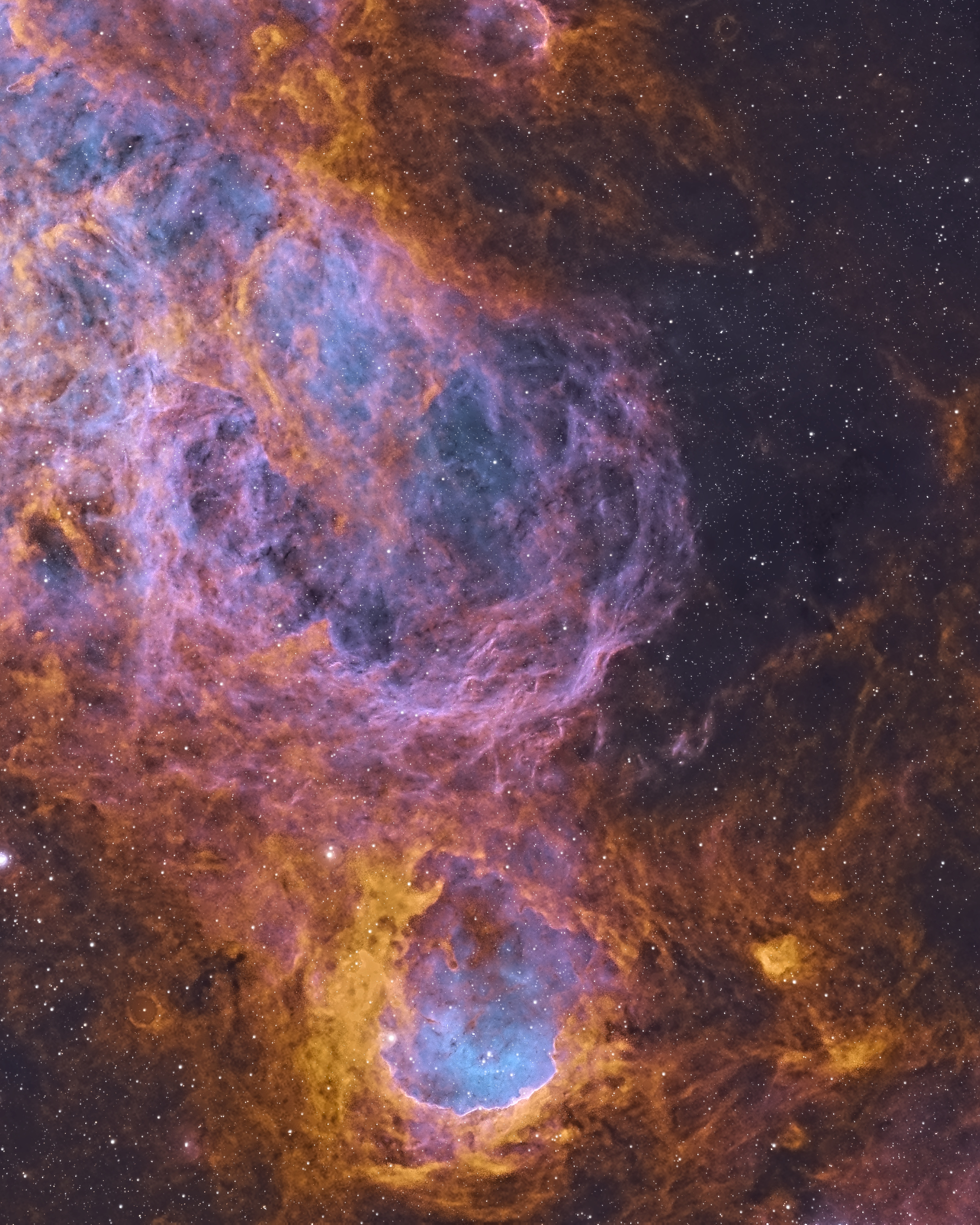
NGC 3324:縁が赤外線の塵で金色に光る丸い星雲。ウェッブが撮影した「宇宙の断崖」はこの縁の一部ですNGC 3324, its rim glowing gold with infrared dust; Webb's "Cosmic Cliffs" are part of this rim
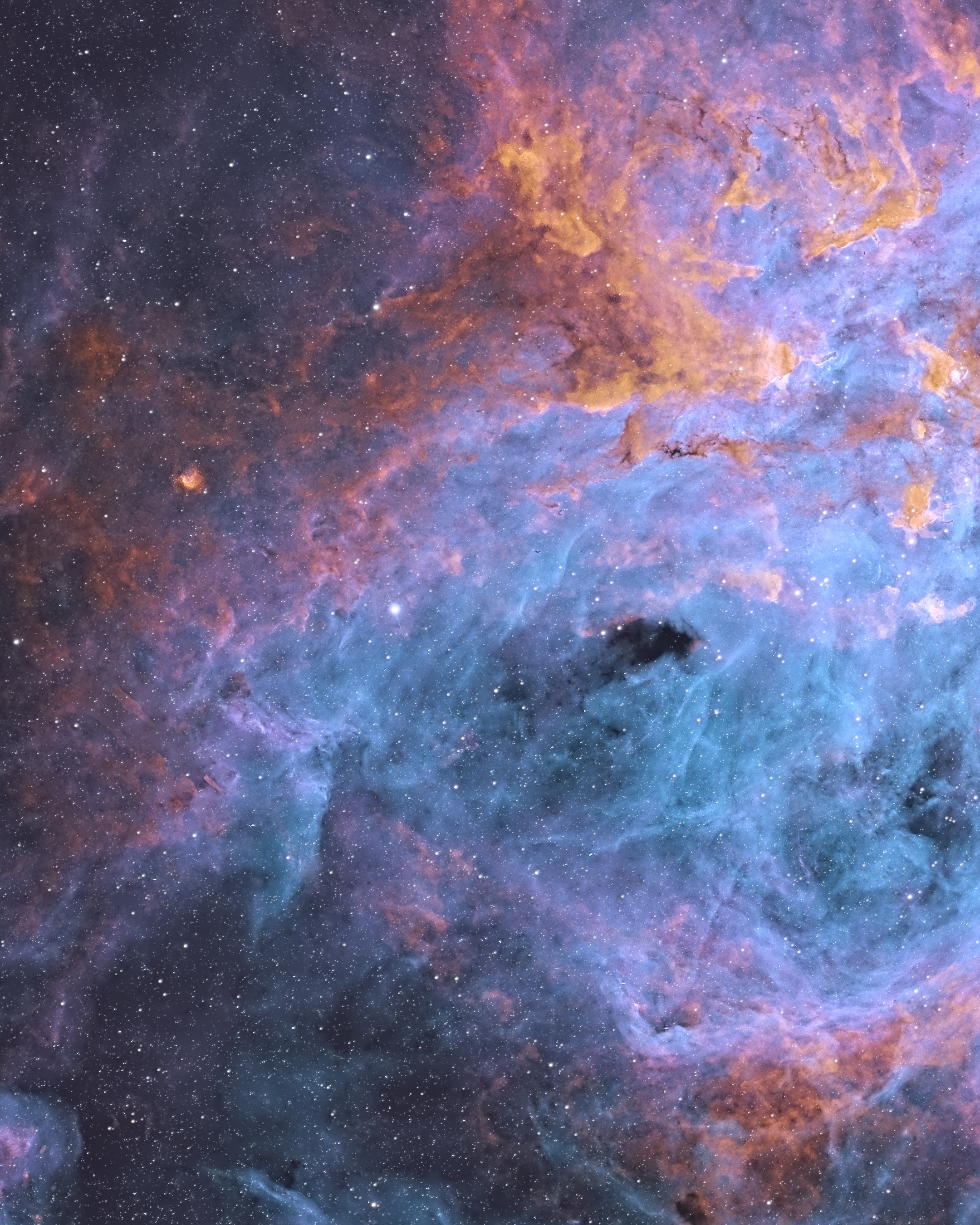
イータ・カリーナの南、酸素の多い青い領域に浮かぶ暗い雲Dark clouds in the blue, oxygen-rich region south of Eta Carinae
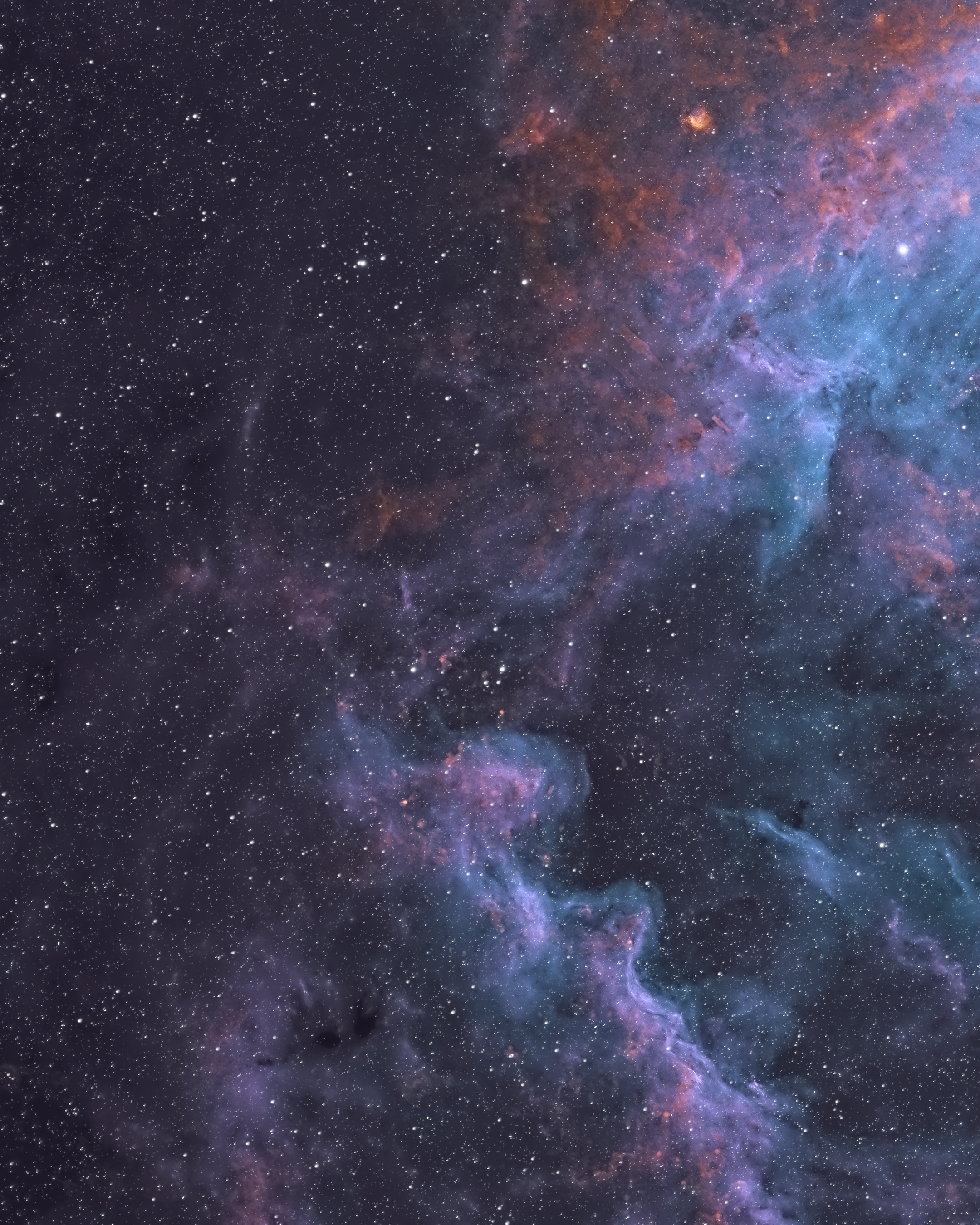
星雲の南の縁にうねる雲Billowing clouds at the nebula's southern edge
拡大画像は、より広い範囲を4/5に縮小したもので、局所的なコントラストを少し上げています。フル解像度の切り抜きは、上のフル解像度版からどうぞ。Close-ups show larger areas reduced to 4/5, with local contrast raised slightly. For full-resolution crops, use the full-resolution file above.
解説
カリーナ星雲(NGC 3372)は、南天のりゅうこつ座にある、天の川銀河でも最大級の明るい星形成領域で、距離は約7,500〜8,500光年です。この画像は、星雲を2種類の光で重ねたものです。シアン、青、ラベンダーに光るガスは、ナミビアのリモート望遠鏡で私が撮影したナローバンドの画像から。琥珀色は赤外線でしか見えない塵で、NASAの宇宙望遠鏡SPHERExが波長3.3マイクロメートルでとらえた、PAH(炭素を多く含む微粒子)の光です。星雲の若く高温の星の紫外線を受けて光っています。中心付近にイータ・カリーナが輝き、右下には丸い星雲NGC 3324があります。写野は約3.0×1.9度(満月6個分近くの幅)で、北は右です。
色の意味
- 寒色はガス(FSQ-106ED):酸素[O III]がシアン、水素Hαがペリウィンクル(青紫がかった青)、硫黄[S II]がラベンダー
- 琥珀色は赤外線の塵(SPHEREx、3.3マイクロメートル):淡いところは赤銅色、明るい稜線は金色
- いちばん暗い空は、やわらかなプラム色に持ち上げています
- 肉眼で見える色ではありません
作り方
- 光学:2026年1月4日(世界時)、ナミビアにあるリモート望遠鏡(タカハシ FSQ-106ED 屈折望遠鏡、口径106 mm、焦点距離530 mm、Moravian C3-61000 カメラ)で撮影。観測時間はSkyGemsから借りたものです。水素Hα(2.5 nm)3分×10枚、酸素[O III](3 nm)5分×10枚、硫黄[S II](2.5 nm)5分×10枚(計2時間10分)。細部、ガス、星はすべてこの画像からです
- 赤外線:NASA SPHERExの分光画像(Quick Release 2・3)を、IRSAのSPHEREx Mosaic Toolで波長3.0〜3.7マイクロメートル、1ピクセル6.15秒角のキューブにまとめました。PAHの地図は、3.29マイクロメートルのチャンネルからまわりの連続光を引いたものです。モザイクのすき間と星は、周囲から埋めています
- ESAのGaia DR3カタログの23,017個の星で位置を求め、赤外線の地図を画像に合わせました
- SPHERExのピクセルは私の画像より4倍粗いため、塵の色と明るさはSPHEREx、細かな質感はFSQ-106EDの画像から取っています(LRGBと同じ考え方)
- ガスの色を線形光で付け直し、塵をスクリーン合成で重ね、色と明るさを調整。3つのスケールで局所コントラストを上げています(HDR)
- 星はFSQ-106EDの画像から取り、ほぼ白で表示
- Web版・5K版・拡大画像は、星の明るさのピークを保ちながらフル解像度版から縮小し、軽くシャープにしています
- 自作のPythonツール(numpy、scipy、astropy)で処理。処理コードはClaude(Anthropic)の支援を受けて書き、実行しました。最終的なファイルは自分のMacで作成しています
注記
- 回折スパイク(明るい星の十字の光)は描き加えていません。
- 描き加え・削除・複製・AIによる生成はしていません。
- SPHERExのデータの出典(DOI)と謝辞は、ページの最後にあります。
About this image
The Carina Nebula (NGC 3372) is one of the largest and brightest star-forming regions in our galaxy, about 7,500–8,500 light-years away in the southern constellation Carina. This picture shows it in two kinds of light. The glowing gas, in cyan, blue and lavender, comes from my own narrowband frames taken with a remote telescope in Namibia. The amber is dust that shows only in the infrared: the 3.3 µm glow of PAHs, carbon-rich grains lit by the nebula's young, hot stars, as mapped by NASA's SPHEREx space telescope. Eta Carinae shines near the center, and the round nebula NGC 3324 sits at the lower right. The field is about 3.0 × 1.9 degrees, nearly six full Moons wide, with north to the right.
What the colors mean
- Cool tones are the glowing gas (FSQ-106ED): oxygen [O III] cyan, hydrogen-alpha periwinkle blue, sulfur [S II] lavender
- Amber is the infrared dust (SPHEREx, 3.3 µm): copper where it is faint, gold on the bright ridges
- The darkest sky is lifted to a soft plum
- These are not the colors the eye would see
How it was made
- Optical: taken remotely on 4 January 2026 (UT) with a Takahashi FSQ-106ED refractor in Namibia (106 mm aperture, 530 mm focal length, Moravian C3-61000 camera), on observing time rented from SkyGems. Hydrogen-alpha (2.5 nm) 10 × 3 min, oxygen [O III] (3 nm) 10 × 5 min, sulfur [S II] (2.5 nm) 10 × 5 min (2 h 10 min in all). These frames give all the fine detail, the gas and the stars
- Infrared: NASA SPHEREx spectral images (Quick Release 2 and 3), combined with IRSA's SPHEREx Mosaic Tool into a cube from 3.0 to 3.7 µm at 6.15″ per pixel. The PAH map is the 3.29 µm channel minus the continuum around it; gaps in the mosaic, and stars, were filled from their surroundings
- The infrared map was aligned to the picture with a plate solution on 23,017 stars of ESA's Gaia DR3 catalog
- SPHEREx pixels are four times coarser than mine, so the dust takes its color and brightness from SPHEREx and its fine texture from the FSQ-106ED frames, the same idea as LRGB
- The gas recolored in linear light; the dust added with a screen blend; colors and tones graded; local contrast raised at three scales ("HDR")
- Stars from the FSQ-106ED frames, shown near-white
- The web and 5K versions and the close-ups are reduced from the full picture keeping each star's peak, and lightly sharpened
- Processed with my own Python pipeline (numpy, scipy, astropy). The processing code was written and run with the assistance of Claude (Anthropic), and the final files were made on my own Mac
Notes
- No diffraction spikes were added.
- Nothing was added, removed, cloned or generated with AI.
- The SPHEREx data references (DOIs) and acknowledgment are at the end of this page.
利用についてUse
報道・記事でのご利用は、上記のクレジットを表記いただければご自由にどうぞ。それ以外のご利用は [email protected] までご連絡ください(All rights reserved)。News and editorial use is welcome with the credit above. For any other use, please write to [email protected] (all rights reserved).
X: @Sting1_JP · Flickr: photostream · AstroBin: この画像this picture