カッシーニが見た木星
Jupiter as Cassini saw it
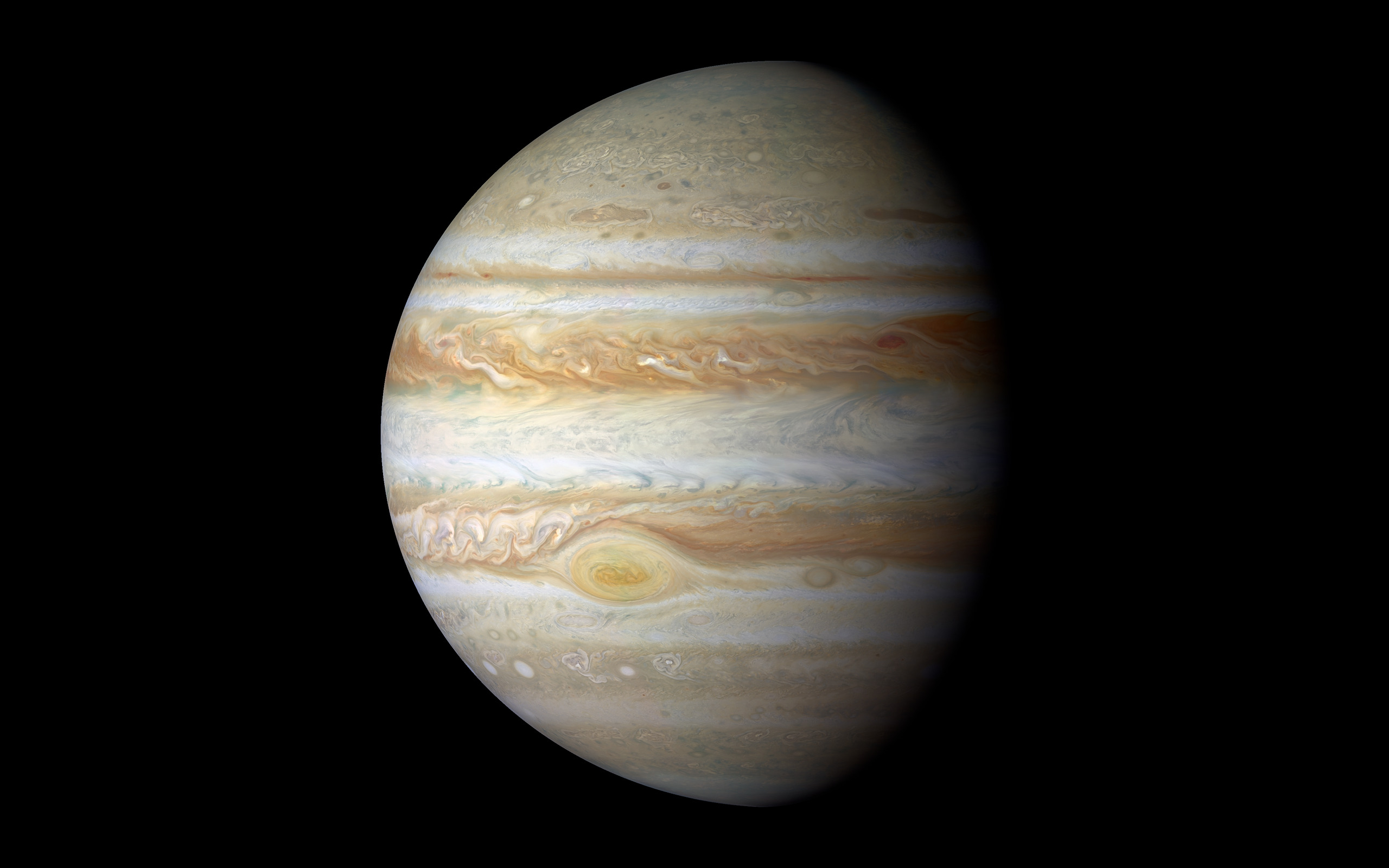
画像:NASA/JPL-Caltech/Space Science Institute/画像処理:Stefano Ivan StingaImage: NASA/JPL-Caltech/Space Science Institute · Processing: Stefano Ivan Stinga
ダウンロードDownloads
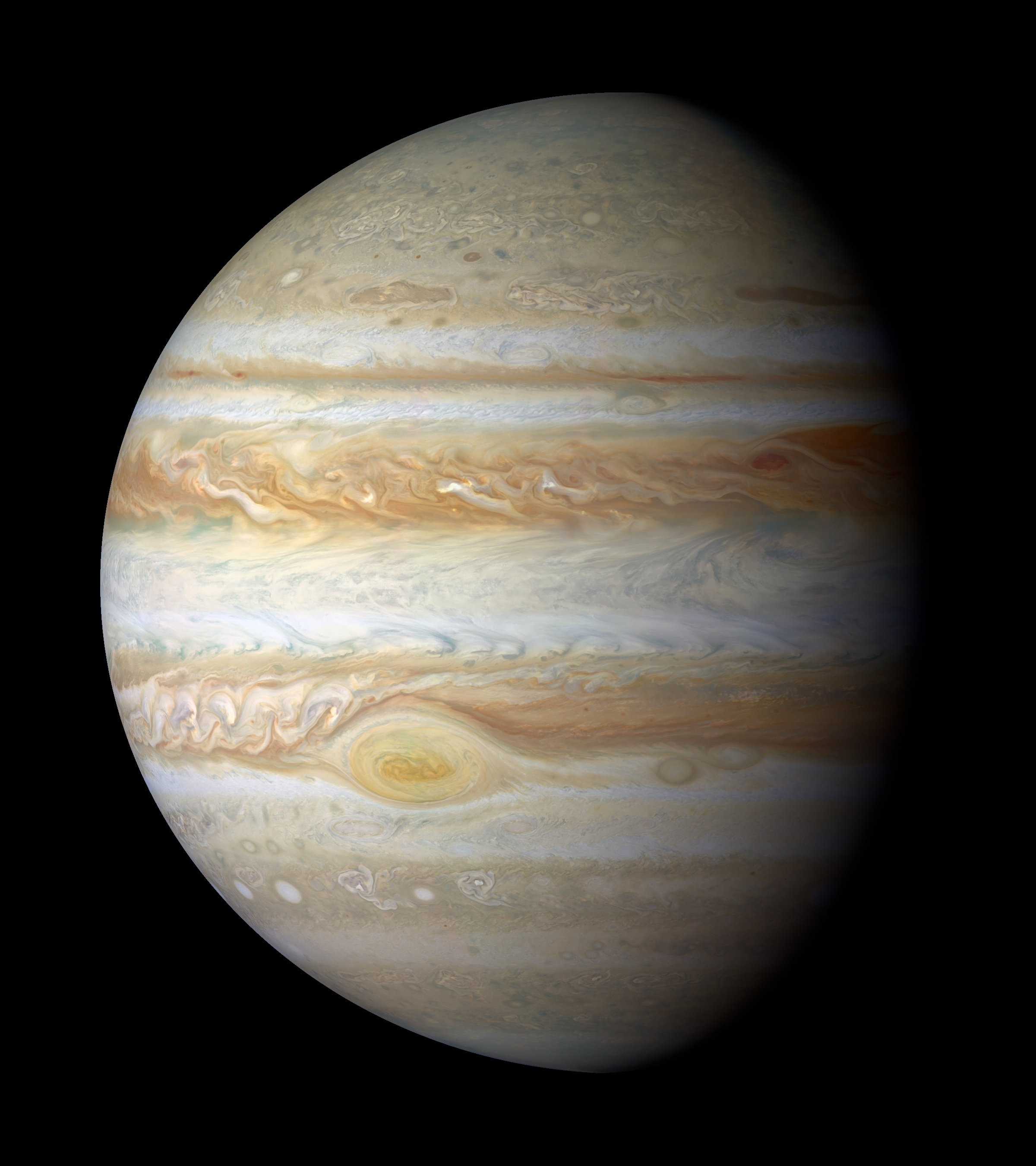
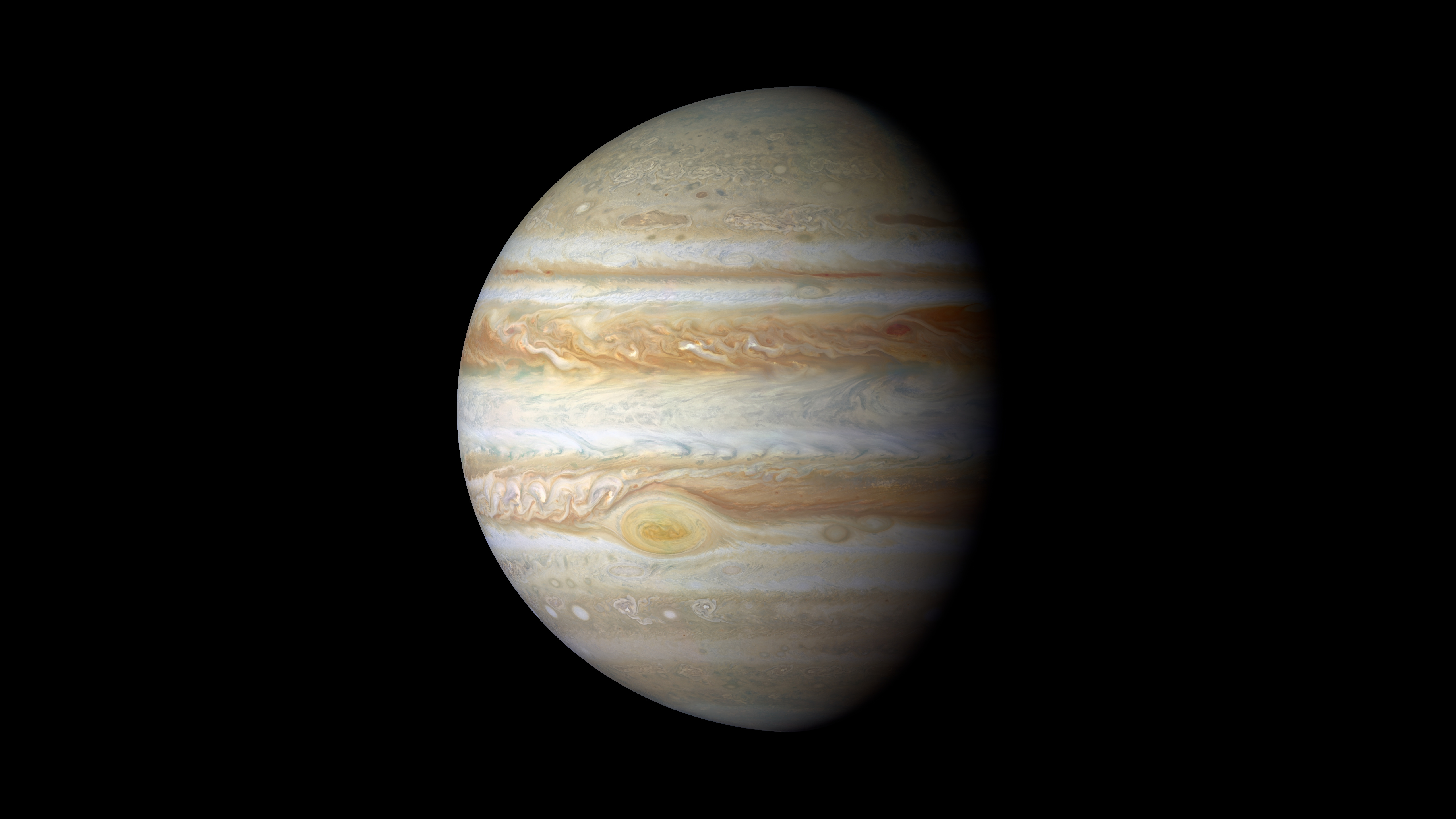
16ビットTIFF(2400×2700)はご要望に応じてお送りします · A 16-bit TIFF is available on request: X @Sting1_JP
拡大画像Close-ups (full resolution crops)
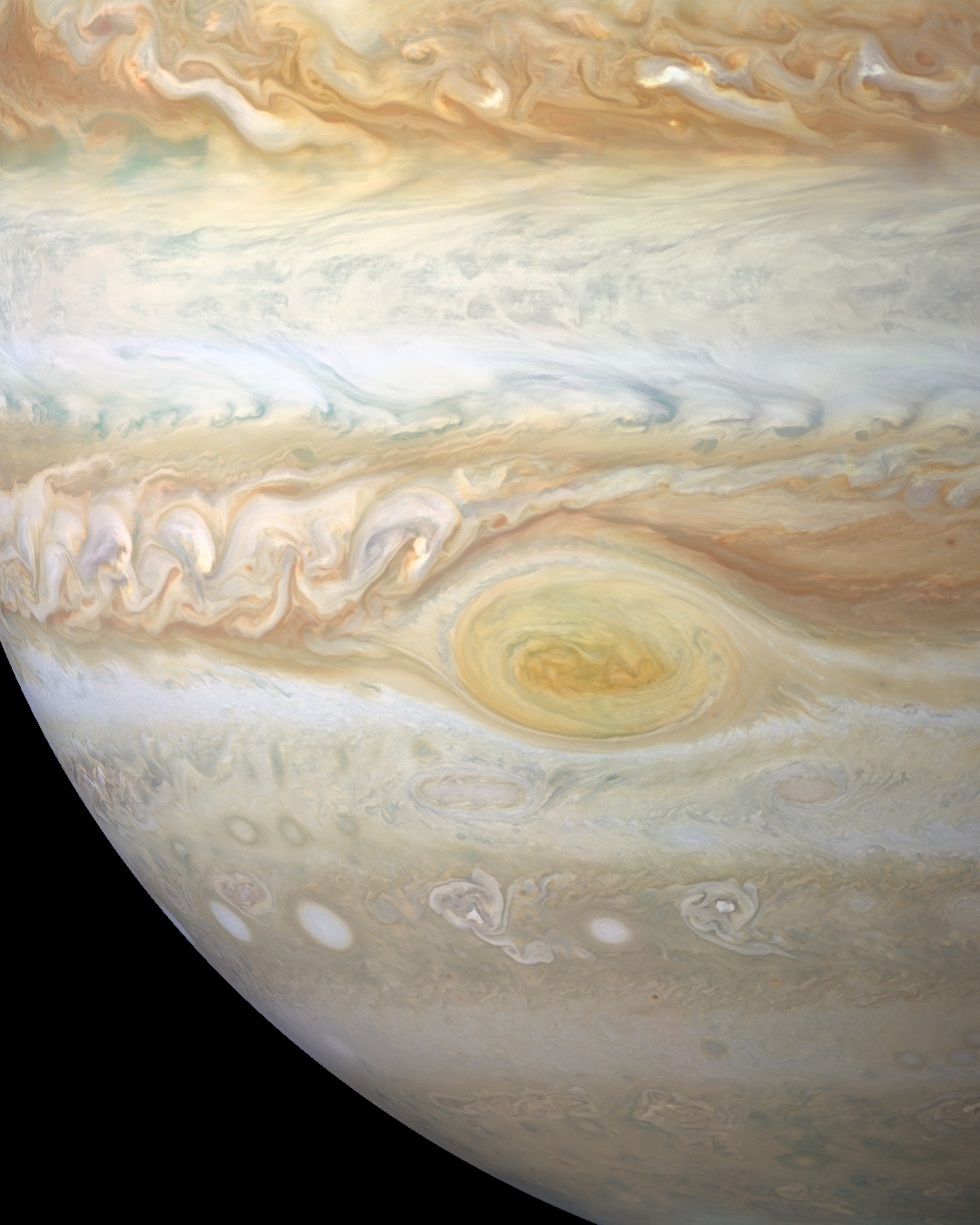
大赤斑(南緯22度付近)と周りの乱れた雲、白い楕円の渦の列The Great Red Spot (about 22°S), the turbulent clouds beside it and a row of white ovals · 1080×1350 (1:1)
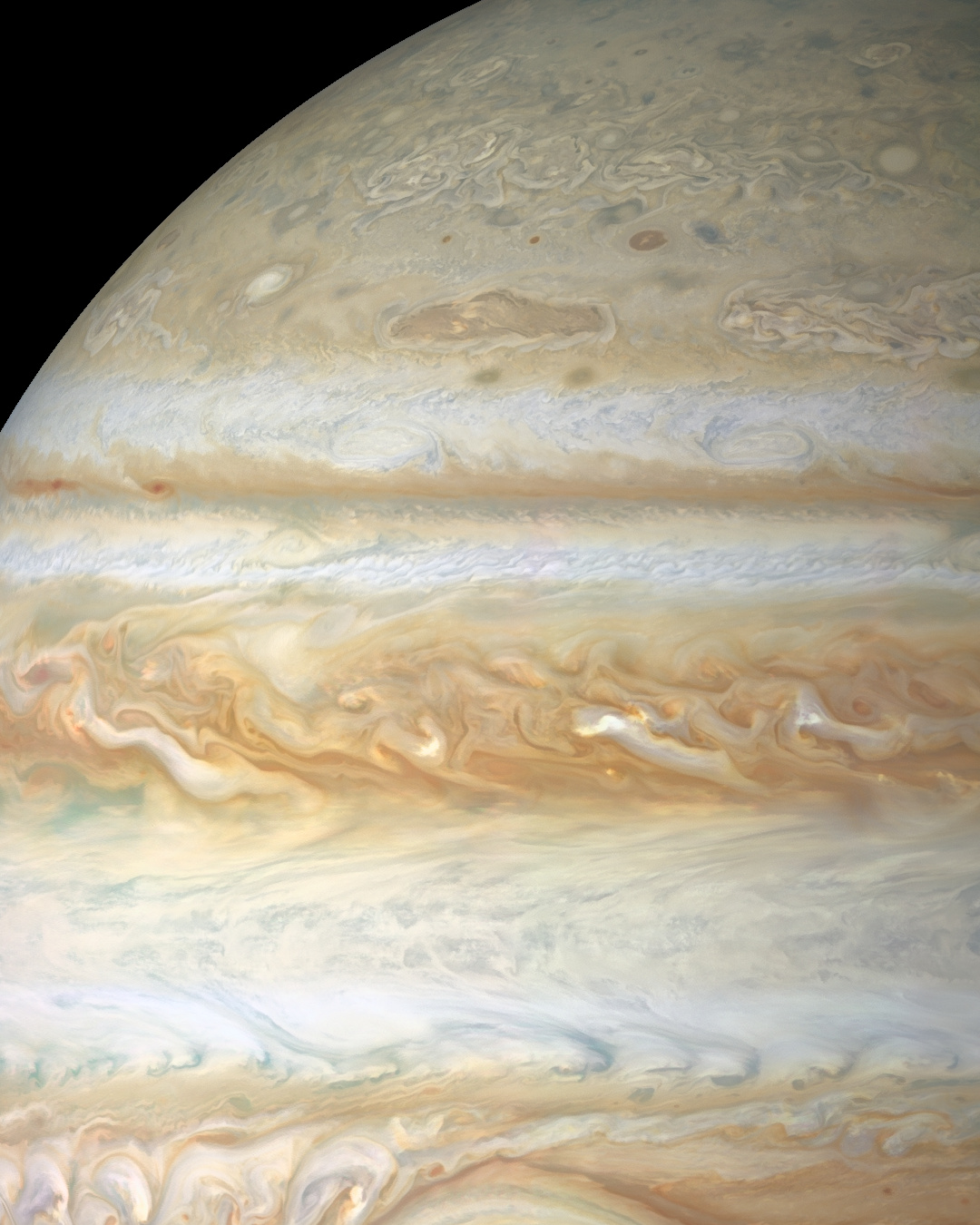
北半球:白い雲が渦巻く北赤道ベルトから惑星の縁までThe northern hemisphere: the North Equatorial Belt with swirling white clouds, up to the limb · 1080×1350 (1:1)
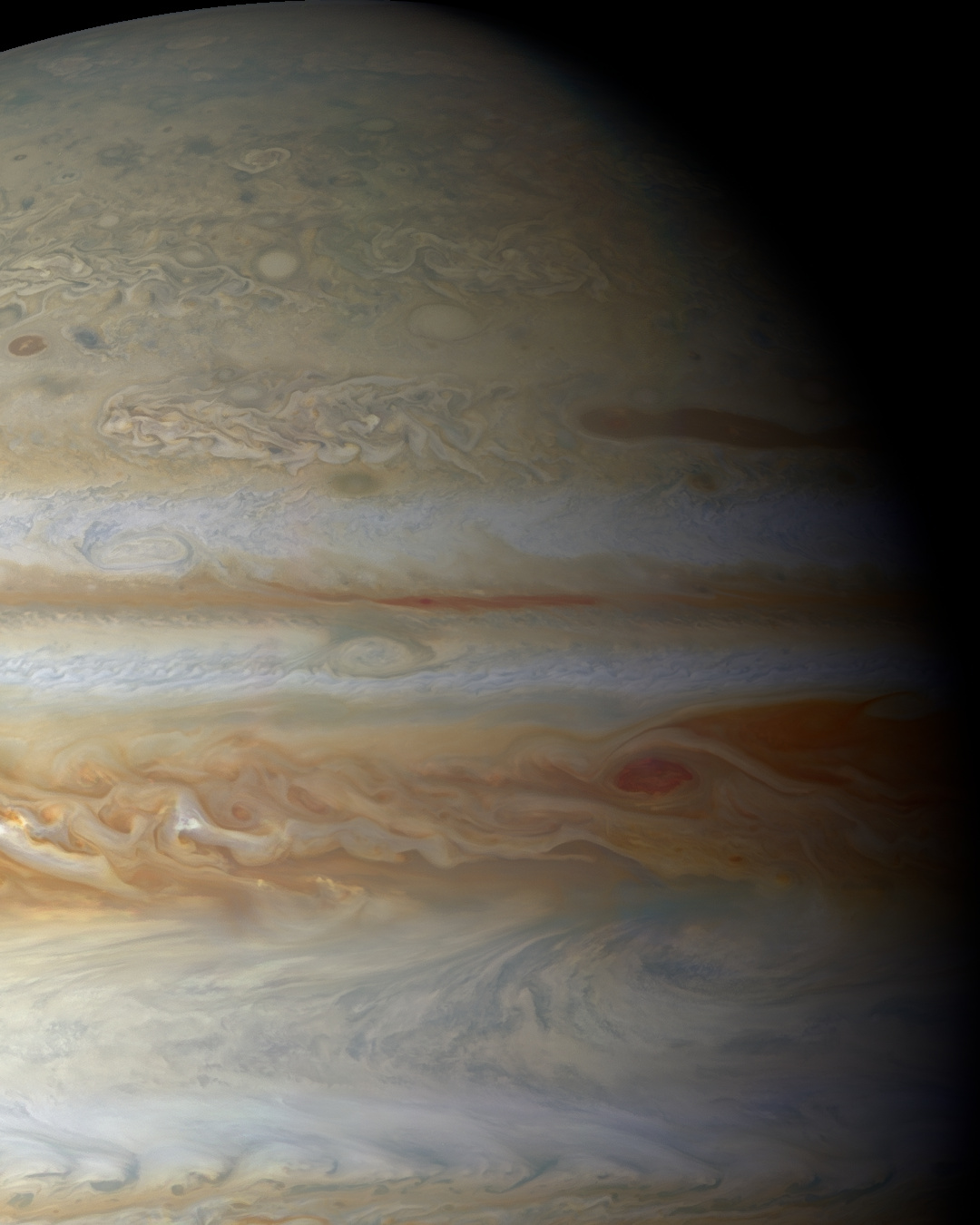
夜側へ:明暗境界に向かって暗くなる雲Toward night: clouds fading into darkness at the terminator · 1080×1350 (1:1)
解説
土星へ向かう途中のカッシーニは、2000年12月30日に木星へ最接近しました(約970万 km)。この画像はその前日、12月29日に約986万 km の距離から狭角カメラで撮影された木星の全体像です。カメラは3×3枚のモザイクを約1時間の間隔で2回撮影しており、その2回分(青・緑・750 nm、計54枚)を、ちょうど間の05:27 UTの一瞬にそろえて1枚にまとめています。南半球には大赤斑と白い楕円の渦の列、北赤道ベルトには白い雲の渦が見え、右側は夜に向かって暗くなっています。1ピクセルは約59 km です。
作り方
- NASAの惑星データシステム(PDS)の較正済みデータ(CISSCAL、I/F)と、SPICEの航法データを使用
- 各フレームの位置は、木星の明るい縁とフレーム同士の重なりから合わせ直しています
- 2回の撮影の間に雲が動いた量から緯度ごとの風速を測り、木星の自転と風で各フレームの雲を05:27 UTの位置へ移動。大赤斑の回転など風で説明できない動きも2回の差から測り、時間の比で振り分けています
- 赤(619 nm)は、この2回の撮影には含まれていないため、緑と750 nmの画像からモデル化し、その前に撮られた偏光フィルター付きの619 nm画像で約1,000 kmより大きい範囲の色を合わせています
- フィルターの特性と太陽光のスペクトルから色を変換(灰色の雲は灰色に)
注記
- カメラのぼけ(画像自体から測定、約0.7ピクセル)を補正し、細部を軽くシャープにしています。
- 見やすさのため、中間調を深め、局所的なコントラストを上げ、雲どうしの色の違いを2倍に強調しています(肉眼で見る色より鮮やかです)。数値はすべて記録しています。
- どのフレームにもデータがない小さな欠損(393ピクセル)は周囲から補っています。AIによる生成や複製、拡大はしていません。
- この撮影からは、NASA/JPLが2003年に全体像(PIA04866、27枚)を公開しています。本作は較正済みのアーカイブデータから、2回の撮影を一瞬にそろえて作り直したものです。
About this image
On its way to Saturn, Cassini passed Jupiter, coming closest on 30 December 2000 (about 9.7 million km). This portrait was taken with its narrow-angle camera the day before, on 29 December, from 9.86 million km. The camera shot a 3×3 mosaic twice, about an hour apart; this picture merges both passes (blue, green and 750 nm, 54 frames) at one moment between them, 05:27 UT. The Great Red Spot and a row of white ovals lie in the southern hemisphere, white clouds swirl in the North Equatorial Belt, and the right side fades toward night. Each pixel is about 59 km.
How it was made
- Calibrated data (CISSCAL, I/F) from NASA's Planetary Data System, with SPICE navigation
- Every frame placed from Jupiter's sunlit limb and its overlaps with the other frames
- Winds measured from how far each latitude's clouds moved between the two passes; every frame's clouds carried to 05:27 UT by Jupiter's rotation and those winds. Motion the winds don't explain, such as the Great Red Spot turning, was measured between the passes and shared out by time
- Red (619 nm) was not in these two passes: its detail is modelled from the green and 750 nm frames, and its colour on scales above about 1,000 km comes from Cassini's own 619 nm frames of an earlier polarizer sequence
- Colour from the filter curves and the solar spectrum (grey clouds come out grey)
Notes
- The camera's blur, measured from the picture itself (about 0.7 px), is undone and fine detail lightly sharpened.
- For legibility the midtones are deepened, local contrast raised and the colour differences between clouds doubled, so the colours are stronger than the eye would see. Every setting is recorded.
- Small gaps with no data in any frame (393 pixels) are filled from their surroundings. Nothing was cloned, enlarged or generated with AI.
- NASA/JPL released a portrait from this sequence in 2003 (PIA04866, 27 frames). This version is rebuilt from the calibrated archive frames, with the two passes merged at one moment.
利用についてUse
報道・記事でのご利用は、上記のクレジットを表記いただければご自由にどうぞ。それ以外のご利用は CC BY-SA 4.0 の条件に従ってください。
News and editorial use is welcome with the credit above. Other uses: CC BY-SA 4.0.
X: @Sting1_JP · Flickr: photostream