アルテミスIIArtemis II
29秒遅れの時計Running 29 seconds late
アルテミスIIのカメラの時計がずれていたらしいと、偶然気づいた話How I found out, by accident, that an Artemis II camera seems to have had the wrong time

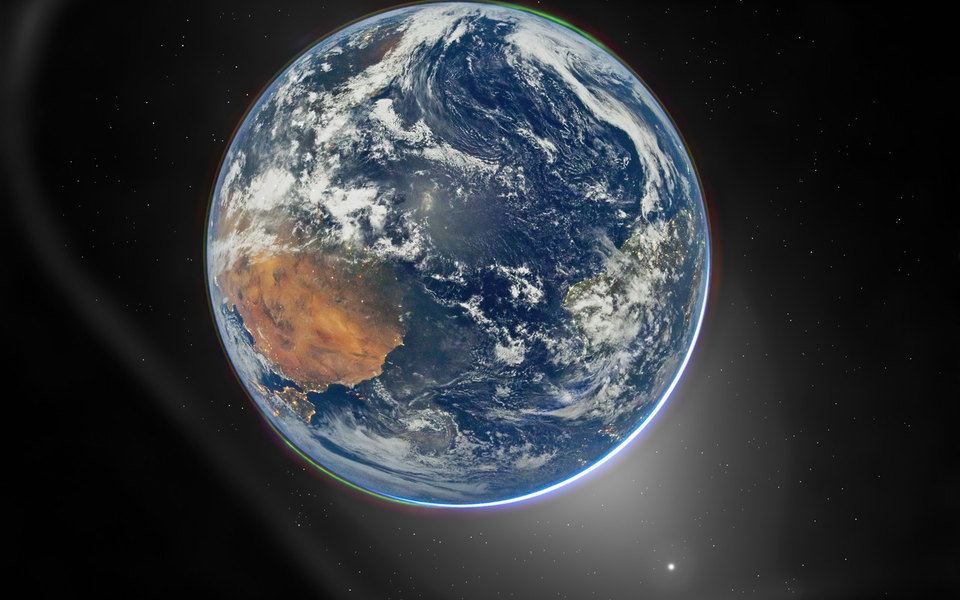
2026年4月3日(世界時)、オリオン宇宙船を月へ向かわせる噴射の約30分後に、リード・ワイズマン船長がオリオンの窓からニコンD5で地球の夜側を撮影しました。NASAはこの1枚を「Hello, World」(art002e000192)として公開しています。記録されている時刻は00:27:39(世界時)です。On 3 April 2026 (UTC), about half an hour after the burn that sent Orion toward the Moon, Commander Reid Wiseman photographed Earth's night side through one of Orion's windows with a Nikon D5. NASA released that frame as "Hello, World" (art002e000192). Its time stamp says 00:27:39 UTC.
実際に撮影されたのは、その約29秒後、00:28:08ごろだったと私は考えています。気づいたのはまったくの偶然で、決め手になったのは雷でした。I now think it was taken about 29 seconds later, close to 00:28:08. I found this by accident, and the evidence came from thunderstorms.
何かがおかしいSomething was off
私はこのカメラで撮られた生データ46枚を重ねて、よりきれいな1枚「Hello, World リメイク」を作っていました。46枚は約10分にわたって撮られていて、10分もあれば何もかもが動きます。オリオンは地球中心から約16,600 km(高度約10,000 km)の位置を、秒速6.8 kmで進んでいました。地球は自転し、雲も流れていきます。I was stacking 46 raw frames from that camera into one cleaner picture, the Hello, World Remake. The frames span ten minutes, and in ten minutes everything moves. Orion was about 16,600 km from Earth's center (about 10,000 km up) and traveling at 6.8 km/s. Meanwhile Earth was turning and the clouds were drifting.
コマを正確に重ねるには、これをすべてモデルにする必要がありました。オリオンの経路には、JPL Horizons にあるNASA自身の軌道データを使いました。ところがモデルは、物理的に説明のつかない補正をいつまでも求めてきます。カメラの時計が30秒ほど遅れていて、どのコマも記録時刻の約30秒あとに撮られたと仮定すると、問題のほとんどが消えました。To line the frames up I had to model all of it, with Orion's path taken from NASA's own trajectory in JPL Horizons. The model kept asking for corrections that made no physical sense. Most of the trouble went away if I assumed the camera's clock was about half a minute behind, so that each frame was really taken half a minute after its time stamp.
話がうますぎます。私自身のミスである可能性も十分ありました。必要なのは、自分のモデルをまったく使わない検証でした。That was too convenient, and it could easily have been my own mistake. I needed a test that didn't use my model at all.
雷を時計にするLightning as a clock
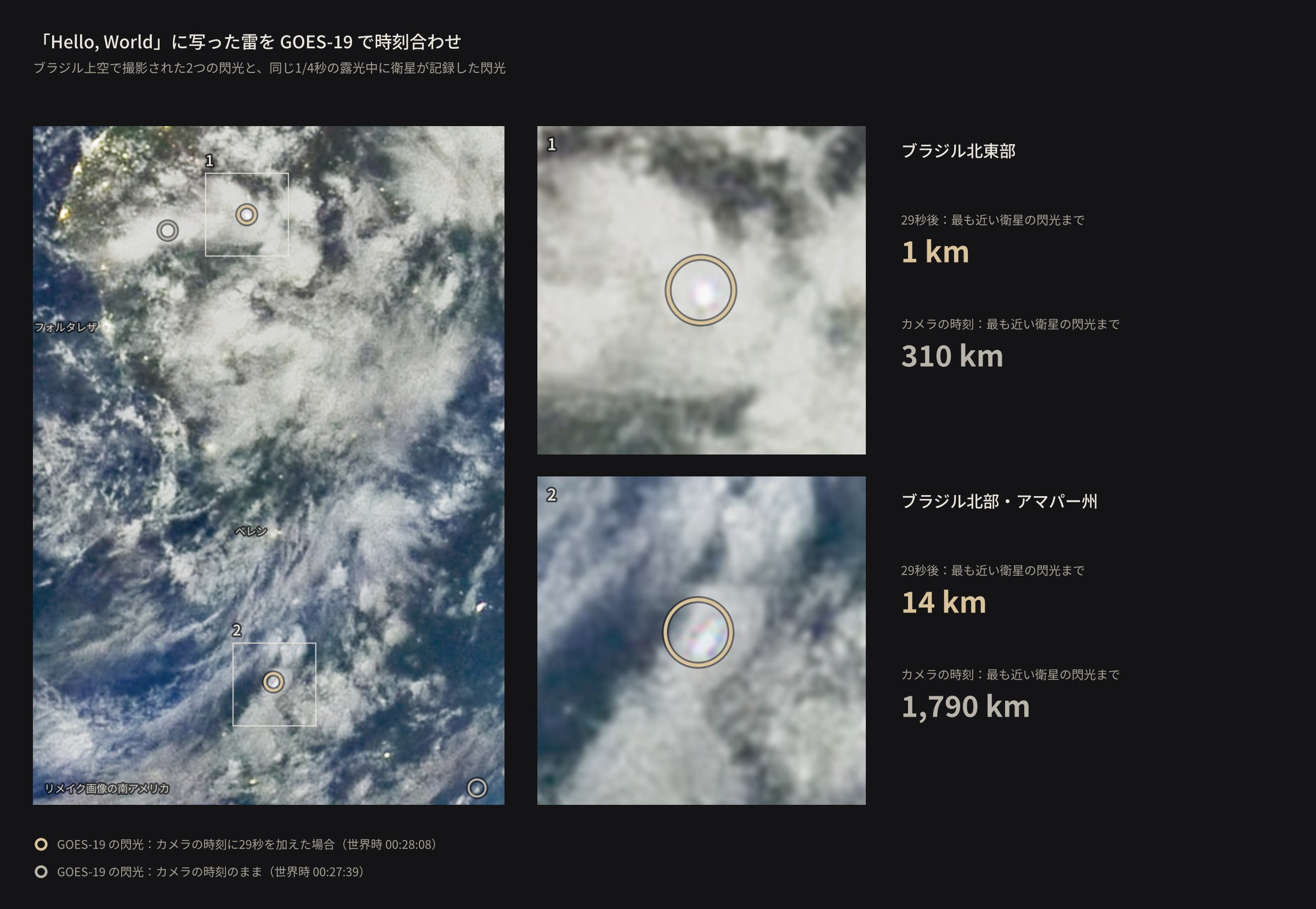
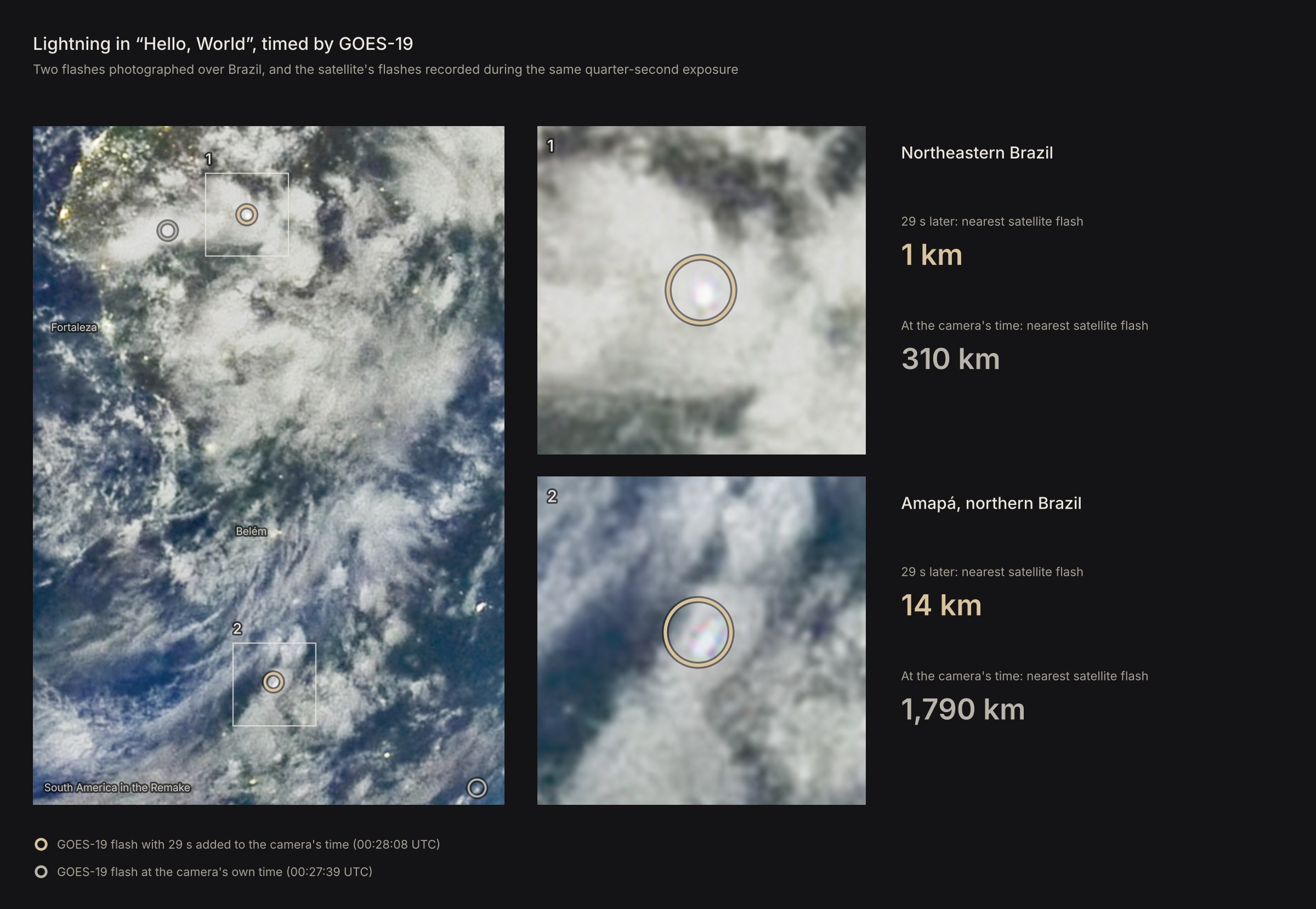
その手がかりは、写真の中にすでにありました。中央アフリカと南アメリカの上空では、いくつかのコマに雷が写っています。ある露出には写っていて、次の露出では消えている明るい点です。NASAの科学レポートも、「Hello, World」自体にコンゴ盆地とアマゾン上空の雷が写っていることを指摘しています。ただ、私の知る限り、その閃光を時刻の確認に使った人はいませんでした。The test was already in the photos. Over central Africa and South America, some frames show lightning: bright spots that are there in one exposure and gone in the next. NASA's science report had already pointed out lightning over the Congo basin and the Amazon in "Hello, World" itself. As far as I know, nobody had used those flashes to check the time.
雷は宇宙から24時間見張られていて、閃光の一つひとつに時刻が付いています。西経75度の上空に静止するアメリカ海洋大気庁(NOAA)のGOES-19は、2ミリ秒ごとに撮像する雷マッパー(GLM)を積んでいます。写真の前後40分間に記録された閃光は32,028個。経度0度の上空では、欧州気象衛星開発機構(EUMETSAT)のMeteosat MTG-I1が、雷イメージャー(LI)でアフリカとヨーロッパを同じように見ています。Lightning is watched from orbit around the clock, and every flash gets a time. NOAA's GOES-19, parked over 75° W, carries the Geostationary Lightning Mapper, which takes a picture every two milliseconds. In the 40 minutes around the photos it logged 32,028 flashes. Over 0° longitude, EUMETSAT's Meteosat MTG-I1 does the same for Africa and Europe with its Lightning Imager.
カメラの時計が正しければ、写真の閃光には、同じ場所・同じ瞬間に衛星の閃光があるはずです。時計がずれていれば、カメラの時刻を正しい量だけずらしたときにだけ、両者が対になります。そこで、カメラの時刻を前後に最大10分ずらしながら何千通りものずれを試し、それぞれで対になる閃光を数えました。If the camera's clock was right, a flash in a photo should have a satellite flash at the same place and the same moment. If the clock was off, they should pair up only after I shift the camera's times by the right amount. So I tried thousands of shifts, moving the camera's times earlier or later by up to ten minutes, and counted the pairs for each one.
最初の試行では、カメラの時刻を約29秒遅らせたとき(+29秒のずれ)に11組が一致し、ずらさない場合は4組でした。とはいえ、11組の一致だけでは証拠になりません。どれもブラジル北東部の一つの雷雲群に集中していて、アマゾン西部の雷雲はまったく一致しなかったのです。そこで、何が確かめられれば決着するかを書き出しました。前もって立てた予測もその一つです。GOES-19からは見えないアフリカ上空の閃光も、Meteosatのデータで同じ29秒に一致しなければならない、というものです。My first try gave 11 pairs when I moved the camera's times about 29 seconds later (a shift of +29 seconds), against 4 with no shift. Eleven coincidences aren't proof. They were all in one storm complex in northeastern Brazil, and the storms over the western Amazon didn't match at all. So I wrote down what would settle it, including one prediction made in advance: the flashes over Africa, which GOES-19 can't see, would have to land on the same 29 seconds in Meteosat's data.
翌日、古いモデルをいったん脇に置き、新しいコードで検証を一から作り直しました。各コマの向きはそのコマに写った星から、オリオンの位置はHorizonsから求めます。The next day I set the old model aside and built the test again from scratch, with new code. The direction each frame was pointing now comes from the stars in that frame, and Orion's position comes from Horizons.
GOES-19との比較では、鋭いピークがひとつ現れました。地球全体が写っているコマには、GOES-19も記録した雷雲の中の強い閃光が38個あり、約+29秒ずらすと38個すべてが一致します。これらはギアナ地方からブラジル南部まで、11の別々の雷雲システムに属していて、11すべてが一致します。前後10分以内のほかのずれでは、偶然一致する閃光は7個ほどで、16個を超えることはありません。最初の試行では一致しなかったアマゾン西部の雷雲も、今度は一致しました。古いモデルが、そのうちの一つを本来の位置から約300 kmずれた場所に置いていただけでした。The GOES-19 comparison shows a single sharp spike. In the frames that show the whole Earth, there are 38 strong flashes in storms that GOES-19 also recorded, and all 38 match at a shift of about +29 seconds. They belong to 11 separate storm systems, from the Guianas to southern Brazil, and all 11 match. At any other shift within ten minutes either way, about 7 flashes match by chance and never more than 16. The western Amazon storms, which hadn't matched in my first try, match now too. My old model had simply put one of them about 300 km from where it really was.
次は予測の検証です。アフリカとその周辺の上空で、Meteosatも記録した雷雲の中の閃光164個のうち、約+29秒で162個が一致しました。雷雲の活動がとても活発だったため、間違ったずれでも偶然で約64個は一致します。それでも、データのある範囲(7分前から3分後まで)のどこでも、88個を超えることはありません。そこで、ずっと厳しい条件でも試しました。Meteosatの閃光が20 km以内にあり、時刻の許容幅はまったく認めない、という条件です。それでも164個のうち155個が一致し、間違ったずれでは約15個、最大でも29個でした。Then I checked the prediction. Of 164 flashes over and around Africa, in storms that Meteosat also recorded, 162 match at about +29 seconds. Those storms were so busy that even a wrong shift matches about 64 flashes by chance, though never more than 88, anywhere in the range the data cover (7 minutes before to 3 minutes after). So I also ran a much stricter test, counting a match only when a Meteosat flash was within 20 km, with no allowance for timing at all. Even then, 155 of the 164 match, against about 15 at a wrong shift and never more than 29.
2つの衛星の時計も、互いに合っています。両方が記録した閃光では、時刻の差は0.126秒で一定で、ばらつきは数ミリ秒です。これは、光がその高さの衛星に届くまでにかかる時間です。GOES-19のファイルには閃光が起きた時刻が、Meteosatのファイルには光が届いた時刻が記録されているようです。The two satellites' clocks agree with each other as well. On flashes that both recorded, their times differ by a fixed 0.126 seconds, and that difference varies by only a few thousandths of a second. That is how long light takes to reach a satellite at that height. GOES-19's files give the time the flash happened, and Meteosat's appear to give the time its light arrived.


この結果を崩せないかも試しました。明るさのしきい値、一致とみなす距離(10〜150 km)、時刻の許容幅を変え、データを半分ずつに分けても調べました。妥当な設定なら、ピークはどれも28.6〜29.2秒に来ます。時刻の許容幅をまったく認めない場合は、どちらの衛星でもピークは28.8〜28.9秒に来ます。コマの時刻をシャッフルすると、ピークは消えます。最も確からしい値は約28.9秒です。I tried to break the result. I changed the brightness threshold, the match distance (10 to 150 km) and the timing tolerance, and I ran each half of the data on its own. Every reasonable version peaks between 28.6 and 29.2 seconds. With no timing tolerance at all, both satellites peak between 28.8 and 28.9 seconds. When I shuffle the frame times, the peak disappears. My best estimate is about 28.9 seconds.
星も同じ答えThe stars agree
各コマに写った星からも、さらに2つの検証ができます。オリオンが動くにつれて、地球は星々を背景に毎秒約0.9分角ずつ動いて見えます。29秒の誤差があれば、地球は約26分角(0.5度弱)、画像上で約26ピクセルずれることになります。The stars in each frame give two more checks. As Orion moves, Earth slides across the stars at about 0.9 arcminutes per second. A 29-second error therefore puts Earth about 26 arcminutes (a little under half a degree), some 26 pixels, out of place.
星で各コマの向きを固定すると、地球の縁がNASAの軌道と最もよく合うのは、約+28秒ずらしたときです。街明かりでは、2つの別々のコマの組で+28.3秒と+28.9秒になり、53の都市がおおむね0.03°(約3 km)以内で本来の位置に来ます。ずらさないと、どのコマでも地球の位置が合いません。Once the stars fix where each frame was pointing, Earth's outline lines up best with NASA's trajectory when the times are shifted by about +28 seconds. City lights give +28.3 and +28.9 seconds in two separate sets of frames, with 53 cities typically within 0.03° (about 3 km) of where they should be. At zero shift, Earth is out of place in every frame.
ただし、この2つの検証では、間違っているのがカメラの時計なのかNASAの軌道なのかは区別できません。どちらでも見え方は同じだからです。雷なら区別できます。衛星は自分の時計で時刻を刻んでいるからです。But these checks can't say whether the camera's clock was wrong or NASA's trajectory was. Both would look the same. Lightning can tell them apart, because the satellites keep their own time.
NASAも似たずれに気づいていたNASA had seen something similar
クルーのカメラの時刻のずれに気づいたのは、私が最初ではありませんでした。10月7日に公開されたNASAの「Artemis II Preliminary Lunar Science Report」(月科学の速報レポート)は、4月6日の月フライバイで、別の2台のカメラにずれを見つけています。チームは、暫定の軌道に沿った3Dレンダリングを写真に合わせました。もう1台のD5で撮られた「地球の出」の写真は、記録時刻より14.2秒あとの時刻で一致し、このカメラも遅れていました。ニコンZ9で撮られた「地球の入り」は24.5秒前の時刻で一致し、こちらは進んでいました。It turned out I wasn't the first to catch one of the crew's cameras with the wrong time. NASA's Artemis II Preliminary Lunar Science Report, released on 7 October, found offsets in two other cameras during the lunar flyby on 6 April. The team matched 3D renders to the photos along a preliminary trajectory. The Earthrise photo, taken with the other D5, fits a time 14.2 seconds later than its time stamp, so that camera was running behind too. Earthset, taken with a Nikon Z9, fits 24.5 seconds earlier, so that one was ahead.
レポートは、これが「暦(軌道)よりもカメラの時計の不正確さを示している可能性がある」としつつ、最終的な答えは今後の解析に委ねています。3台目のこのカメラについては、雷の結果から、ずれていたのは時計のほうだったと考えられます。軌道の時刻は、約1秒以内で正しいと見られます。The report says this "might tend to point toward inaccuracy of the camera clocks rather than the ephemeris" (the ephemeris is the spacecraft's computed trajectory), and leaves the full answer to future analysis. For this third camera, the lightning points to the clock. The trajectory's times look right to within about a second.
この結果の意味What it means
NASAのアーカイブが間違っているわけではありません。カメラが記録した時刻を、そのまま正確に収めています。NASA's archive isn't wrong. It records the camera's own time, exactly as the camera wrote it.
なぜ時計がずれていたのかは分かりません。時計が少しずつずれていったのかもしれませんし、合わせる元になった時計そのものがずれていたのかもしれません。また、調べたのは1台のカメラ(D5、製造番号3500017)と、10分間の一連の撮影だけです。同じ夜のもう1台のD5のコマには、使える星が写っていません。I can't say why the clock was off. It may have drifted, or it may have been set from a clock that was itself off. I also checked only one camera (D5 serial 3500017) and one ten-minute sequence. The other D5's frames from that night show no usable stars.
写真としては、30秒の違いは何も変えません。ただ、時刻をもつほかのデータとこれらのコマを比べるときには重要です。29秒あれば、オリオンは約200 km進むからです。そして「Hello, World」が撮られたのは、00:28:08(世界時)ごろだった可能性が高いことになります。For the picture, half a minute changes nothing. It matters when you compare these frames with anything else that carries a time, because in 29 seconds Orion travels about 200 km. And it means "Hello, World" was most likely taken at about 00:28:08 UTC.
カメラの時計が30秒ずれているのは、ごくありふれたことです。予想していなかったのは、そのずれを、16,000 km以上離れた2つの大陸の雷雲から測れたことでした。また私の知る限り、地球低軌道の外からクルーが撮影した雷の閃光が、衛星の雷センサーと一つひとつ照合されたのも、これが初めてです。A camera clock that is half a minute off is ordinary. I didn't expect to be able to measure it from thunderstorms on two continents, more than 16,000 km away. To my knowledge, these are also the first lightning flashes photographed by a crew beyond low Earth orbit to be matched flash by flash to satellite lightning sensors.
データとコードは、ご要望があればお送りします。The data and code are available on request.
検証の詳細The fine print
雷との照合をどこまで信頼できるか知りたい方のために、方法と、誤解につながりうる点をまとめます。For readers who want to know how far to trust the lightning match, here is how it was done and where it could mislead.
一致の条件。写真の閃光は、80 km以内に衛星の閃光があり、それが露出時間と重なるとき(前後0.15秒の許容幅つき)に「一致」とします。露出時間は1/15〜1/4秒でした。実際の対は、この条件よりずっと近くにあります。距離は典型的にGOES-19で9 km、Meteosatで8 kmで、10組のうち9組は25 km以内です。間違ったずれで偶然できる対は、典型的に40 km以上離れています。図3は、図1と同じ条件でのこの距離を示しています。GOES-19の閃光38個のうち32個、Meteosatの閃光164個のうち160個で、20 km以内に衛星の雷があります。上で述べたMeteosatの厳しいテストでは時刻の許容幅を認めないため、155個になります。What counts as a match. A photo flash matches when a satellite flash lies within 80 km of it and overlaps the exposure in time, allowing 0.15 seconds either side. The exposures lasted 1/15 to 1/4 second. The real pairs are much closer than the rule requires: typically 9 km apart for GOES-19 and 8 km for Meteosat, with nine in ten inside 25 km. Chance pairs at wrong shifts are typically more than 40 km apart. Figure 3 shows these distances for the same test as Figure 1: 32 of the 38 GOES-19 flashes and 160 of the 164 Meteosat flashes have satellite lightning within 20 km. The stricter Meteosat test above drops the timing allowance, which is why it counts 155.


数えた閃光。写真の閃光は、衛星のデータをまったく使わず、明るさだけで選びました。GOES-19の視野に85個、Meteosatの視野に241個です。上の38個と164個は、そのうち、衛星がその夜のいずれかの時刻に記録した雷から80 km以内にあるものです。この選び方はカメラの時計に左右されないので、ピークを作り出すことはありません。残りの124個は、記録された雷雲から離れていて、最も近い雷まで典型的に約1,000 kmあります。そのうち84個は、偽の検出が多発する1枚のコマに由来し、対照テストでの誤検出の大半もこのコマから出ています。約20個は、正体の分からない孤立した明るい点です。明るさのしきい値を厳しくしても、結果はほとんど変わりません。最も明るい閃光では、16個中16個、71個中71個が一致します。しきい値を緩めるとノイズが混じって一致率は下がりますが、ピークは同じずれに残ります。Which flashes were counted. I picked the photo flashes by brightness alone, without using any satellite data: 85 in GOES-19's view and 241 in Meteosat's. The 38 and 164 above are the ones within 80 km of lightning that the satellite recorded at any time that night. That selection doesn't depend on the camera's clock, so it can't create the spike. The other 124 are away from any recorded storm, typically about 1,000 km from the nearest lightning. Most of them, 84, come from a single frame that produces spurious detections; the same frame gives most of the false alarms in a control test. About twenty are isolated bright points that I haven't identified. A stricter brightness threshold changes little: of the brightest flashes, 16 of 16 and 71 of 71 match. A looser one lets in noise and the match rate falls, but the spike stays at the same shift.
偶然の可能性。確率の数字は示しません。同じ雷雲の閃光は互いに独立ではなく、計算式では結果を過大に見せてしまうからです。公平な物差しは、同じ雷雲と同じ選び方のまま試した「間違ったずれ」です。その場合に一致するのは、38個中で典型的に7個、164個中で64個、最大でも16個と88個です。どの時刻がどのコマのものかをシャッフルすると、+29秒で一致するのは最大でも19個と87個でした。Chance. I don't quote a probability, because flashes from one storm aren't independent and a formula would overstate the case. The fair comparison is with the wrong shifts, which use the same storms and the same selection. They typically match 7 of 38 and 64 of 164, and at most 16 and 88. When I shuffle which time goes with which frame, the most I get at +29 seconds is 19 and 87.
閃光だけでなく、雷雲ごとに。活発な雷雲は、多くのずれで一致してしまいます。そこで、雷雲システム全体でも数えました。GOES-19では、+29秒で11システムすべての閃光が残らず一致し、ほかのずれでは最大でも2システムです。そのうち4つは、それだけで29秒を特定します。前後10分以内のほかのどのずれでも、そのシステムの閃光がすべて一致することはありません。Meteosatでは18システムのうち16が残らず一致し、ほかのずれでは最大でも4システムです。大きめのシステムのうち4つが同じように29秒を特定し、その一つは30枚のコマにわたる50個の閃光を含みます。大きなシステムをどれか一つ除いても、ピークは動きません。Storms, not just flashes. A busy storm can match at many shifts, so I also counted whole storm systems. For GOES-19, all 11 match in full at +29 seconds, meaning every one of their flashes matches; at any other shift, at most 2 do. Four of them point to 29 seconds by themselves: no other shift within ten minutes matches all of their flashes. For Meteosat, 16 of 18 systems match in full, against at most 4 at any other shift, and four of the larger ones point to 29 seconds the same way, including one with 50 flashes across 30 frames. Leaving out any single large system doesn't move the spike.
観測機器の限界。GOES-19のセンサーの画素は最も細かいところで8 kmで、閃光の位置を決めるには、衛星側も私も雲頂の高さを仮定する必要があります。そのため、10〜20 kmの位置の誤差は避けられません。時刻については、衛星間の0.126秒は考慮済みです。光がオリオンに届くまでにさらに約0.05秒かかり、カメラが露出のどの瞬間を記録するのかは分かりません。合わせて0.1秒ほどになるので、「約29秒」(28.8〜29.1秒)と書いています。The instruments' limits. GOES-19's sensor sees in 8 km pixels at best, and both the satellite's processing and mine have to assume how high the cloud tops are to place a flash, so position errors of 10 to 20 km are expected. On timing, the 0.126 seconds between the satellites is accounted for. Light took about another 0.05 seconds to reach Orion, and I don't know which instant of an exposure the camera stamps. Together these come to about a tenth of a second, which is why I say "about 29 seconds" (28.8 to 29.1).
残る疑問がひとつ。「Hello, World」そのものに写っている閃光は、位置は一致しますが、GOES-19がそこで最初にとらえた光は、露出が終わったはずの時刻の約0.2秒あとです。38個のうち、時刻の許容幅が必要なのはこの1個だけで、理由は分かりません。One loose end. The flash in "Hello, World" itself matches in position, but GOES-19's first pulse there comes about 0.2 seconds after the exposure should have closed. It is the only one of the 38 that needs the timing allowance, and I don't know why.
出典とクレジットSources and credits
- 生データ:Artemis II Lunar Science Team (2026). Artemis II Crew Camera Data Bundle, PDS Cartography and Imaging Sciences Node, doi:10.17189/x52v-tb80Raw frames: Artemis II Lunar Science Team (2026). Artemis II Crew Camera Data Bundle, PDS Cartography and Imaging Sciences Node, doi:10.17189/x52v-tb80
- NASA, Artemis II Preliminary Lunar Science Report(2026年10月7日)、§5.10.1、§7.6(公開ページ)NASA, Artemis II Preliminary Lunar Science Report (7 October 2026), §5.10.1 and §7.6 (release page)
- 雷:GOES-19 雷マッパー(GLM)レベル2(NOAA)、MTG-I1 雷イメージャー(LI)レベル2(EUMETSAT)Lightning: GOES-19 Geostationary Lightning Mapper, Level 2 (NOAA); MTG-I1 Lightning Imager, Level 2 (EUMETSAT)
- 軌道:JPL Horizons、オリオン(−1024)、NASA/JSCの航法解Trajectory: JPL Horizons, Orion (−1024), NASA/JSC navigation solution
- 星:HYG Database v4.1(astronexus、CC BY-SA 4.0)Stars: HYG Database v4.1 (astronexus, CC BY-SA 4.0)
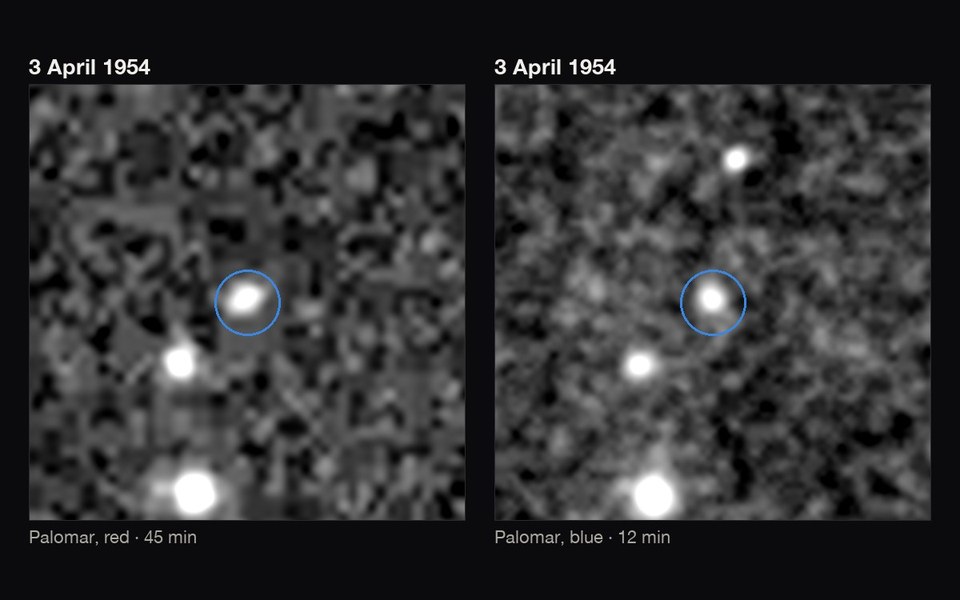
- 画像:NASA/Artemis II Crew/画像処理:Stefano Ivan Stinga。冒頭の画像と図2は Hello, World リメイク からImages: NASA/Artemis II Crew · Processing: Stefano Ivan Stinga. The picture at the top and Figure 2 come from the Hello, World Remake