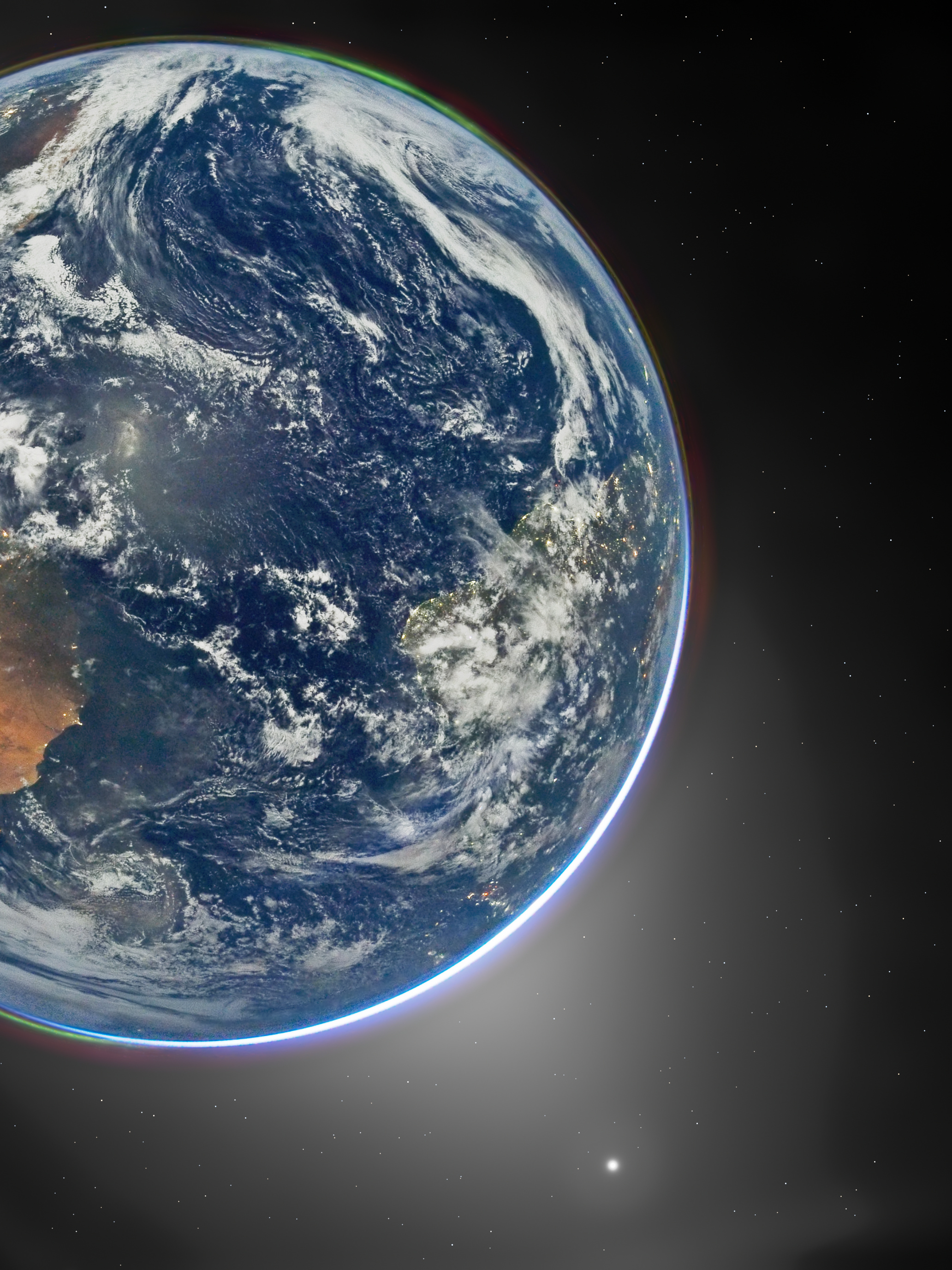
Hello, World リメイクHello, World Remake
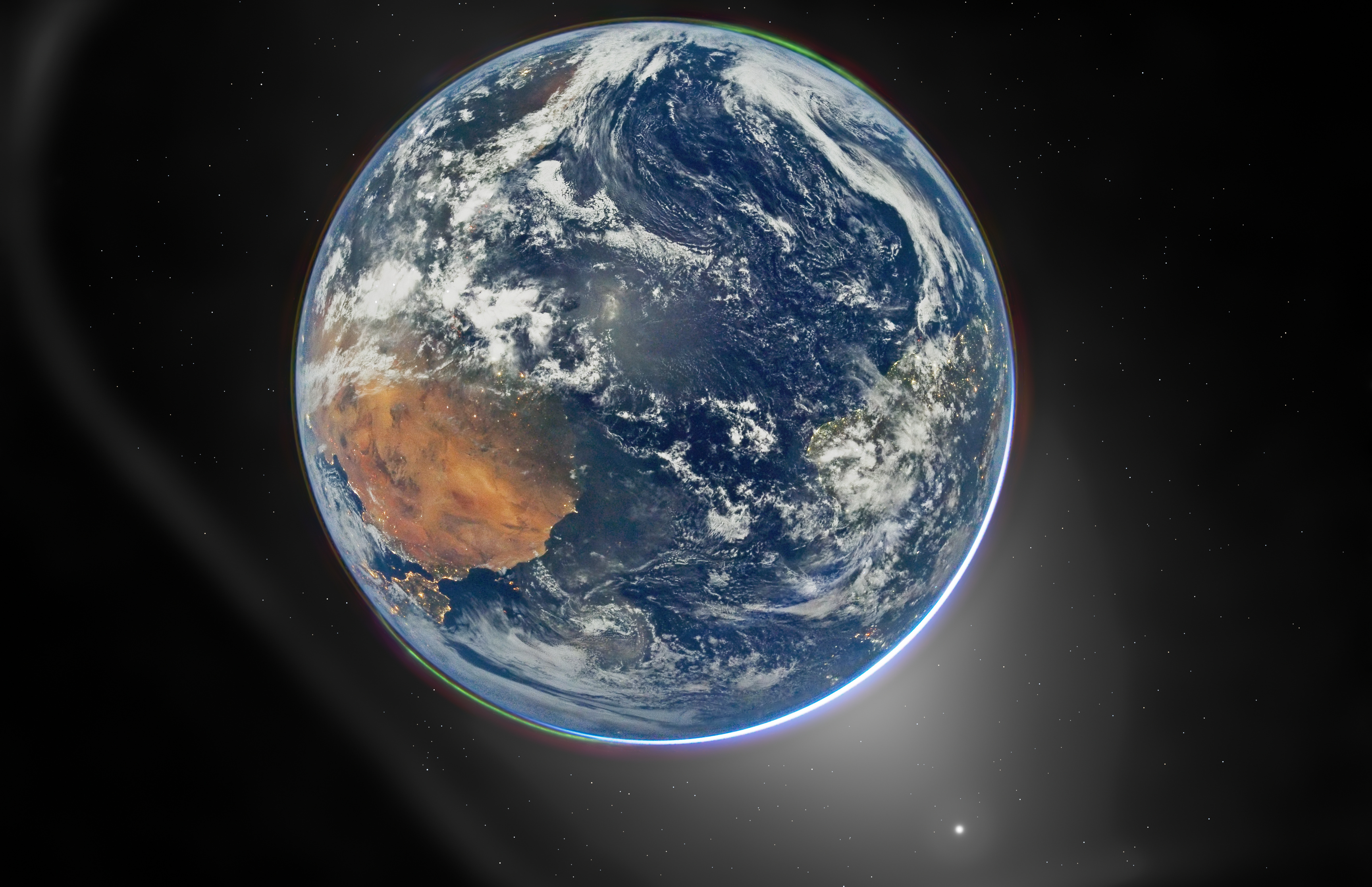
アルテミスII・月明かりの地球の夜側・生データ46枚、ひとつの瞬間Artemis II · Earth's night side by moonlight · 46 raw frames, one moment
すぐに見る:Jump to: アフリカの雷Lightning over Africa 南のオーロラSouthern aurora 金星と黄道光Venus and the zodiacal light
画像:NASA/Artemis II Crew/画像処理:Stefano Ivan StingaImages: NASA/Artemis II Crew · Processing: Stefano Ivan Stinga
ダウンロードDownloads
16ビットTIFF(5552×3696、69 MB)は、ご連絡いただければお送りします([email protected])。A 16-bit TIFF (5552×3696, 69 MB) is available on request: [email protected].
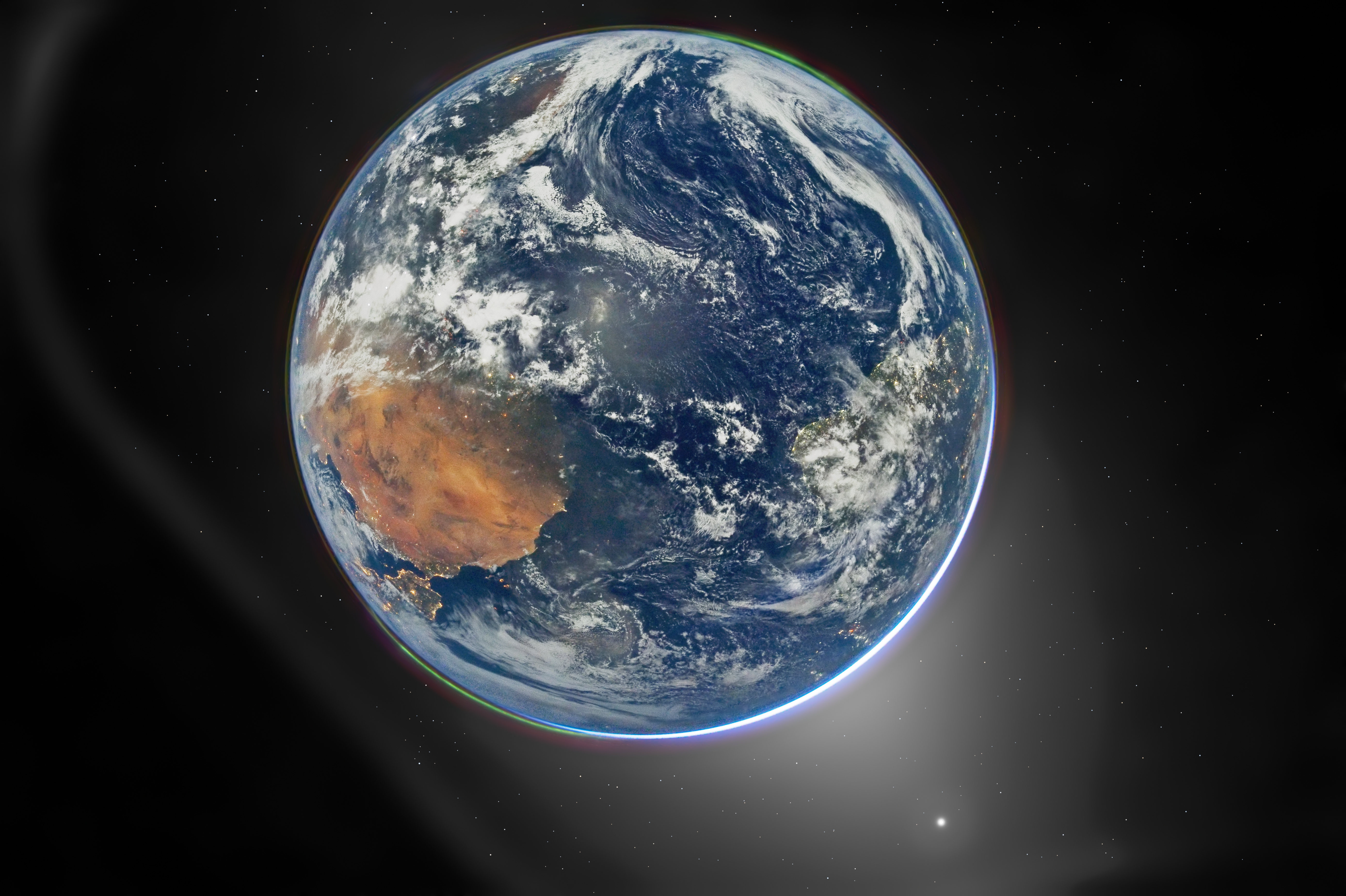
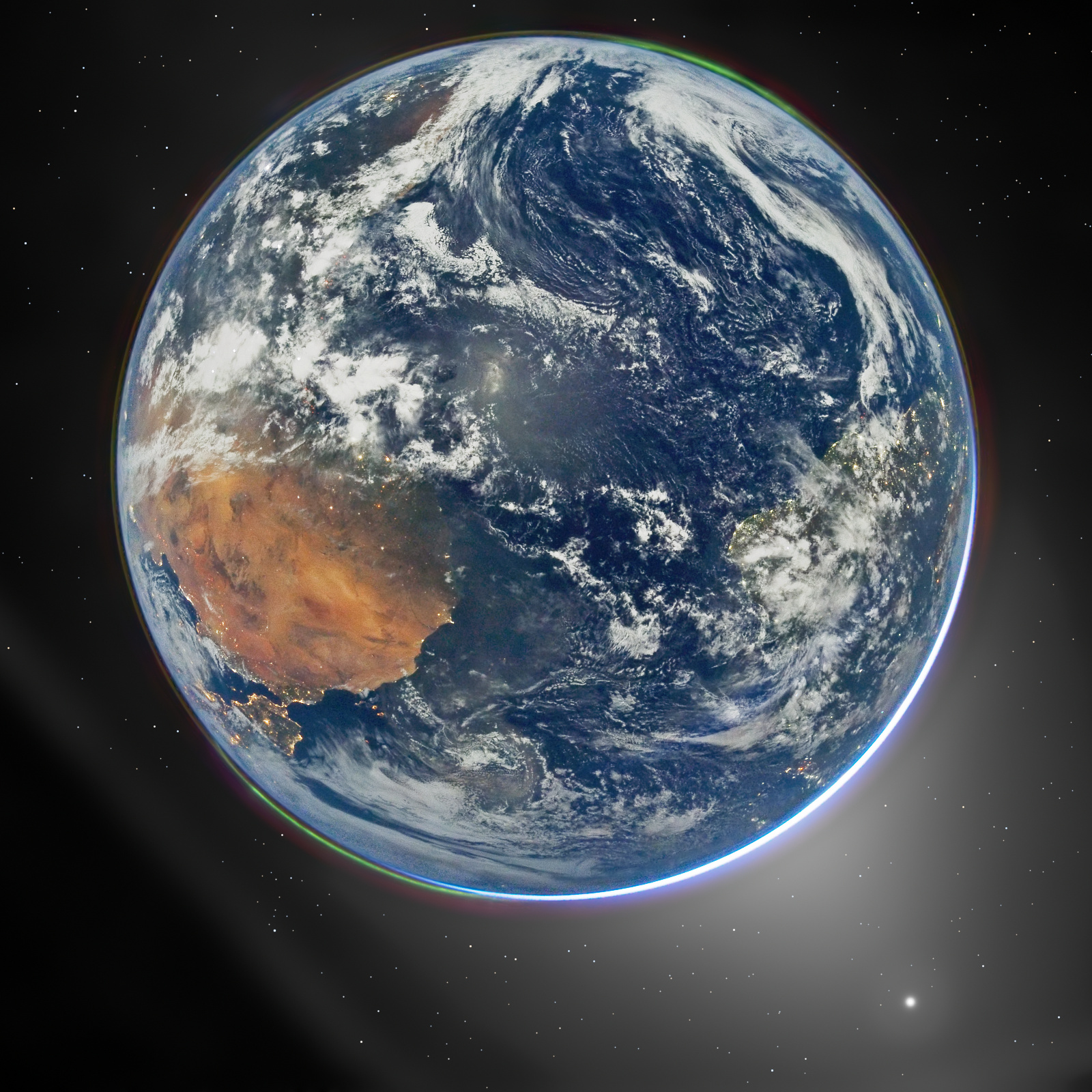
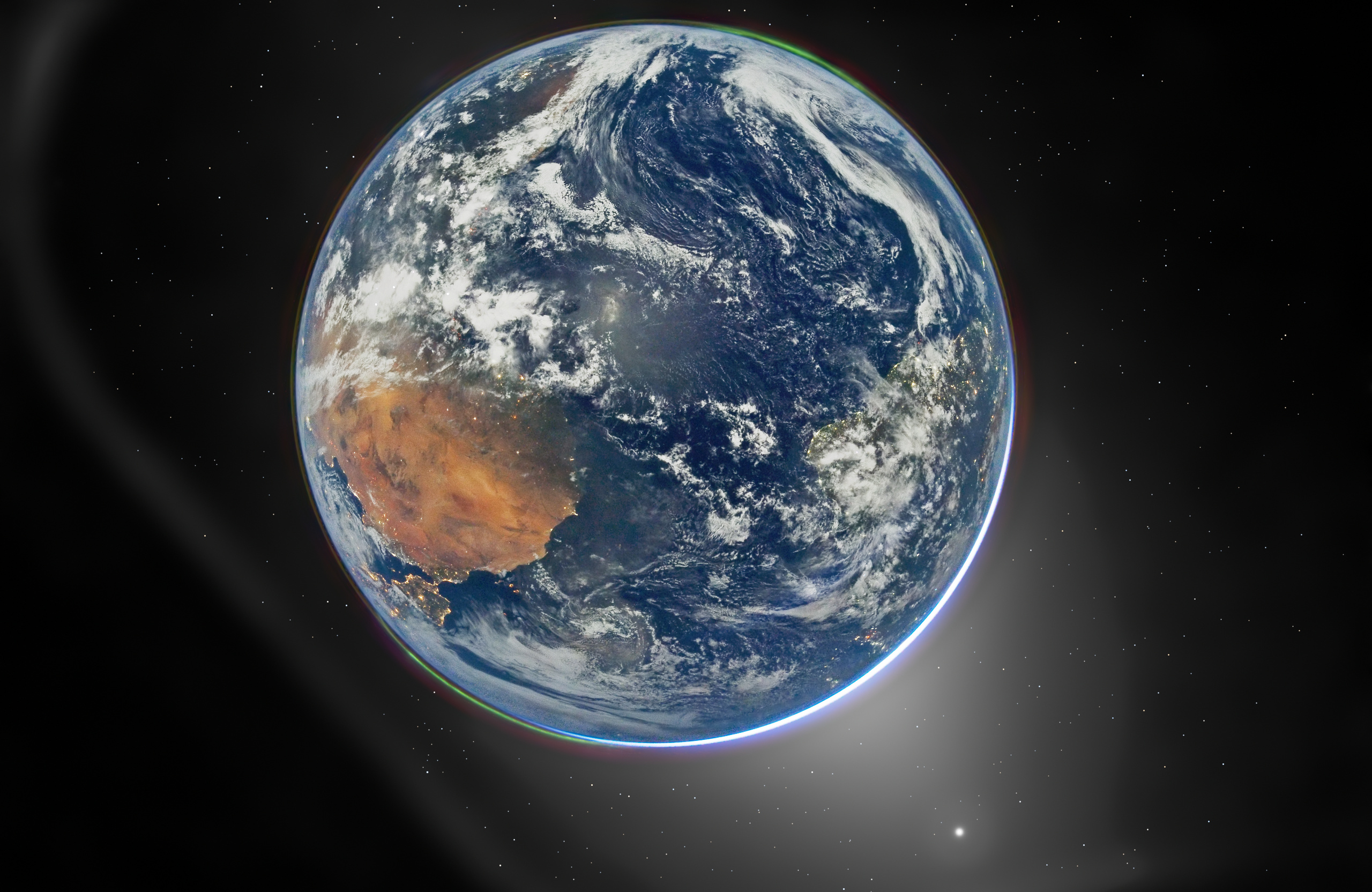
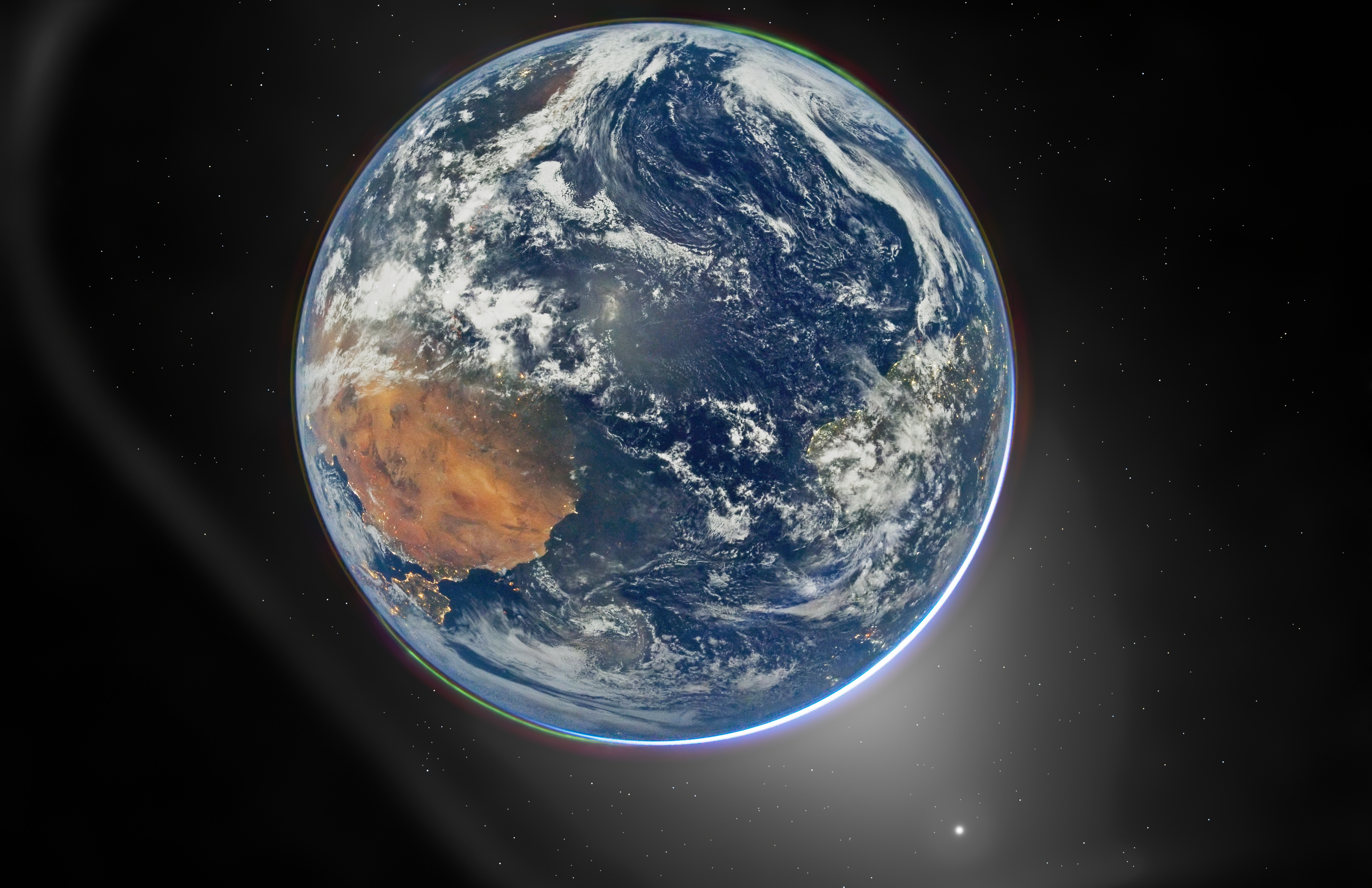
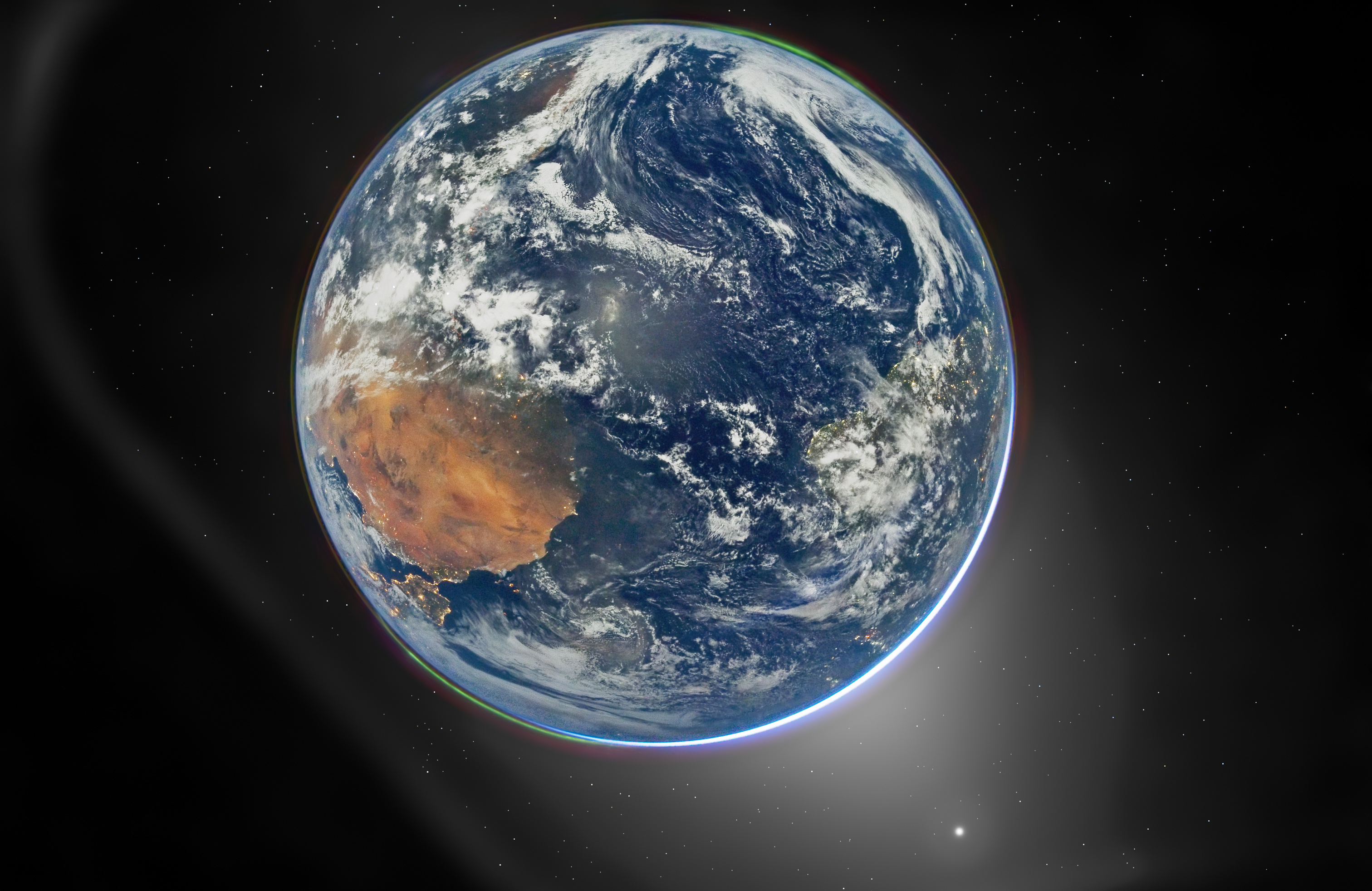
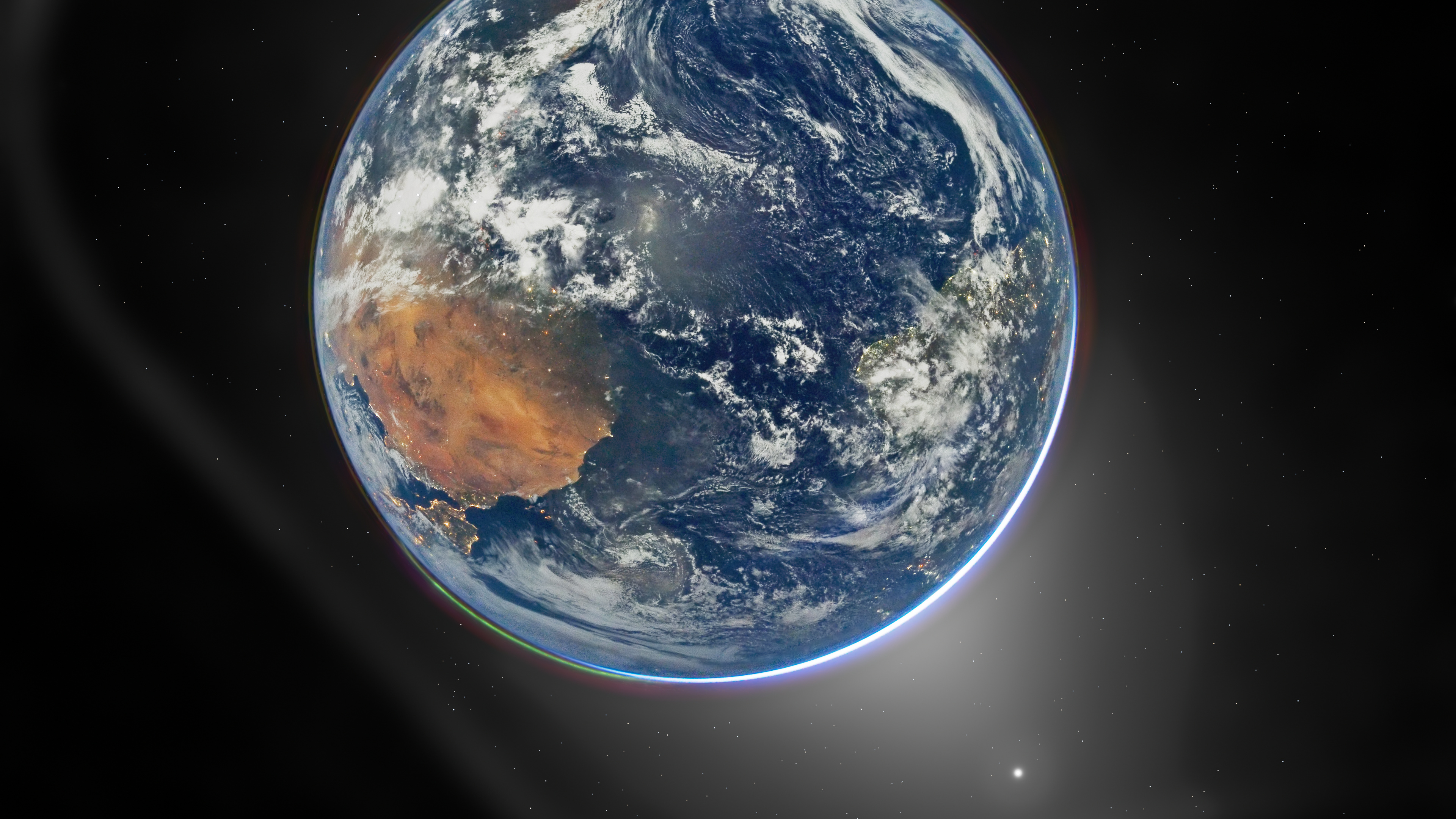
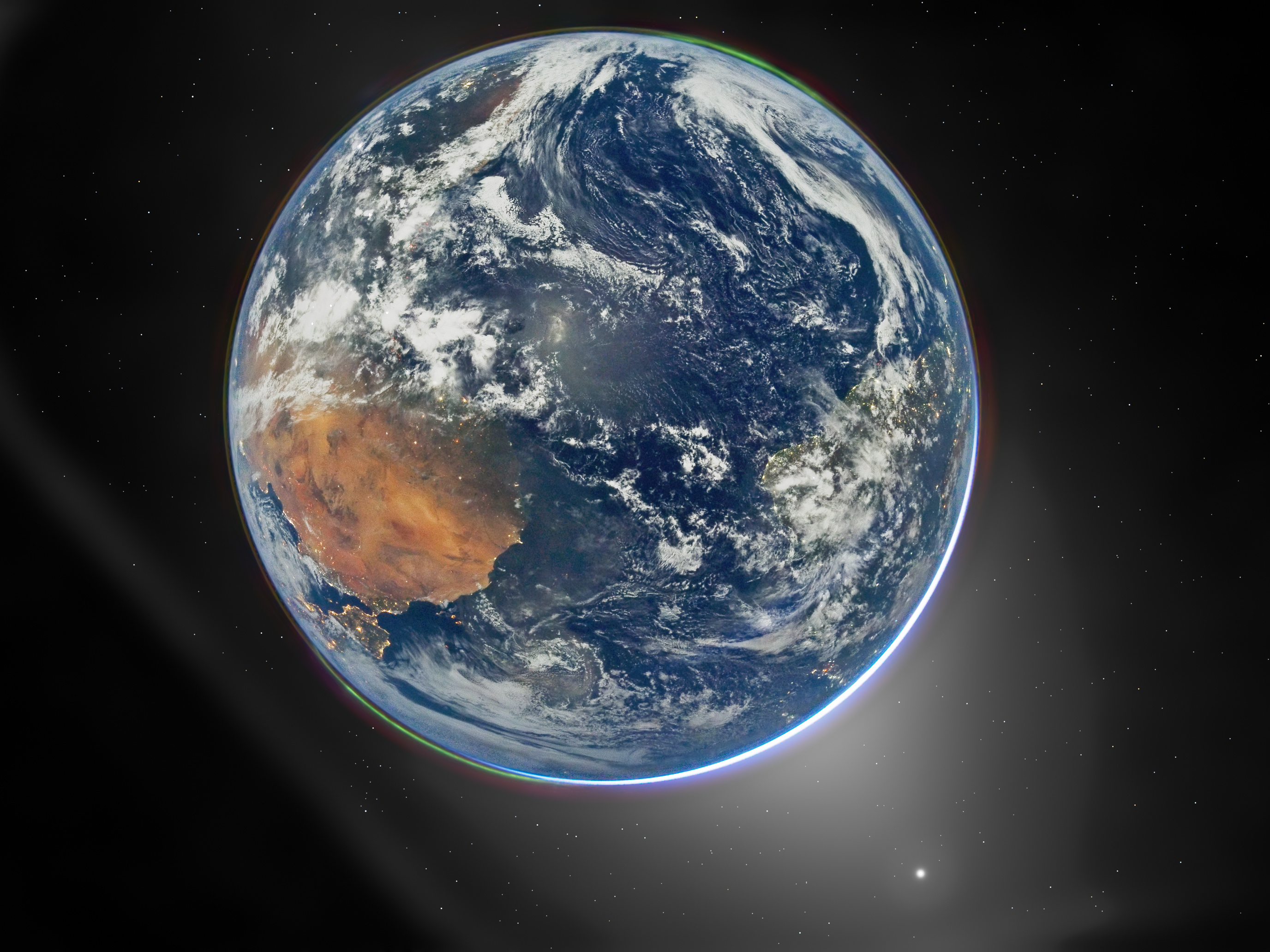
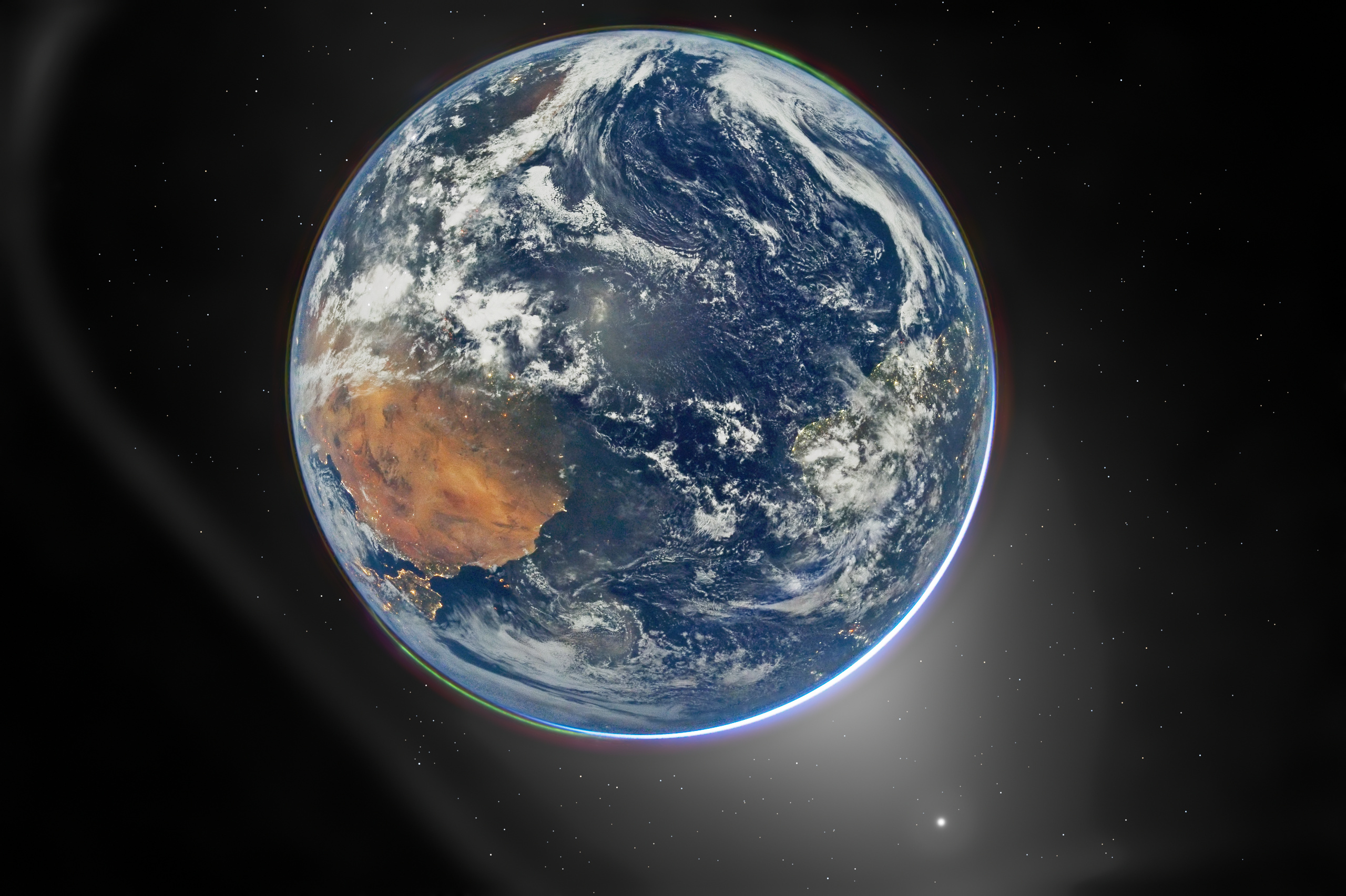
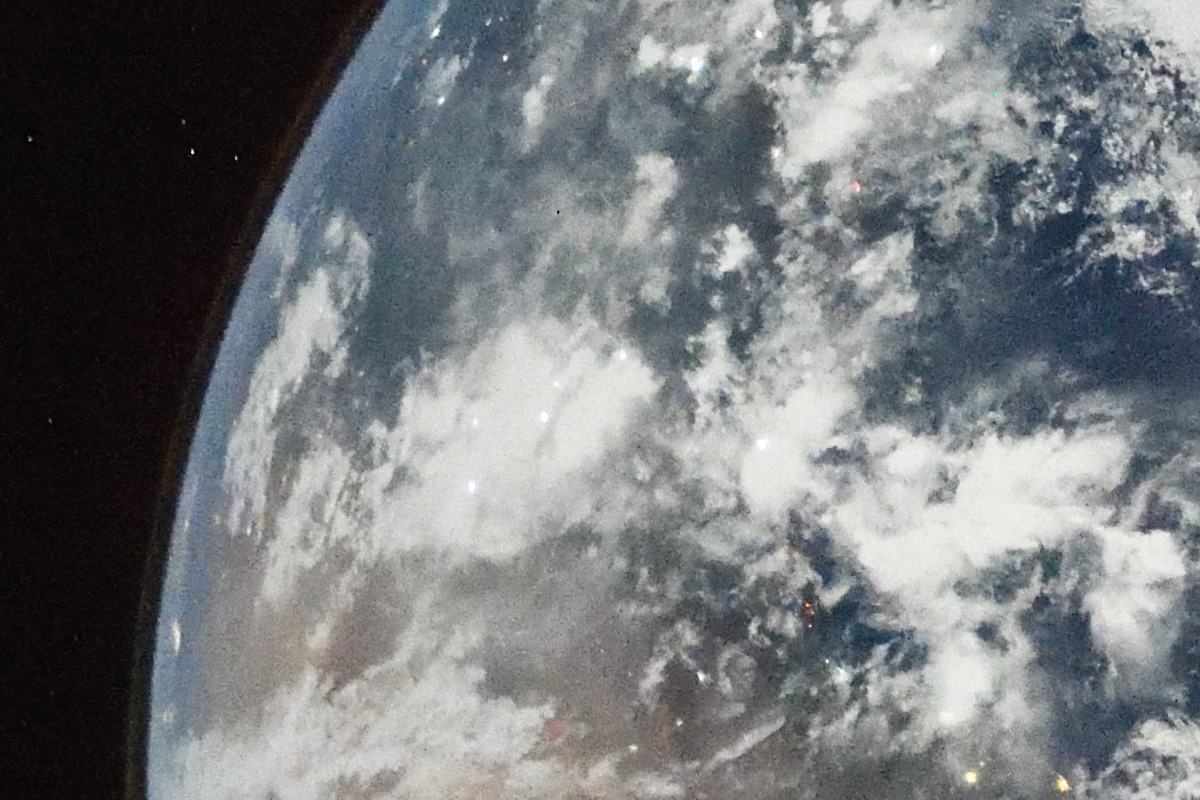
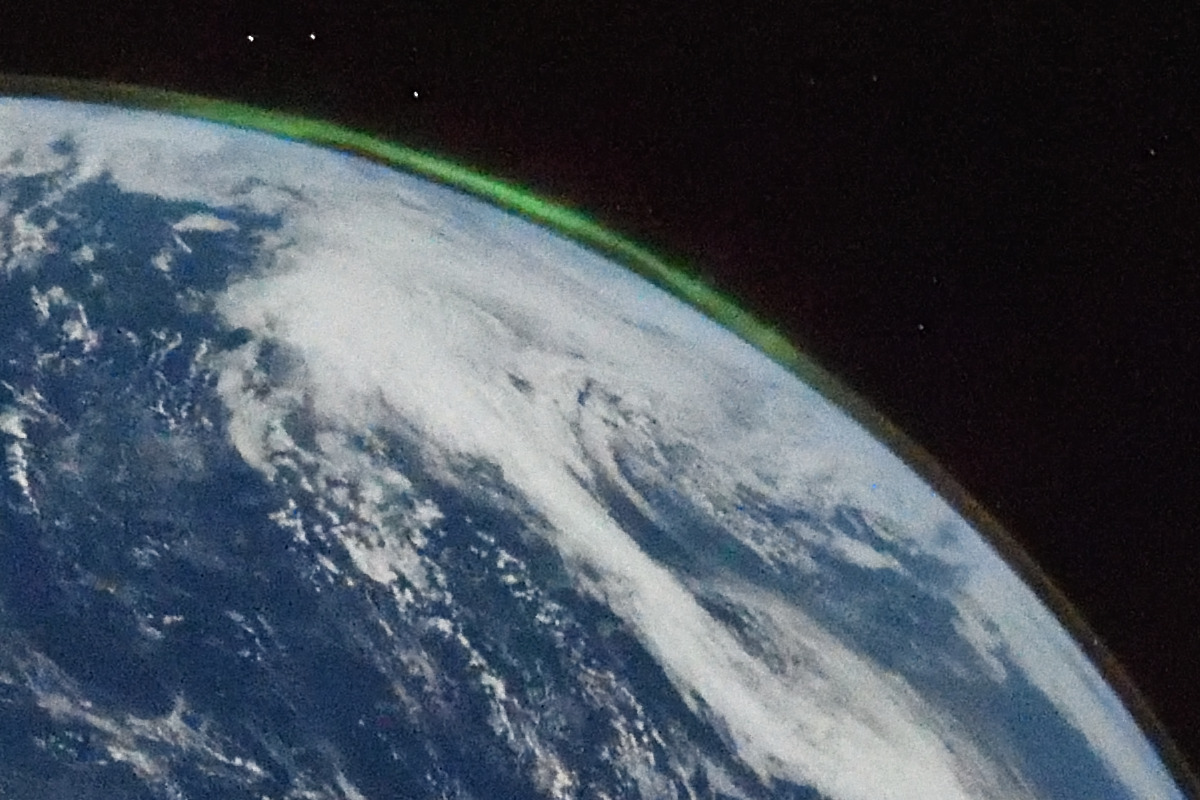
2026年4月3日(世界時)、宇宙船オリオンを地球周回軌道から月へ向かわせる噴射の約30分後に、アルテミスIIのクルーがオリオンの窓から地球の夜側を撮影しました。オリオンは地球の影の中にあり、前日に満月を迎えた月が雲や海岸線、砂漠を照らしていました。NASAはその1枚を「Hello, World」(art002e000192、リード・ワイズマン船長撮影)として公開しています。このリメイクは、同じニコンD5で約10分間に撮られた生データ46枚を、そのコマの瞬間と視点に合わせて1枚に合成したものです。処理は従来の画像処理だけで、生成や描き足しは一切していません。On 3 April 2026 UTC, about half an hour after the burn that sent Orion out of Earth orbit toward the Moon, the Artemis II crew photographed Earth's night side through one of Orion's windows. Orion was inside Earth's shadow, and the Moon, full the day before, lit the clouds, coasts and deserts. NASA released one frame as "Hello, World" (art002e000192), taken by Commander Reid Wiseman. This remake combines 46 raw frames from the same Nikon D5, taken over ten minutes, into one image at the moment and viewpoint of that frame. Only classical processing was used; nothing was generated or painted in.
私の知る限り、アルテミスIIの「Hello, World」の元になった生データを初めてスタックした画像。ニコンD5の生データ46枚を地球の3Dモデルと星に合わせて合成し、NASAのart002e000192と同じ瞬間・視点で描いた。To my knowledge, the first stack of the raw frames behind Artemis II's "Hello, World": 46 Nikon D5 raw frames, combined on a 3D model of Earth and on the stars, at the moment and viewpoint of NASA's art002e000192.
先行する作品:Simeon SchmaußさんによるNASAのJPEG 2枚のHDR合成(Flickr)と、Andy Saundersさんなどによる一連のコマのアニメーション(Ars Technica)。Earlier versions by others: Simeon Schmauß's HDR merge of two of NASA's JPEGs (Flickr) and animations of the sequence, such as Andy Saunders' (Ars Technica).
NASAの1枚と比べるNASA's frame and the Remake
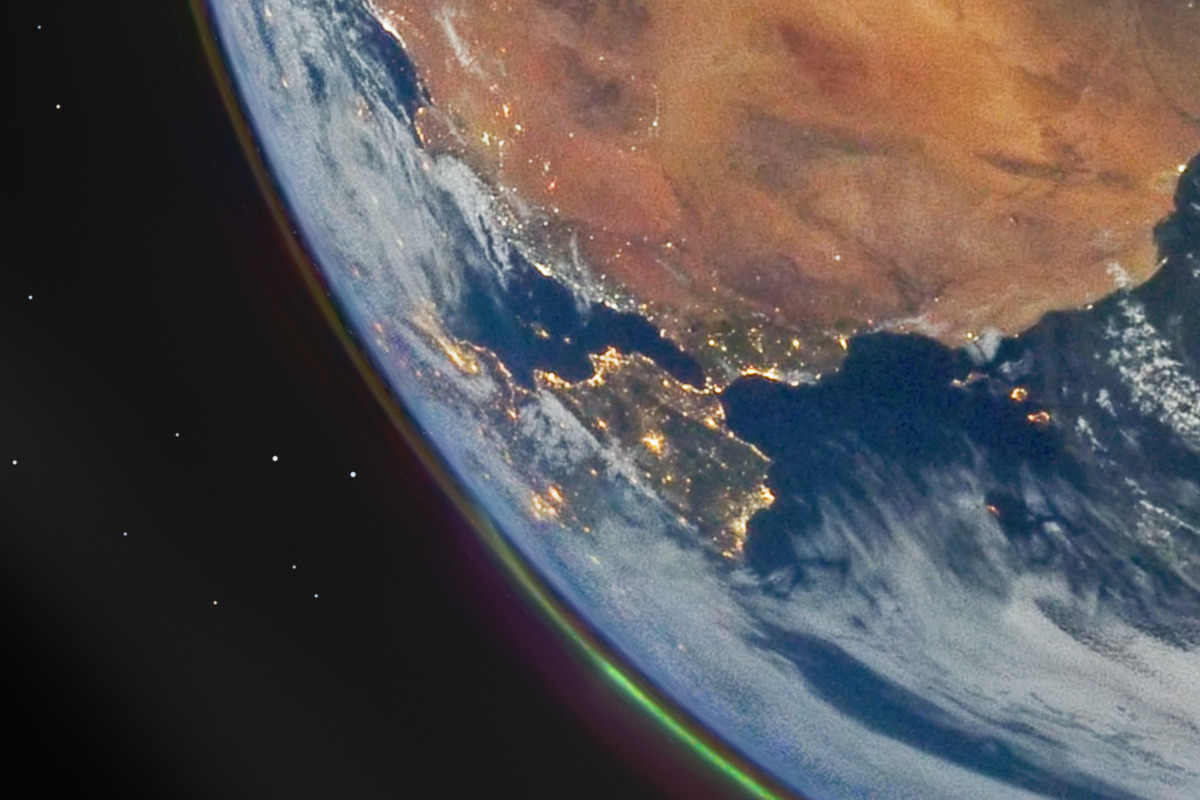
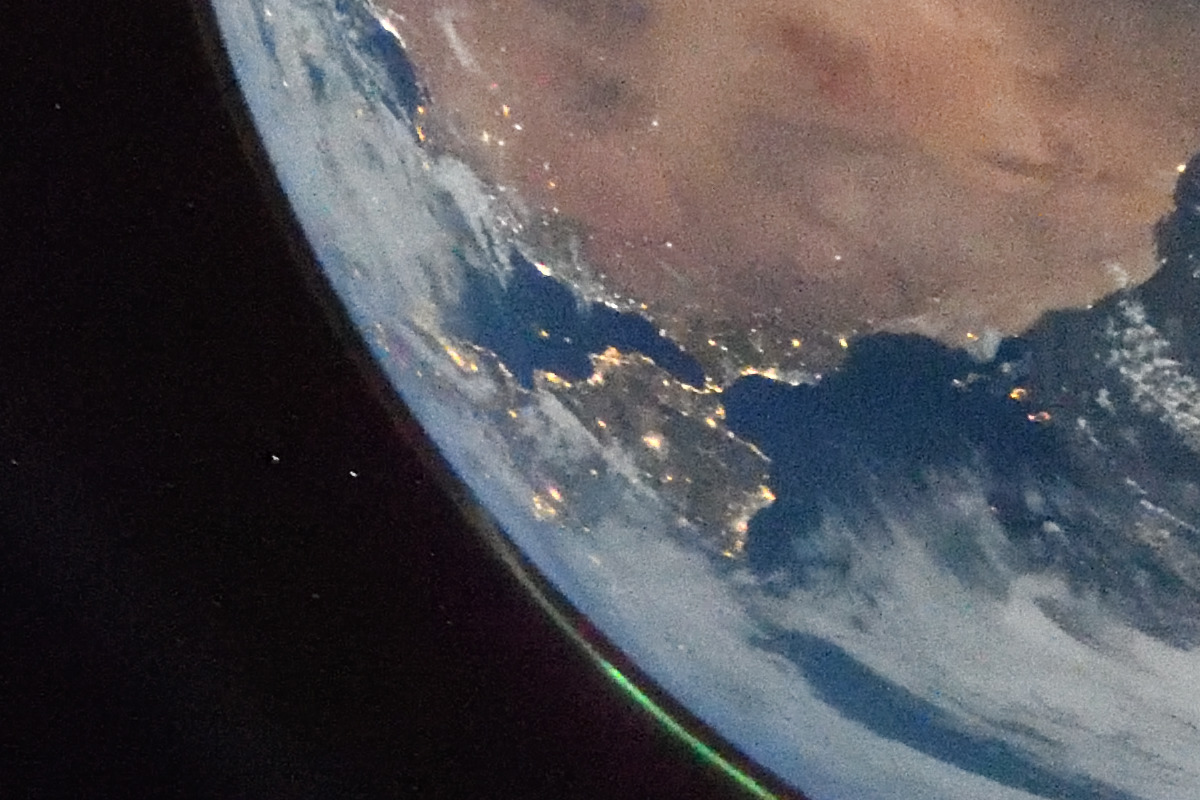 NASAの1枚NASA's frame
リメイク(46枚)Remake (46 frames)
夜のイベリア半島と北アフリカ:街明かり、モロッコの海岸線、サハラ砂漠の縁Iberia and North Africa at night: city lights, the coast of Morocco and the edge of the Sahara
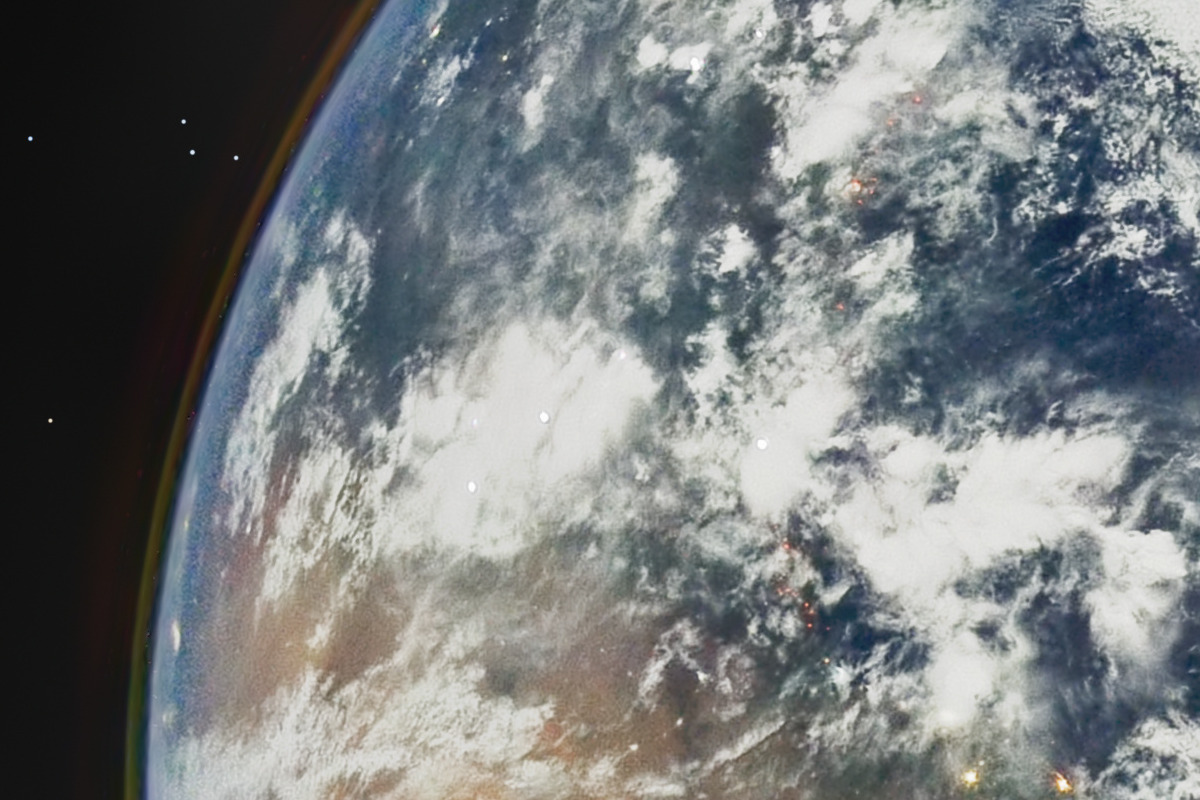
 NASAの1枚NASA's frame
リメイク(46枚)Remake (46 frames)
中央アフリカの雷雲:月に照らされた雲と、このコマにとらえられた雷の閃光Thunderstorms over central Africa: clouds lit by the Moon, with lightning flashes caught in this frame
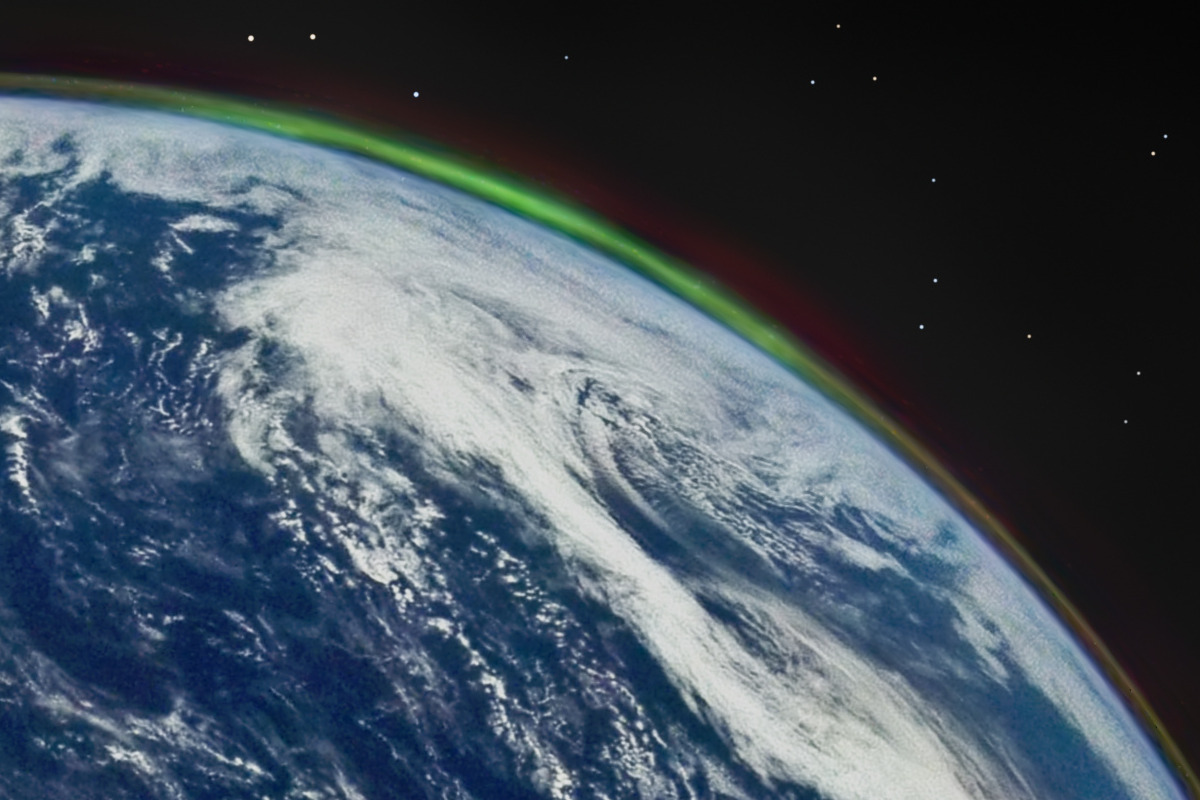
 NASAの1枚NASA's frame
リメイク(46枚)Remake (46 frames)
上端の夜側の縁:大気光の層と、その上の南のオーロラThe night-side limb at the top: airglow layer and the southern aurora above it
左:NASAが処理した1枚 art002e000192(NASA自身のカメラ内処理による画像。16ビットTIFFを8ビットにしただけで、ほかは変えていません)。右:リメイク。どちらも同じ画素を等倍(100%)で切り抜き、それぞれの色調のまま並べています。リメイクは暗部がやや暗く、色がやや濃い仕上がりです。スライダーで境目を動かせます。Left: NASA's processed frame art002e000192, in NASA's own in-camera rendering (the 16-bit TIFF scaled to 8 bits, nothing else changed). Right: the Remake. Both show the same pixels at 100%, each in its own grade; the Remake is a little darker in the shadows and more saturated. Drag to move the divider.
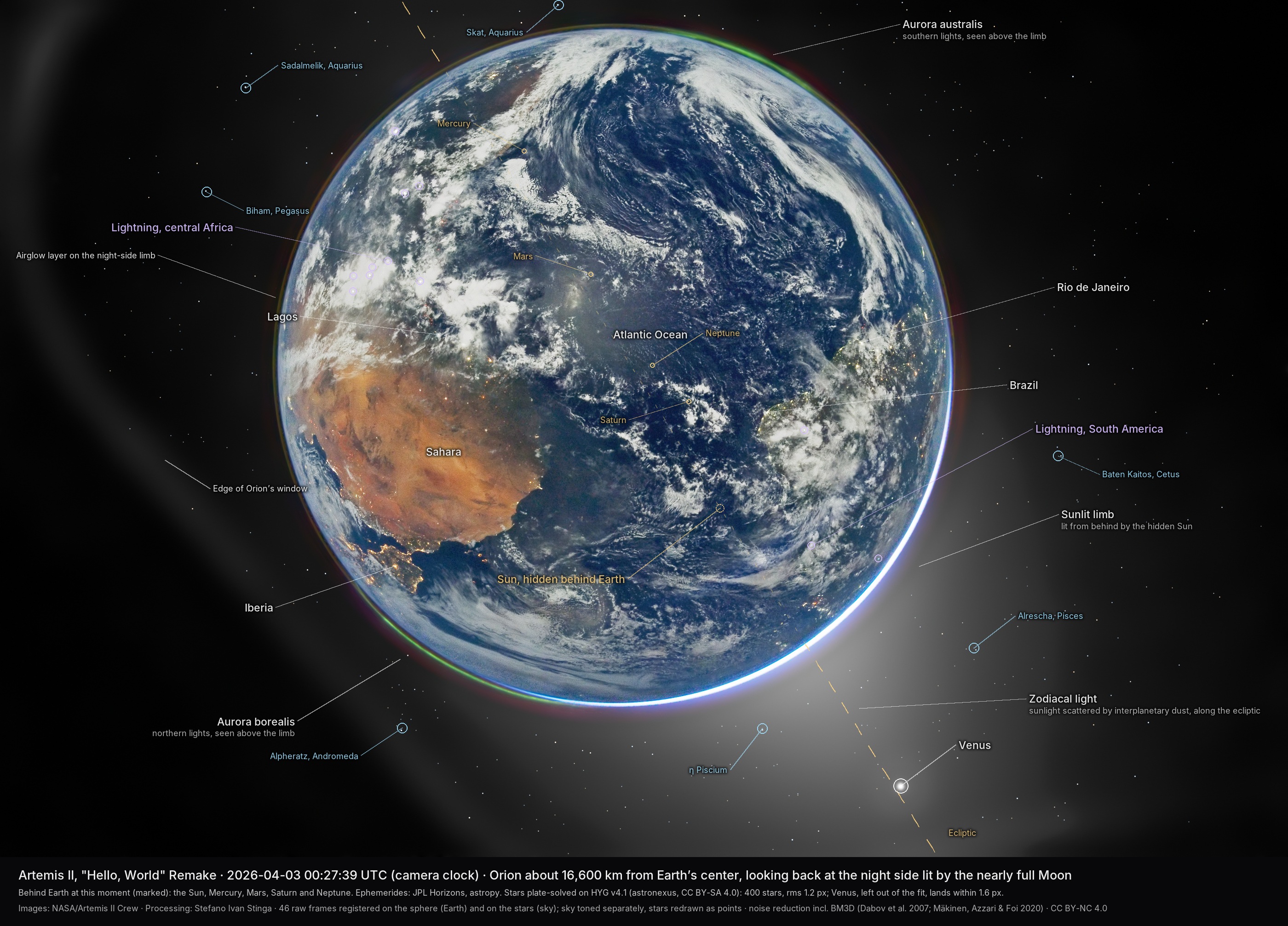
写っているものWhat you're seeing
- 黄道光Zodiacal light
惑星間の塵が散乱した太陽光。地球の向こうから黄道に沿って金星の方へ伸びています。Sunlight scattered by dust between the planets, streaming from behind Earth along the ecliptic toward Venus.
ビューアで見る →See it in the viewer → - 陽の当たる縁The sunlit limb
画像の中で唯一、陽の当たる部分です。地球の向こうに隠れた太陽が、縁の大気を背後から照らしています。The only sunlit sliver: the atmosphere at the limb, lit from behind by the Sun hidden behind Earth.
ビューアで見る →See it in the viewer → - オーロラAuroras
上端の縁の上に、横から見た南のオーロラ(南半球の高緯度の上空)。左下には北のオーロラ(北半球の高緯度の上空)。Aurora australis seen edge-on above the limb at the top, over high southern latitudes; aurora borealis at the bottom left, over high northern latitudes.
南のオーロラ →Southern →北のオーロラ →Northern → - 大気光Airglow
夜側の縁に沿って光る、大気自体が発光する薄い層(通常は高度85〜100 km)。A thin layer of the upper atmosphere that glows on its own at night, along the night-side limb (typically 85–100 km up).
ビューアで見る →See it in the viewer → - 街明かりCity lights
イベリア半島とモロッコ、西アフリカ(ラゴス)、そしてフォルタレザからリオデジャネイロまでのブラジル。Iberia and Morocco, West Africa (Lagos), and Brazil from Fortaleza to Rio de Janeiro.
イベリア半島 →Iberia →ブラジル →Brazil → - 雷Lightning
中央アフリカ(中央アフリカ共和国、カメルーン、コンゴ盆地)と、ブラジル北東部、アマゾン、ギアナ地方の上空。この1/4秒のコマには写っていて、0.3〜0.9秒前のコマには写っていない明るい点です。Over central Africa (the Central African Republic, Cameroon and the Congo Basin) and over north-east Brazil, the Amazon and the Guianas: bright spots in this 1/4 s frame that are absent from the frames taken 0.3–0.9 s earlier.
中央アフリカ →Central Africa →ブラジル →Brazil → - 乳白色のもやA milky veil
サハラの西に、全コマに写っています。月光に照らされた大西洋上のサハラの砂塵である可能性が高いと考えています。West of the Sahara, in every frame: very likely Saharan dust over the Atlantic, lit by the Moon.
ビューアで見る →See it in the viewer → - 地球の向こう側と金星Behind Earth, and Venus
この瞬間、太陽、水星、火星、土星、海王星は地球の向こう側にありました(暦による位置)。右下の明るい点が金星です。At this moment the Sun, Mercury, Mars, Saturn and Neptune were behind Earth (positions from ephemerides). The bright point at the lower right is Venus.
地球の向こう側 →Behind Earth →金星と星々 →Venus and the stars → - オリオンの窓Orion's window
左側の曲線状の帯は窓の縁です。その近くや外側にあるはずの明るい星(エニフ、シェアト、マタル)は、窓枠に遮られて写っていません。The curved bands at the left are the edges of the window. Bright stars expected near or beyond them (Enif, Scheat, Matar) are blocked by the frame.
ビューアで見る →See it in the viewer →
リンクは、その場所をビューアで開きます。ビューアではラベル(L)、黄道(E)、海岸線(G)の表示を切り替えられます。Each link opens the viewer at that spot. In the viewer you can turn the labels (L), the ecliptic (E) and the coastlines (G) on and off.
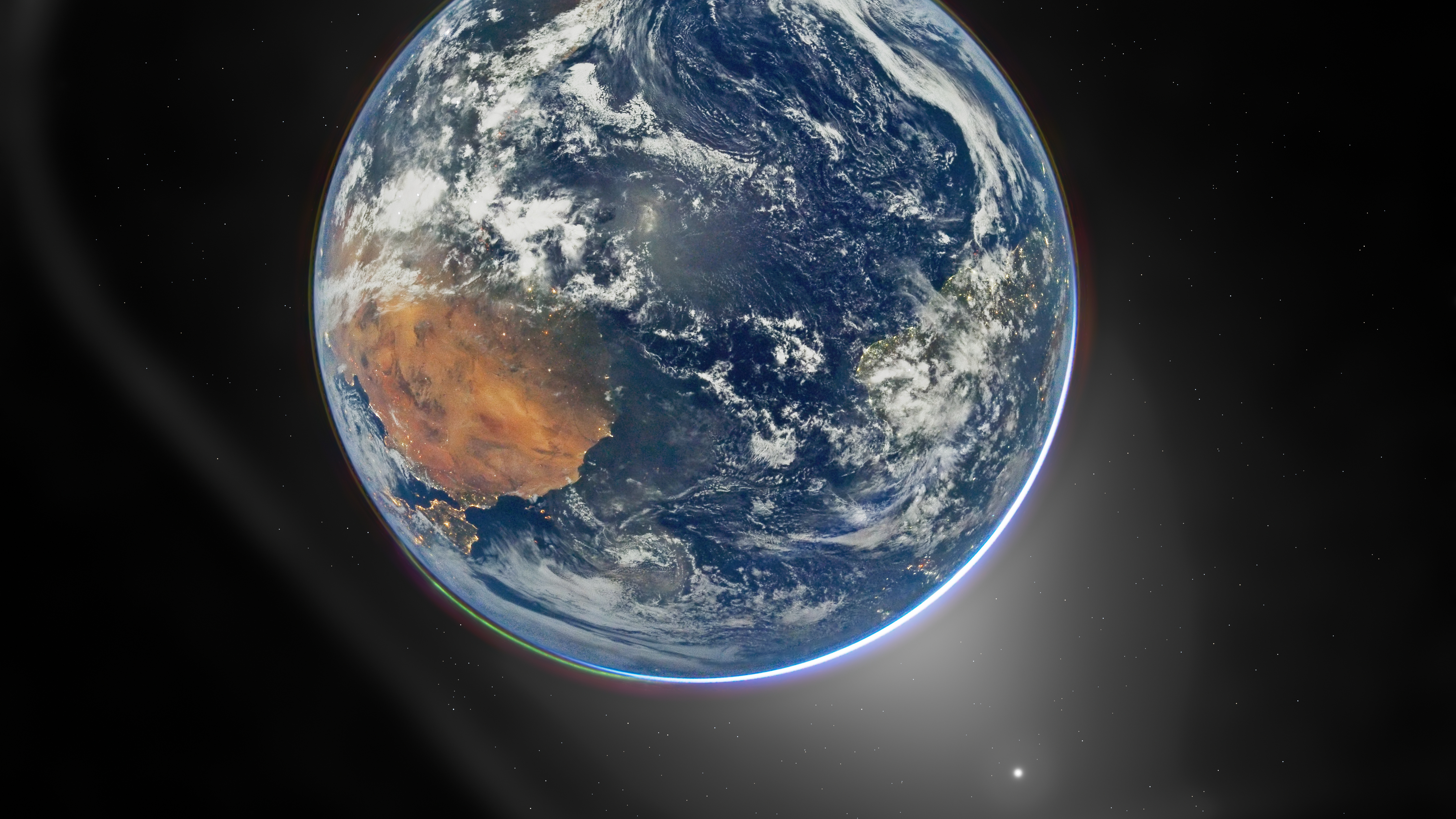
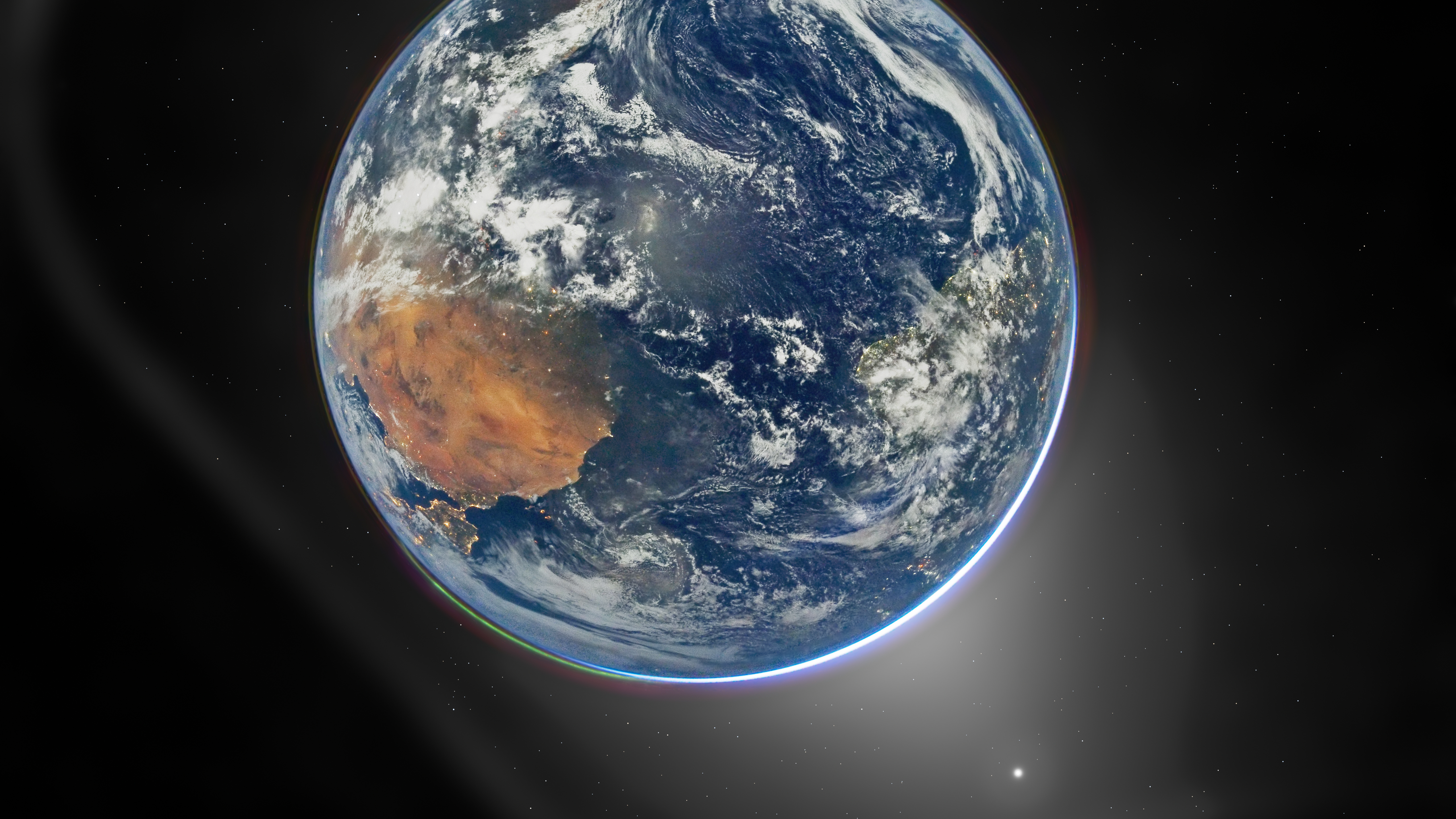
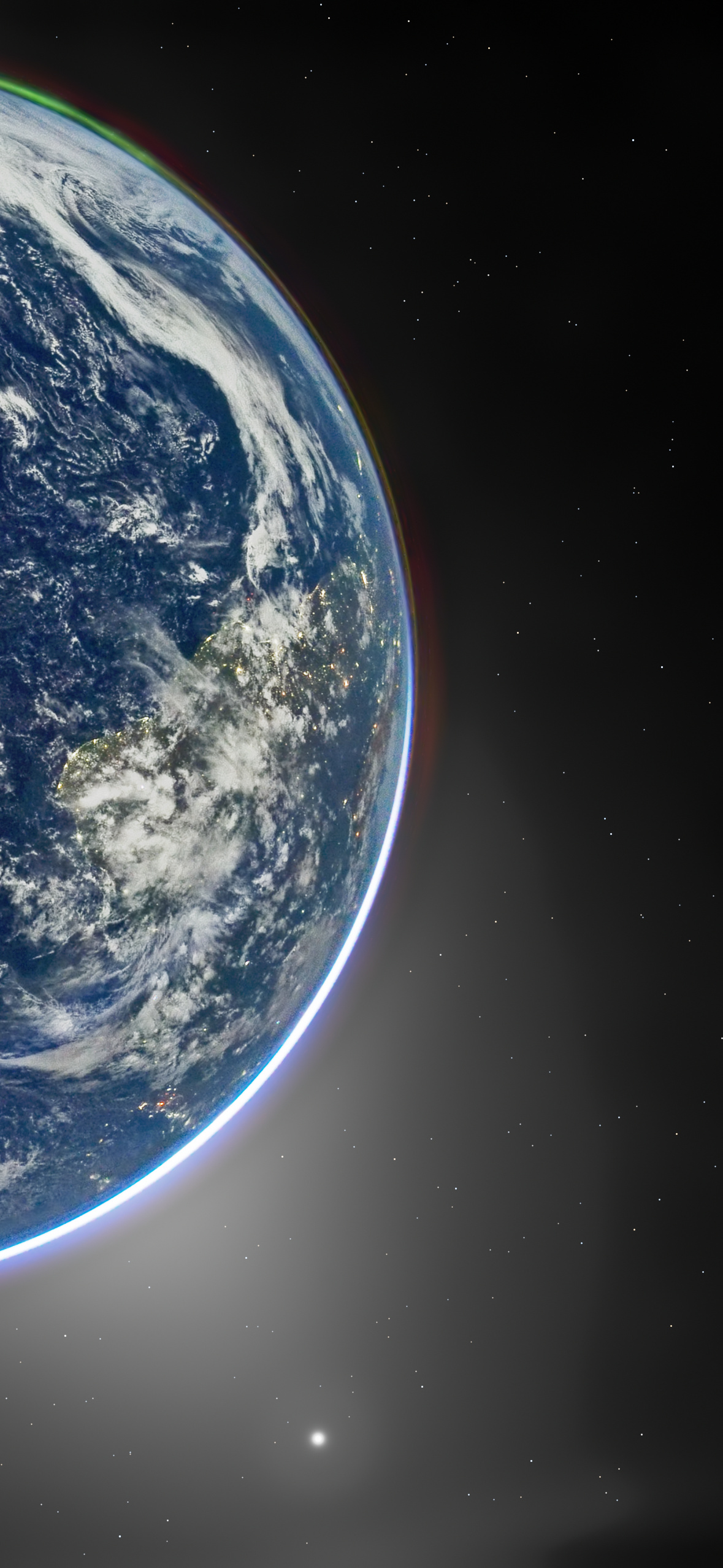
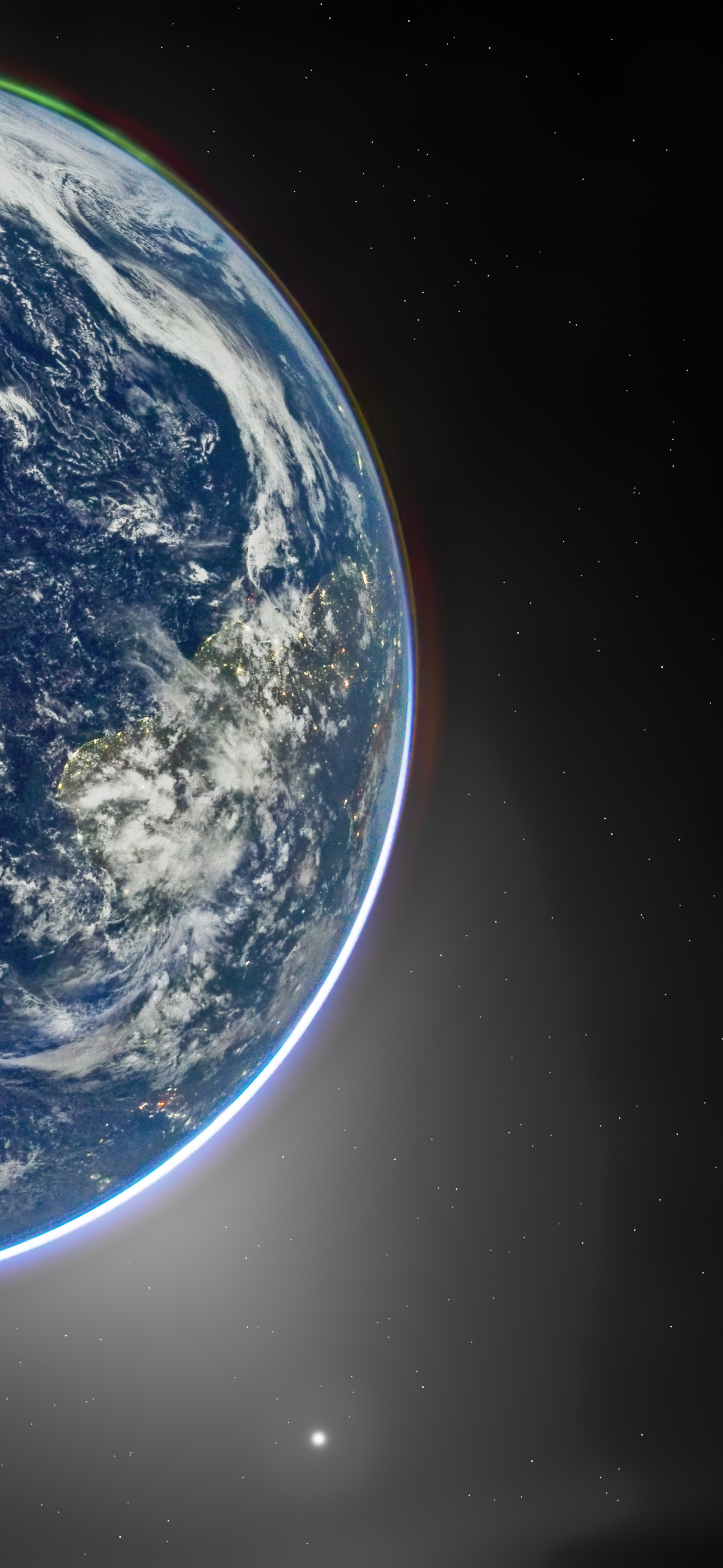
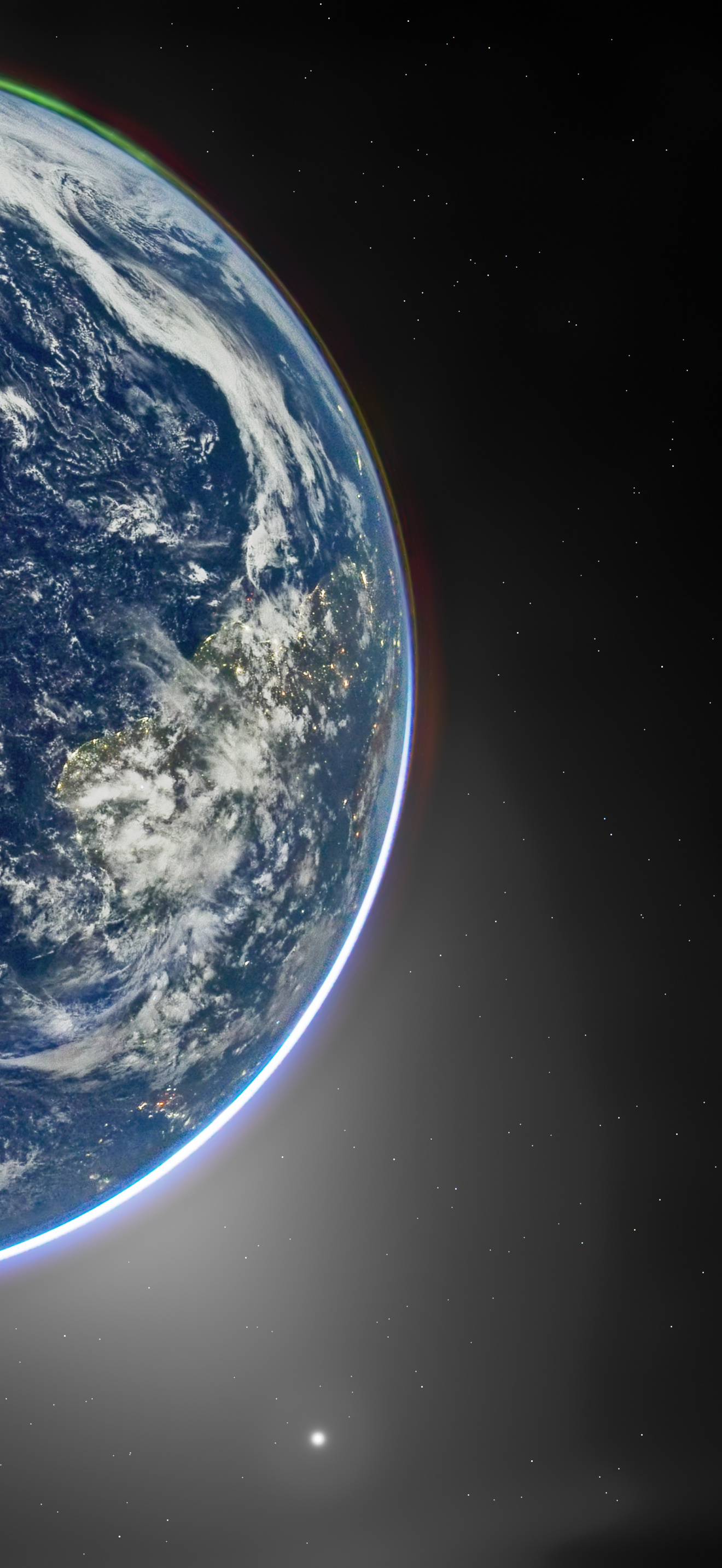
壁紙Wallpapers
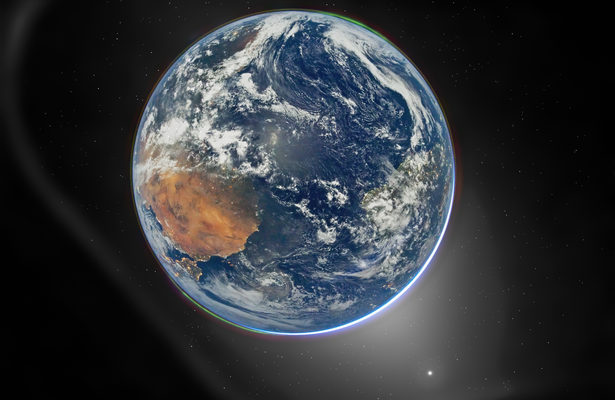
Mac・ディスプレイMac and displays
どのサイズも拡大はしていません(sRGB JPEG)。No size is upscaled (sRGB JPEG).
解説
作り方
- データ:NASA惑星データシステム(PDS)のアルテミスII クルーカメラ・データバンドル(doi:10.17189/x52v-tb80)の生データ46枚(ニコンD5、14〜24 mm f/2.8を22〜24 mmで使用、ISO 51200。ブラケット5枚とタイムラプス41枚)
- 各コマを生のセンサーデータから較正(黒レベル、固定パターンノイズ、ホットピクセル)し、地球の3Dモデル(WGS84、オリオンの位置はJPL Horizons)上に配置。バンドル調整で各コマの向き、レンズの歪み、コマ間の雲の動きを解いています
- 地球:実データのスタックだけで作り、外れ値を除去。ノイズ低減は従来の手法(ウェーブレットとBM3D)で、デコンボリューションには街明かりで測った点像分布関数を使っています。色と局所コントラストは画像全体へのなめらかな調整のみで、最も暗い部分(月光の海)には追加のノイズ低減をかけています。生成モデルや学習済みモデルは使っていません
- 太陽側の縁:長い露光では白飛びしているため、約2分前の短時間露光4枚(1/200〜1/60秒)から復元
- オーロラ:数分で変化するため、縁のうちオーロラの部分は「Hello, World」のコマの前後19秒以内の5枚だけで作っています
- 空:星に合わせて別にスタックし、地球とは別に調整。なめらかな背景光を約4倍に持ち上げ、地球の近くは対数的に抑えて、黄道光と窓の縁が画面サイズでも見えるようにしています。空のノイズは、測定した背景をなめらかにしたものに置き換えています
- 星:一定の検出限界より明るい400個の星を、測定した位置・明るさ・色から鋭い点として描き直しています(窓の内側のみ)。位置はHYG星表でプレートソルブしています
- 除去したもの:かすかな窓の反射2つと、金星のレンズゴースト5つ
- 金星:それ自体のにじみの形から丸く整え、にじみは無彩色にしています
注記
- 時刻はカメラの時計による00:27:39(世界時)で、ファイルとNASAのメタデータの値です。
- 太陽と惑星の位置は、オリオンの位置から見た暦によるものです。
- 大気光の高さ(通常85〜100 km)は一般的な値で、この画像から測ったものではありません。
- 描き足し、複製、AIによる生成はしていません。
- 見て楽しむための画像で、測光用ではありません。
About this image
How it was made
- Data: 46 raw frames (Nikon D5, 14–24 mm f/2.8 at 22–24 mm, ISO 51200; 5 brackets and 41 time-lapse frames) from NASA's Planetary Data System, Artemis II Crew Camera Data Bundle (doi:10.17189/x52v-tb80)
- Each frame calibrated from the raw sensor data (black level, fixed-pattern noise, hot pixels) and placed on a 3D model of Earth (WGS84, Orion's position from JPL Horizons); a bundle adjustment solved each frame's pointing, the lens distortion and the drift of the clouds between frames
- Earth: stacked real data only, with outlier rejection. Classical noise reduction (wavelet and BM3D) and deconvolution with a point-spread function measured on city lights. Color and local contrast are adjusted with smooth whole-image operations, and the darkest areas (moonlit ocean) get extra noise reduction. No generative or learned models
- Sunlit limb: clipped in the long exposures, so it is rebuilt from four short exposures (1/200–1/60 s) taken two minutes earlier
- Auroras: they change within minutes, so the two aurora parts of the limb come only from the five frames taken within 19 s of the Hello, World frame
- Sky: stacked separately on the stars and toned separately from Earth. The smooth glow is lifted about 4× with a logarithmic shoulder near Earth, so the zodiacal light and the window edges show at screen size, and the sky's noise floor is replaced by the smoothed measured background
- Stars: the 400 stars above one detection limit are redrawn as sharp points from their measured position, brightness and color, only inside the window, and plate-solved against the HYG star catalog
- Removed: two faint window reflections and five lens ghosts of Venus
- Venus is made round from its own glare profile, with a neutral glow
Notes
- The time is 00:27:39 UTC by the camera's clock, as in the files and NASA's metadata.
- The Sun and planets are placed from ephemerides, seen from Orion's position.
- The airglow altitude (typically 85–100 km) is the usual value, not a measurement from this picture.
- Nothing was added, cloned or generated with AI.
- For illustration, not photometry.
データNumbers
- NASAの元のコマNASA's frame
- art002e000192「Hello, World」art002e000192, "Hello, World"
- 時刻Time
- 2026年4月3日 00:27:39(世界時、カメラの時計)3 April 2026, 00:27:39 UTC (camera clock)
- 距離Distance
- 地球中心から約16,600 kmabout 16,600 km from Earth's center
- カメラCamera
- ニコンD5、ISO 51200Nikon D5, ISO 51200
- コマ数Frames
- 生データ46枚(約10分間)46 raw frames over ten minutes
- 大きさSize
- 5552×3696画素5552 × 3696 pixels
利用についてUse
報道・記事でのご利用は、上記のクレジットを表記いただければご自由にどうぞ(広告のあるニュースサイトを含みます)。それ以外のご利用は CC BY-NC 4.0(非営利)の条件に従ってください。ノイズ低減に使ったBM3Dが非営利目的に限って利用できるソフトウェアのため、広告、商品、プリントの販売、有料のライセンスには使えません。このライセンスは画像処理に対するもので、NASAの画像自体は、米国では一般に著作権の対象になりません。News and editorial use is welcome with the credit above, including on ad-supported news sites. Other uses: CC BY-NC 4.0 (non-commercial). BM3D, used for noise reduction, is licensed for non-commercial use only, so the pictures can't be used in ads, on products or prints, or for paid licensing. The license covers the processing; NASA's own images are generally not copyrighted in the United States.
連絡先Contact: [email protected] · X: @Sting1_JP · Bluesky: @stinga.jp · Flickr: photostream
クレジットと出典Credits and sources
- 画像:NASA/Artemis II Crew。NASAの元のコマ art002e000192 は、リード・ワイズマン船長の撮影です。Images: NASA/Artemis II Crew. NASA's original frame art002e000192 was taken by Commander Reid Wiseman.
- 生データ:Artemis II Lunar Science Team (2026). Artemis II Crew Camera Data Bundle, Planetary Data System (PDS) Cartography and Imaging Sciences (CIS) Node. https://doi.org/10.17189/x52v-tb80Raw frames: Artemis II Lunar Science Team (2026). Artemis II Crew Camera Data Bundle, Planetary Data System (PDS) Cartography and Imaging Sciences (CIS) Node. https://doi.org/10.17189/x52v-tb80
- ノイズ低減(BM3D、タンペレ大学、非営利ライセンス):K. Dabov, A. Foi, V. Katkovnik, K. Egiazarian, "Image Denoising by Sparse 3-D Transform-Domain Collaborative Filtering," IEEE Trans. Image Process. 16 (2007) 2080–2095; Y. Mäkinen, L. Azzari, A. Foi, "Collaborative Filtering of Correlated Noise," IEEE Trans. Image Process. 29 (2020) 8339–8354.Noise reduction (BM3D, Tampere University, non-commercial license): K. Dabov, A. Foi, V. Katkovnik, K. Egiazarian, "Image Denoising by Sparse 3-D Transform-Domain Collaborative Filtering," IEEE Trans. Image Process. 16 (2007) 2080–2095; Y. Mäkinen, L. Azzari, A. Foi, "Collaborative Filtering of Correlated Noise," IEEE Trans. Image Process. 29 (2020) 8339–8354.
- 星:HYG Database v4.1, astronexus(codeberg.org/astronexus/hyg)、CC BY-SA 4.0。ビューアの星のラベルもこのデータによります。Stars: HYG Database v4.1, astronexus (codeberg.org/astronexus/hyg), CC BY-SA 4.0. The viewer's star labels come from it.
- 海岸線と地名:Natural Earth(パブリックドメイン)Coastlines and places: Natural Earth (public domain)
- 暦とミッションのタイムライン:JPL Horizons、astropyEphemerides and mission timeline: JPL Horizons; astropy
- ビューア:OpenSeadragon(BSD-3-Clause)Viewer: OpenSeadragon (BSD-3-Clause)